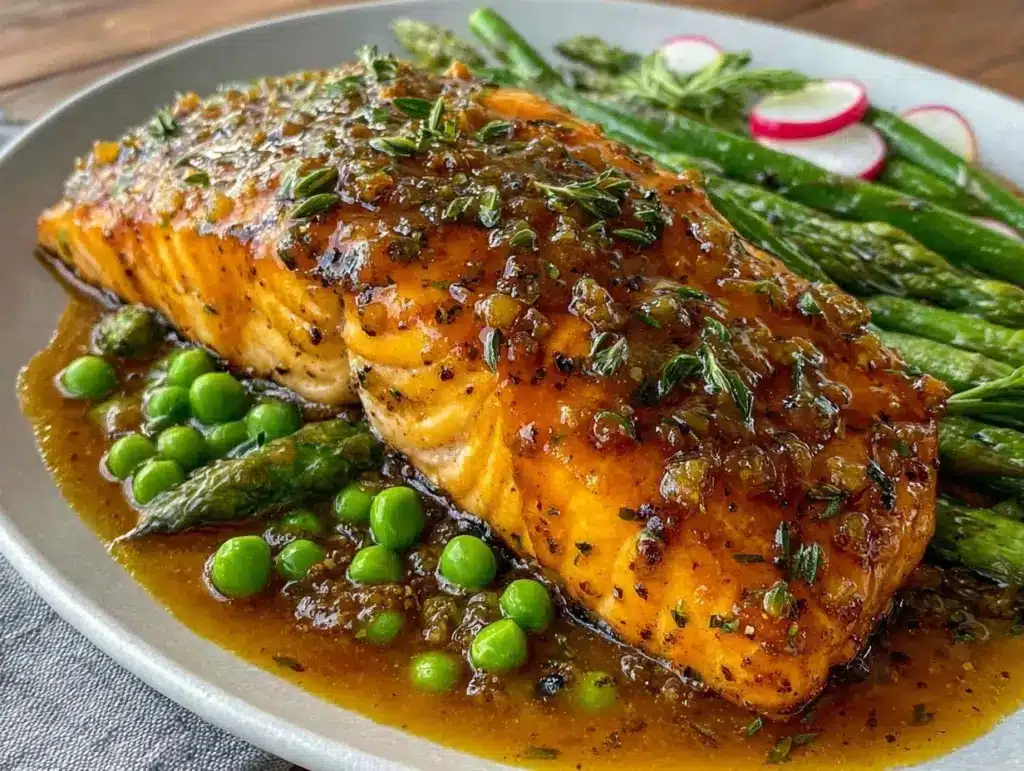
Let me tell you, the aroma of honey and Dijon mustard caramelizing on tender salmon fillets is enough to make anyone’s mouth water. The first time I whipped up this Easy Honey Dijon Glazed Salmon with Spring Vegetables, I was instantly hooked. You know the kind of moment where you pause, take a deep breath, and just smile because you realize you’re onto something truly special? Yeah, that was it.
Years ago, when I was knee-high to a grasshopper, my grandma used to prepare fish dishes that felt like warm hugs on a plate. This recipe reminds me of those cozy family dinners, but with a fresh, springtime twist. I stumbled upon the glaze combination during a rainy weekend experiment, trying to recreate a restaurant favorite without the fuss. Honestly, I wish I’d found this recipe way sooner—it’s dangerously easy and offers pure, nostalgic comfort all in one.
My family couldn’t stop sneaking bites off the serving platter (and I can’t really blame them). Whether it’s a weeknight dinner or a special occasion, this honey Dijon salmon paired with crisp spring vegetables brightens up any table. Perfect for potlucks, a sweet treat for the kids, or just to brighten up your Pinterest recipe board, this dish has quickly become a staple in my kitchen. After testing it multiple times—in the name of research, of course—it’s safe to say this recipe feels like a warm hug you’re going to want to bookmark forever.
Why You’ll Love This Recipe
After countless trials in my kitchen and feedback from family and friends, I’m confident this Easy Honey Dijon Glazed Salmon with Spring Vegetables will quickly become your go-to. Here’s why:
- Quick & Easy: Comes together in under 30 minutes, perfect for busy weeknights or last-minute cravings.
- Simple Ingredients: No fancy grocery trips needed; you likely already have everything in your pantry and fridge.
- Perfect for Spring & Light Dinners: The fresh vegetables add a crisp, seasonal touch that pairs beautifully with the salmon.
- Crowd-Pleaser: Always gets rave reviews from kids and adults alike—sweet, tangy, and just the right balance of flavors.
- Unbelievably Delicious: The honey and Dijon combo creates a glaze that’s sticky, flavorful, and utterly addictive.
This isn’t just another salmon recipe. The secret is in the balance—the honey adds natural sweetness, the Dijon mustard gives a subtle tang, and a hint of garlic rounds it all out. Plus, roasting the spring vegetables alongside the salmon means everything cooks evenly and locks in freshness without extra effort. Honestly, it’s comfort food reimagined—lighter, faster, but still soul-soothing. If you want to impress guests without stress or turn a simple meal into something memorable, this recipe’s got your back.
What Ingredients You Will Need
This recipe uses simple, wholesome ingredients to deliver bold flavors and a satisfying texture without the fuss. Most of these are pantry staples, and the veggies can be swapped based on what’s fresh or seasonal.
- For the Salmon & Glaze:
- 4 salmon fillets (6 oz / 170 g each), skin on or off depending on preference
- 3 tablespoons honey (raw or local honey recommended for best flavor)
- 2 tablespoons Dijon mustard (I like Grey Poupon for its smooth tang)
- 1 tablespoon olive oil (extra virgin, adds richness)
- 2 cloves garlic, minced (fresh is best for punchy aroma)
- 1 teaspoon fresh lemon juice (brightens the glaze)
- Salt and freshly ground black pepper, to taste
- For the Spring Vegetables:
- 1 cup asparagus spears, trimmed and cut into 2-inch pieces (fresh and crisp)
- 1 cup sugar snap peas, trimmed
- 1 cup baby carrots, peeled
- 1 small red onion, sliced into wedges
- 1 tablespoon olive oil
- Salt and pepper, to taste
- Optional: fresh herbs like dill or parsley for garnish (adds a fresh finish)
If you want to swap veggies, feel free to use green beans or zucchini depending on what you have on hand. For a gluten-free option, this recipe is naturally compliant, just double-check your mustard label to be safe. If dairy-free, all ingredients here are already suitable, making this dish super accessible.
Equipment Needed
To pull off this Easy Honey Dijon Glazed Salmon with Spring Vegetables, you’ll need some basic kitchen tools that most home cooks have on hand:
- Baking sheet or roasting pan (a rimmed one works best to catch any drips)
- Parchment paper or aluminum foil (for easy cleanup and to prevent sticking)
- Mixing bowl (to whisk together the glaze ingredients)
- Sharp knife and cutting board (for prepping vegetables and salmon)
- Measuring spoons and cups (to keep the glaze balanced)
- Brush or spoon (to spread the glaze evenly over the salmon)
If you don’t have a rimmed baking sheet, a cast-iron skillet or ovenproof dish can work too—just watch the cooking time and adjust as needed. Personally, I love using parchment paper on my baking sheet for minimal mess and easy transfer of veggies. Budget-friendly tip: a silicone baking mat can also be a great investment for roasting and baking tasks.
Preparation Method
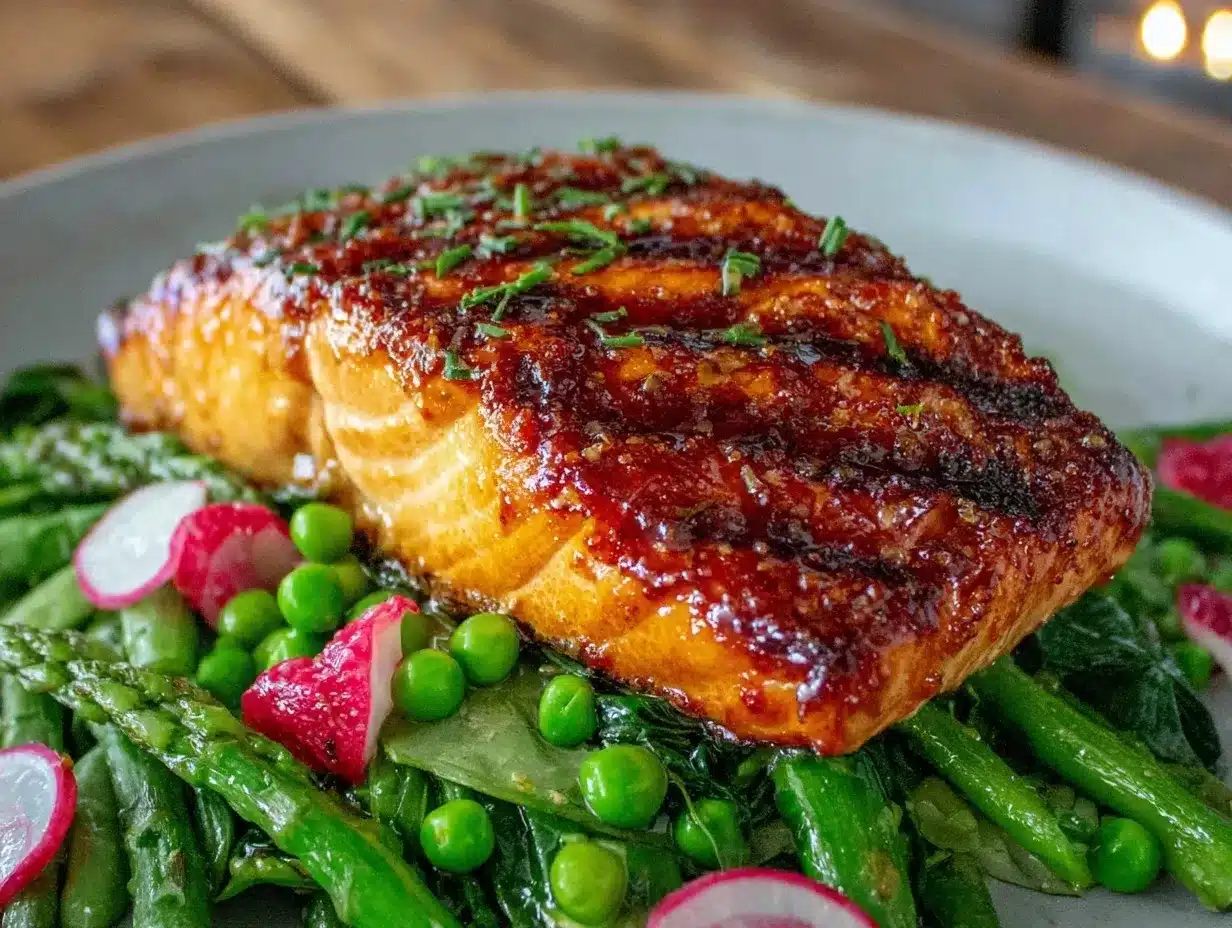
- Preheat your oven to 400°F (200°C). Line a baking sheet with parchment paper or foil to make cleanup a breeze. This step takes about 5 minutes.
- Prepare the glaze: In a small mixing bowl, whisk together 3 tablespoons honey, 2 tablespoons Dijon mustard, 1 tablespoon olive oil, minced garlic, and 1 teaspoon lemon juice until smooth. Season lightly with salt and pepper. Set aside while you prep the salmon and vegetables.
- Prep the spring vegetables: Rinse and trim asparagus, snap peas, and baby carrots. Slice the red onion into wedges. Toss all vegetables in a bowl with 1 tablespoon olive oil, salt, and pepper until evenly coated.
- Arrange the vegetables: Spread the coated veggies in an even layer on the baking sheet, leaving space in the center for the salmon fillets. This helps everything cook evenly and creates a beautiful presentation.
- Prepare the salmon: Pat the fillets dry with paper towels to ensure the glaze sticks well. Place the salmon skin-side down (if skin-on) in the center of the baking sheet.
- Brush the glaze: Generously brush the honey Dijon glaze over the top of each salmon fillet. Don’t be shy here—you want that glossy, sticky coating that’ll caramelize beautifully.
- Roast in the oven: Place the baking sheet in the preheated oven and roast for 12-15 minutes, or until salmon flakes easily with a fork and the vegetables are tender-crisp. If you want a bit more caramelization, you can broil for the last 1-2 minutes—just keep an eye so nothing burns.
- Check doneness: The salmon should reach an internal temperature of 145°F (63°C) if you’re using a thermometer. The vegetables should be vibrant and slightly crisp, not mushy.
- Garnish and serve: Remove from oven, sprinkle with fresh herbs if desired, and let it rest for 2-3 minutes before plating. This pause lets the juices settle and flavors deepen.
Pro tip: If your vegetables cook faster than the salmon, you can toss them under the broiler for a minute or two separately to get a nice char without overcooking the fish. Also, don’t skip patting the salmon dry—that simple step makes a huge difference in crispiness and glaze adherence.
Cooking Tips & Techniques
Cooking salmon to perfection can be tricky, but here’s what I’ve learned after plenty of trial and error with this recipe:
- Don’t overcrowd the pan. Giving the salmon and vegetables room helps them roast evenly rather than steam.
- Use room temperature salmon. Letting the fish sit out for 15 minutes before cooking helps it cook evenly without drying out.
- Brush on the glaze more than once. I like to brush once before roasting and again halfway through cooking for that extra sticky, flavorful finish.
- Watch the broiler closely. If you decide to broil for caramelization, it happens fast—usually under 2 minutes—so stand by.
- Timing is everything. Start roasting the vegetables first if they’re on the larger side, then add the salmon after 5 minutes to sync cooking times.
- Use a thermometer if unsure. Salmon is done at 145°F (63°C) internal temp, but many prefer it slightly less cooked. Just remember carryover cooking happens when resting.
I remember once rushing the glaze step, and the salmon came out a little bland—lesson learned! Taking a moment to whisk the glaze well and season properly really pays off. Also, multitasking is your friend here: while the oven does its job, you can prep a simple side salad or set the table.
Variations & Adaptations
This recipe is pretty flexible, and I’ve played around with several tasty versions:
- Low-carb option: Serve the glazed salmon with roasted cauliflower rice or sautéed greens instead of the spring vegetables.
- Seasonal swap: In summer, swap asparagus and snap peas for fresh green beans and cherry tomatoes. For fall, try roasted Brussels sprouts and butternut squash.
- Flavor twist: Add a teaspoon of smoked paprika or cayenne to the glaze for a smoky, spicy kick.
- Allergen-friendly: This recipe is naturally gluten-free and dairy-free. Just use a mustard brand that’s free from cross-contamination.
- Personal favorite: I once added a splash of soy sauce and grated ginger to the glaze for an Asian-inspired glaze that my family adored.
Feel free to make it your own! The honey Dijon base is a fantastic canvas for all kinds of flavor profiles.
Serving & Storage Suggestions
This dish tastes best served warm, straight from the oven when the glaze is still glossy and the vegetables have that perfect tender-crisp bite. Plate the salmon fillets atop the roasted spring vegetables, garnishing with fresh herbs like dill or parsley for a pop of color and brightness.
Pair it with a light white wine such as Sauvignon Blanc or a crisp sparkling water with lemon for a refreshing complement. For sides, a simple quinoa salad or crusty bread rounds out the meal beautifully.
To store leftovers, transfer salmon and vegetables into an airtight container and refrigerate for up to 3 days. When reheating, cover loosely with foil and warm in a 300°F (150°C) oven for about 10 minutes to prevent drying out. Microwave reheating works but watch the time to avoid overcooking.
Flavors actually deepen the next day, so this makes an excellent meal prep option. Just be mindful of texture changes in the veggies—some may soften more after refrigeration.
Nutritional Information & Benefits
This Easy Honey Dijon Glazed Salmon with Spring Vegetables is not only delicious but packs a nutritional punch. Each serving (one salmon fillet with veggies) roughly contains:
| Calories | 350-400 kcal |
|---|---|
| Protein | 35 grams |
| Fat | 18 grams (mostly healthy fats from salmon and olive oil) |
| Carbohydrates | 12 grams (mainly from honey and vegetables) |
| Fiber | 4 grams |
Salmon is an excellent source of omega-3 fatty acids, which support heart and brain health. The spring vegetables provide fiber, vitamins A and C, and antioxidants. The honey adds natural sweetness without refined sugars, and Dijon mustard contributes trace minerals and a little zing. This meal fits well into gluten-free, low-carb, and dairy-free diets, making it a healthful choice for many.
Conclusion
In the end, this Easy Honey Dijon Glazed Salmon with Spring Vegetables is a recipe worth keeping close. Its simplicity and fresh flavors make it a go-to when you want a tasty dinner without fuss. Honestly, it’s the kind of dish that invites you to slow down, savor each bite, and feel good about what you’re eating.
Don’t hesitate to tweak it to suit your taste—swap veggies, add a spice here or there, or try different glazes. I love this recipe because it reminds me of home and the joy of sharing meals with loved ones. If you give it a try, share your thoughts or any fun twists you add. I’m always excited to hear how recipes evolve in your kitchen!
Happy cooking, and here’s to many more delicious dinners!
FAQs
Can I use frozen salmon for this recipe?
Yes, just make sure to thaw it completely and pat dry before glazing and cooking to avoid excess moisture.
What if I don’t have honey on hand?
You can substitute maple syrup or agave nectar, though the flavor will be slightly different but still delicious.
How do I know when the salmon is cooked perfectly?
Look for the flesh to flake easily with a fork and an internal temperature of 145°F (63°C). The center should be opaque but moist.
Can I prepare this recipe ahead of time?
You can prep the glaze and chop vegetables in advance, but it’s best to cook just before serving for optimal texture and flavor.
Is it possible to make this recipe on the grill?
Absolutely! Use a grill-safe pan or foil packet to cook the salmon and vegetables, adjusting time to about 10-12 minutes over medium heat.
Pin This Recipe!
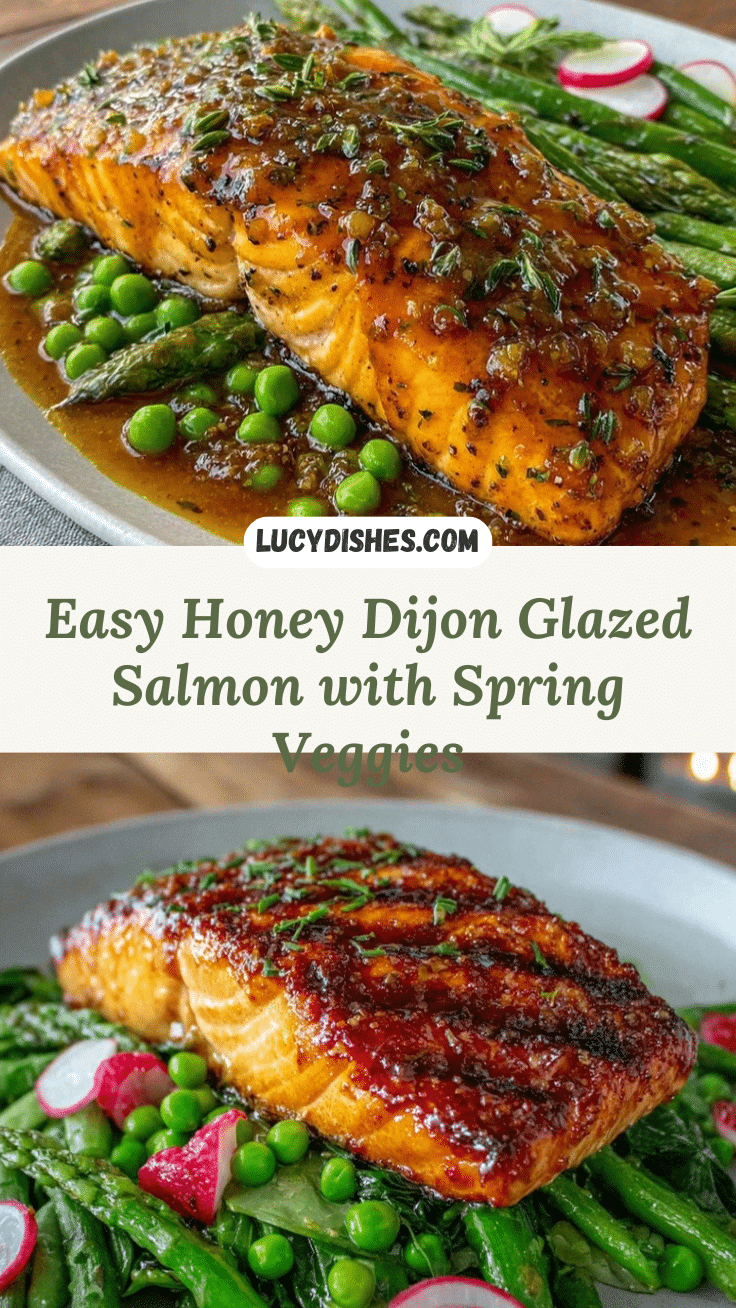
Easy Honey Dijon Glazed Salmon with Spring Vegetables
A quick and easy salmon recipe featuring a sticky honey Dijon glaze paired with crisp spring vegetables, perfect for a light and flavorful dinner.
- Prep Time: 10 minutes
- Cook Time: 15 minutes
- Total Time: 25 minutes
- Yield: 4 servings 1x
- Category: Main Course
- Cuisine: American
Ingredients
- 4 salmon fillets (6 oz / 170 g each), skin on or off depending on preference
- 3 tablespoons honey (raw or local honey recommended for best flavor)
- 2 tablespoons Dijon mustard (e.g., Grey Poupon)
- 1 tablespoon olive oil (extra virgin)
- 2 cloves garlic, minced
- 1 teaspoon fresh lemon juice
- Salt and freshly ground black pepper, to taste
- 1 cup asparagus spears, trimmed and cut into 2-inch pieces
- 1 cup sugar snap peas, trimmed
- 1 cup baby carrots, peeled
- 1 small red onion, sliced into wedges
- 1 tablespoon olive oil
- Salt and pepper, to taste
- Optional: fresh herbs like dill or parsley for garnish
Instructions
- Preheat your oven to 400°F (200°C). Line a baking sheet with parchment paper or foil.
- In a small mixing bowl, whisk together honey, Dijon mustard, olive oil, minced garlic, and lemon juice until smooth. Season with salt and pepper.
- Rinse and trim asparagus, snap peas, and baby carrots. Slice the red onion into wedges. Toss all vegetables with olive oil, salt, and pepper.
- Spread the coated vegetables evenly on the baking sheet, leaving space in the center for the salmon.
- Pat salmon fillets dry with paper towels. Place salmon skin-side down (if skin-on) in the center of the baking sheet.
- Brush the honey Dijon glaze generously over the top of each salmon fillet.
- Roast in the oven for 12-15 minutes, or until salmon flakes easily and vegetables are tender-crisp. Optionally broil for 1-2 minutes for extra caramelization.
- Check salmon internal temperature reaches 145°F (63°C).
- Remove from oven, garnish with fresh herbs if desired, and let rest for 2-3 minutes before serving.
Notes
Pat salmon dry before glazing for better glaze adherence and crispiness. Brush glaze twice for extra flavor. Watch broiler closely if using for caramelization. Use a thermometer to ensure salmon is cooked to 145°F (63°C).
Nutrition
- Serving Size: One salmon fillet wi
- Calories: 350400
- Sugar: 8
- Sodium: 150
- Fat: 18
- Saturated Fat: 3
- Carbohydrates: 12
- Fiber: 4
- Protein: 35
Keywords: salmon, honey Dijon glaze, spring vegetables, easy dinner, healthy, gluten-free, dairy-free, quick recipe