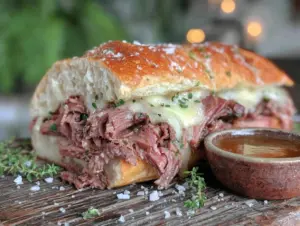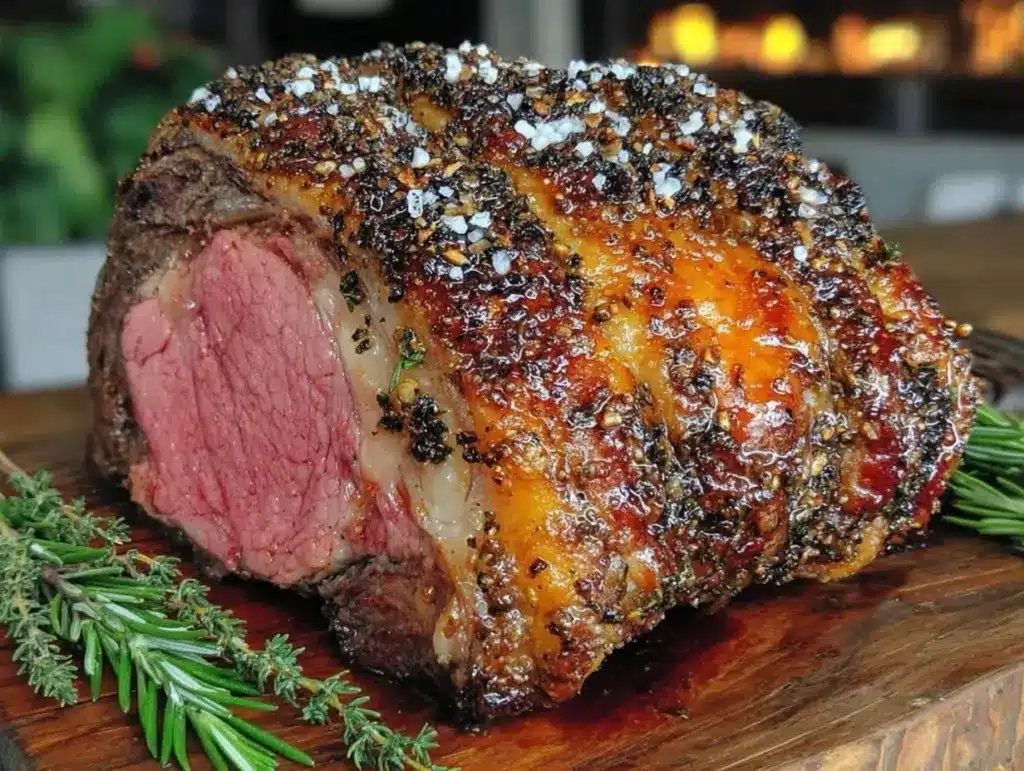
“You seriously have to try this standing rib roast,” my coworker said, sliding a thin slice of the leftover roast across the break room table. The rich aroma of roasted herbs and beef immediately made me pause mid-sip of my lukewarm coffee. Honestly, I was skeptical—roasts always seemed like a weekend marathon, not something a busy person like me could pull off without stress. But that bite? It was like the kind of comfort food that makes you forget everything else for a moment, the kind you want more of even after the day’s chaos.
I decided to give it a shot that very weekend. My first attempt was a little uneven—the crust too salty, the au jus a bit thin—but what surprised me most was how forgiving and satisfying the process became as I tweaked the recipe. I found myself making it not just once, but three times in a week. There’s something about the way the perfect standing rib roast pairs with a silky red wine au jus that makes even a late night in feel special. It’s a dish that asks for patience but rewards you like a warm hug after a long day.
What stuck with me most, though, was how this recipe changed my view of roast dinners. It’s not just a fancy meal reserved for holidays or big gatherings—it can be approachable, even for a midweek treat. And the au jus? Let’s just say it’s the kind of sauce that’ll have you licking your plate clean. So if you’ve ever thought perfect rib roast was out of reach, this recipe might just surprise you the way it did me.
Why You’ll Love This Recipe
After multiple trials in my small kitchen, this perfect standing rib roast recipe with easy red wine au jus sauce quickly became a go-to whenever I want something impressive yet manageable. Here’s why it’s worth your time:
- Quick & Easy: While roasting takes time, the hands-on prep is straightforward and comes together in under 30 minutes, making it great for organized home cooks.
- Simple Ingredients: No hard-to-find spices or specialty items—just quality beef, fresh herbs, and pantry staples like garlic and onion.
- Perfect for Special Occasions: Whether it’s a cozy dinner party or a celebratory feast, this roast impresses without the stress.
- Crowd-Pleaser: The tender, juicy meat paired with the rich, flavorful au jus consistently earns rave reviews from friends and family.
- Unbelievably Delicious: The crust develops a perfect caramelized texture while the inside stays melt-in-your-mouth tender.
What sets this apart from your average roast is the au jus sauce—it’s not just a drippy side but a deeply savory complement, thanks to a splash of red wine that adds complexity without overpowering. Plus, roasting at the right temperature and resting the meat properly ensures a flawless finish every time. It’s the kind of recipe that makes you close your eyes after the first bite and savor every moment.
This roast has become my way to turn an ordinary night into something memorable. For a fresh side, I often pair it with a crisp Greek cucumber salad to balance the rich flavors. If you’re craving another hearty dish, the moist homemade meatloaf is a comforting alternative that’s just as satisfying.
What Ingredients You Will Need
This recipe uses simple, wholesome ingredients to bring out the natural flavors of the beef and create a deeply satisfying au jus. Most are pantry staples or easy to find at any grocery store.
- For the Standing Rib Roast:
- Standing rib roast (bone-in, about 4-5 pounds / 1.8-2.3 kg) – choose USDA Choice or Prime for best marbling
- Olive oil (2 tablespoons) – helps the seasoning stick and promotes browning
- Garlic cloves (4, minced) – adds aromatic depth
- Fresh rosemary (2 tablespoons, chopped) – classic herb that pairs beautifully with beef
- Fresh thyme (1 tablespoon, chopped) – for subtle earthiness
- Kosher salt (2 teaspoons) – essential for seasoning and crust formation
- Freshly ground black pepper (1 teaspoon) – adds mild heat and flavor
- For the Red Wine Au Jus:
- Beef drippings (from roast) – the base of your au jus
- Dry red wine (1 cup / 240 ml) – I prefer Cabernet Sauvignon for richness
- Beef broth (1 cup / 240 ml) – homemade or low-sodium store-bought
- Shallots (2, finely chopped) – brings sweetness and complexity
- Garlic clove (1, minced)
- Fresh thyme sprigs (2) – for infusion
- Butter (1 tablespoon, cold) – for a glossy finish
- Salt and pepper to taste
If you want to swap fresh herbs, dried rosemary and thyme can be used, but reduce quantities to half. For a gluten-free au jus, ensure beef broth is labeled gluten-free. I’ve found that using fresh, quality ingredients here really makes a difference, especially the wine and herbs.
Equipment Needed
- Roasting pan with rack – to allow even heat circulation around the roast
- Instant-read meat thermometer – crucial for checking doneness without cutting into the roast
- Sharp carving knife – for smooth, clean slices
- Medium saucepan – to prepare the red wine au jus
- Wooden spoon or whisk – for deglazing and stirring the sauce
- Cutting board – preferably with grooves to catch juices
- Aluminum foil – to tent the roast during resting
If you don’t have a roasting rack, you can use a bed of chopped onions and carrots to elevate the roast slightly. For the thermometer, I recommend brands like ThermoPro for reliability without breaking the bank. Keeping your carving knife sharp will save you frustration and keep slices looking neat, which honestly makes the whole eating experience better.
Preparation Method
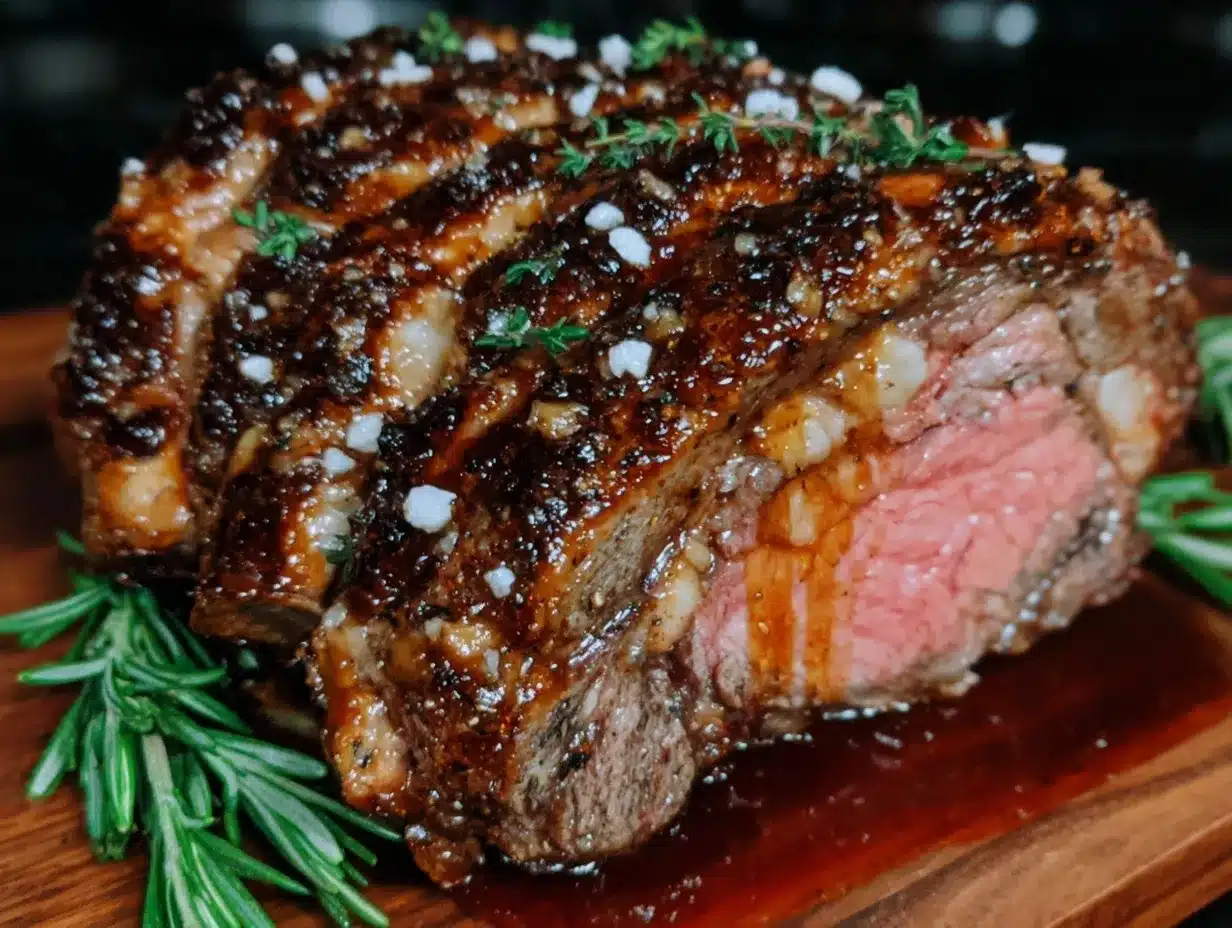
- Bring the Roast to Room Temperature (30-45 minutes): Remove the rib roast from the fridge and let it sit uncovered on the counter. This step helps the meat cook more evenly. You’ll notice the fat softening and the roast losing its chill.
- Preheat Your Oven to 450°F (232°C): A hot oven at the start helps create that delicious crust.
- Prepare the Herb Rub: In a small bowl, combine the olive oil, minced garlic, chopped rosemary, thyme, salt, and pepper. Rub this mixture all over the roast, making sure to cover the fat cap and sides evenly. The garlic and herbs will infuse the meat as it roasts.
- Place the Roast on the Rack: Set the roast fat side up on the roasting rack in your pan. Put the pan in the oven and roast at 450°F (232°C) for 15 minutes to kickstart browning.
- Reduce Oven Temperature to 325°F (163°C): Without opening the oven, lower the heat and continue roasting. Cook for about 13-15 minutes per pound (approximately 1-1.5 hours for a 4-5 pound roast), depending on your desired doneness:
- 125°F (52°C) for rare
- 135°F (57°C) for medium-rare (recommended)
- 145°F (63°C) for medium
- Check the Internal Temperature: Use your instant-read thermometer to check the thickest part of the roast (away from the bone). Remember, the temperature will rise about 5°F (3°C) while resting.
- Rest the Roast (20-30 minutes): Remove the roast from the oven and tent it loosely with foil. Resting allows juices to redistribute, making the meat juicy and tender.
- Make the Red Wine Au Jus: While the roast rests, pour off excess fat from the roasting pan, leaving the browned bits and drippings. Place the pan over medium heat on the stove, add shallots and garlic, sauté about 2 minutes. Pour in the red wine and beef broth, scraping the bottom to deglaze. Add thyme sprigs and simmer until reduced by half (about 10-15 minutes). Strain if desired, then whisk in cold butter for shine and richness. Season with salt and pepper.
- Carve and Serve: Slice the roast against the grain in ½-inch (1.25 cm) thick pieces. Serve immediately with generous spoonfuls of the red wine au jus.
Pro tip: The smell of the roast and wine sauce mingling is unbeatable. Try to resist sneaking bites—unless you want a very empty platter later!
Cooking Tips & Techniques
One big lesson I learned early on: don’t skip resting the meat. It feels tempting to carve right away, but waiting makes the difference between juicy slices and dry disappointments. Also, a hot initial roast at 450°F really helps the crust develop without overcooking the inside.
When making the au jus, patience pays off. Let the wine reduce slowly to concentrate flavors. Rushing this step leads to a thin, bland sauce. I’ve made the mistake of adding salt too early—wait until the reduction is nearly done so you don’t over-season.
Using a meat thermometer is a game changer. Guessing by time alone can result in over or underdone meat. I like to insert the probe horizontally, avoiding bones, for the most accurate reading.
Lastly, carving against the grain is crucial for tenderness. It might feel awkward at first, but once you get the hang of it, your slices will be much more enjoyable to eat.
Variations & Adaptations
This standing rib roast recipe is versatile and lends itself well to tweaks:
- Herb Variations: Swap rosemary and thyme with sage and oregano for a Mediterranean twist. I once tried adding smoked paprika to the rub for a subtle smoky note that was surprisingly good.
- Seasonal Additions: Roast garlic cloves or shallots alongside the beef for sweet, caramelized bites. In winter, a touch of horseradish in the au jus adds a warming kick.
- Cooking Method: If you don’t have an oven large enough, try a reverse sear technique: slow roast at low temp (250°F/120°C), then finish with a quick high-heat sear in a cast iron pan for crust.
- Dietary Adjustments: For gluten-free, ensure your broth contains no wheat additives. To cut carbs, pair with mashed cauliflower instead of traditional potatoes.
Once, I made a smaller 3-pound roast for a midweek dinner and adjusted times accordingly. It turned out just as delicious and was perfect for leftovers the next day.
Serving & Storage Suggestions
Serve the rib roast warm, sliced thick enough to enjoy the tender texture but thin enough for easy bites. The red wine au jus is perfect spooned generously over the meat and can double as a dip for sides.
This roast pairs beautifully with roasted root vegetables, creamy mashed potatoes, or a fresh side like the easy salmon bowls if you want a lighter contrast on the table.
Store leftover roast wrapped tightly in foil or an airtight container in the fridge for up to 4 days. Au jus keeps well refrigerated for about 3 days. For longer storage, freeze sliced meat and sauce separately in freezer-safe containers for up to 3 months.
To reheat, warm gently in a low oven (250°F/120°C) covered with foil, or briefly in a skillet with a splash of au jus to keep it moist. Flavors deepen overnight, so leftovers often taste even better the next day!
Nutritional Information & Benefits
A 4-ounce (113 grams) serving of standing rib roast provides about 320 calories, 25 grams of protein, and 22 grams of fat, mostly healthy monounsaturated fats from the beef. It’s a great source of iron, zinc, and B vitamins, which support energy and immune function.
The fresh herbs add antioxidants without adding calories. Using moderate amounts of red wine in the au jus adds flavor but minimal alcohol content remains after cooking.
This dish fits well into low-carb or keto eating styles due to its high protein and fat content. Just watch portions if you’re mindful of saturated fat. For gluten-sensitive diners, it’s naturally gluten-free if you choose appropriate broth.
Authentically homemade, this roast can be part of a balanced diet when paired with plenty of veggies and wholesome sides, like the vibrant fresh cucumber salad with feta.
Conclusion
This perfect standing rib roast with red wine au jus is one of those recipes that proves fancy meals don’t have to be intimidating. With simple ingredients, straightforward steps, and a little patience, you get a feast that feels special and tastes incredible every time. I love how it turns any dinner into an occasion, no matter how hectic the day was.
Feel free to play around with herbs, sides, and cooking methods to make it your own. There’s nothing quite like the satisfaction of slicing into a beautifully roasted rib roast that’s juicy and bursting with flavor. I’m excited for you to try it and make it part of your own kitchen stories.
When you do, I’d love to hear how it goes—drop a comment or share your twists. Here’s to many delicious meals ahead!
FAQs
- How do I know when the standing rib roast is done? Use an instant-read thermometer inserted into the thickest part of the meat (away from bone). Aim for 135°F (57°C) for medium-rare, then rest before carving.
- Can I prepare the roast ahead of time? You can season the roast up to 24 hours in advance and keep it covered in the fridge. Bring it to room temperature before roasting.
- What if I don’t have red wine for the au jus? Substitute with extra beef broth and a splash of balsamic vinegar or grape juice to add acidity and depth.
- Is standing rib roast better bone-in or boneless? Bone-in roasts tend to be juicier and more flavorful, plus the bones help with even cooking.
- How should I carve the roast? Let it rest, then slice against the grain into ½-inch (1.25 cm) slices for the most tender bites.
Pin This Recipe!
Perfect Standing Rib Roast Recipe with Easy Red Wine Au Jus Sauce
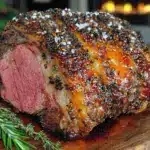
A tender and juicy standing rib roast paired with a rich, flavorful red wine au jus sauce. This recipe is approachable for home cooks and perfect for special occasions or a comforting midweek treat.
- Prep Time: 30-45 minutes
- Cook Time: 1 to 1.5 hours
- Total Time: 1 hour 45 minutes to 2 hours 15 minutes
- Yield: 8 servings
- Category: Main Course
- Cuisine: American
Ingredients
- Standing rib roast (bone-in, about 4-5 pounds)
- Olive oil (2 tablespoons)
- Garlic cloves (4, minced)
- Fresh rosemary (2 tablespoons, chopped)
- Fresh thyme (1 tablespoon, chopped)
- Kosher salt (2 teaspoons)
- Freshly ground black pepper (1 teaspoon)
- Beef drippings (from roast)
- Dry red wine (1 cup, preferably Cabernet Sauvignon)
- Beef broth (1 cup, homemade or low-sodium store-bought)
- Shallots (2, finely chopped)
- Garlic clove (1, minced)
- Fresh thyme sprigs (2)
- Butter (1 tablespoon, cold)
- Salt and pepper to taste
Instructions
- Bring the rib roast to room temperature by removing it from the fridge and letting it sit uncovered on the counter for 30-45 minutes.
- Preheat your oven to 450°F (232°C).
- In a small bowl, combine olive oil, minced garlic, chopped rosemary, thyme, kosher salt, and black pepper. Rub this herb mixture all over the roast, covering the fat cap and sides evenly.
- Place the roast fat side up on a roasting rack in a roasting pan. Roast in the oven at 450°F for 15 minutes to develop a crust.
- Reduce the oven temperature to 325°F (163°C) without opening the oven. Continue roasting for about 13-15 minutes per pound, depending on desired doneness (125°F for rare, 135°F for medium-rare, 145°F for medium).
- Use an instant-read thermometer to check the internal temperature at the thickest part away from the bone. Remember the temperature will rise about 5°F while resting.
- Remove the roast from the oven and tent loosely with aluminum foil. Rest for 20-30 minutes to allow juices to redistribute.
- While the roast rests, prepare the red wine au jus: pour off excess fat from the roasting pan, leaving browned bits and drippings. Place the pan over medium heat, add shallots and garlic, and sauté for about 2 minutes.
- Pour in the red wine and beef broth, scraping the bottom to deglaze. Add thyme sprigs and simmer until reduced by half (about 10-15 minutes).
- Strain the sauce if desired, then whisk in cold butter for shine and richness. Season with salt and pepper to taste.
- Carve the roast against the grain into ½-inch thick slices and serve immediately with generous spoonfuls of the red wine au jus.
Notes
Rest the meat for 20-30 minutes after roasting to ensure juicy, tender slices. Use an instant-read thermometer for accurate doneness. Let the red wine au jus reduce slowly for concentrated flavor and add salt near the end to avoid over-seasoning. Carve against the grain for best tenderness. If no roasting rack is available, use a bed of chopped onions and carrots to elevate the roast.
Nutrition
- Serving Size: 4 ounces (113 grams)
- Calories: 320
- Sodium: 400
- Fat: 22
- Saturated Fat: 9
- Carbohydrates: 2
- Protein: 25
Keywords: standing rib roast, rib roast recipe, red wine au jus, roast beef, holiday roast, beef roast, easy roast recipe, special occasion dinner