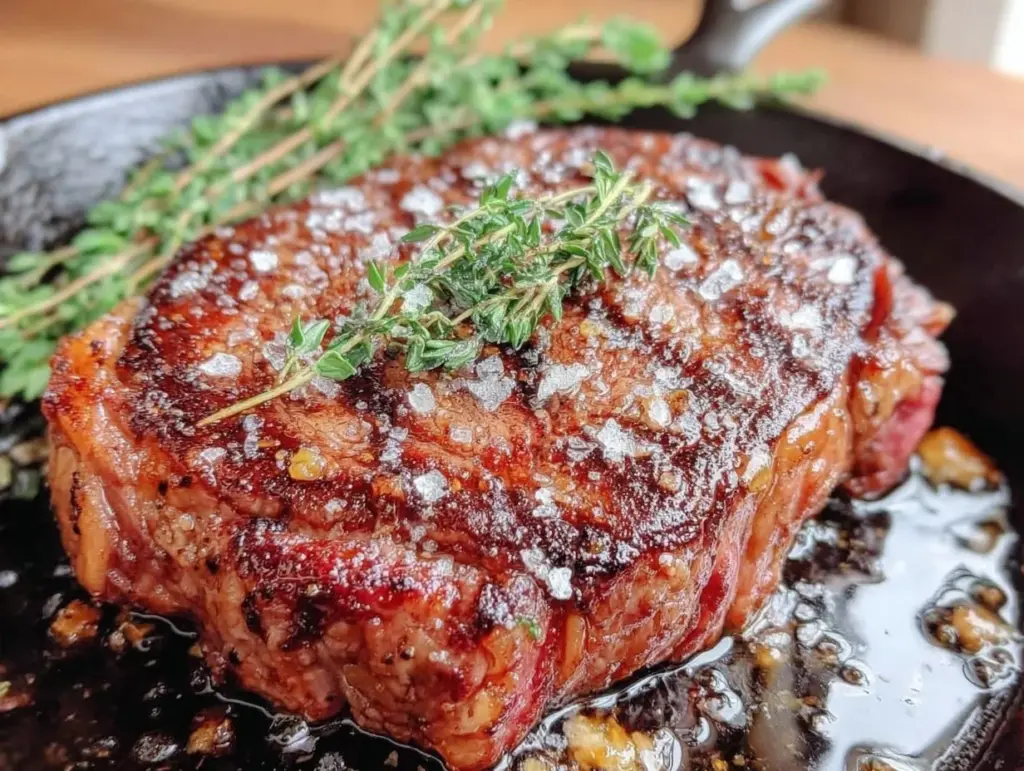
“You sure you wanna sear it last?” my roommate asked, eyeing the thick ribeye I’d just pulled from the fridge. Honestly, I was skeptical too. I’d always done a quick sear first, then oven finish—classic method, right? But that night, tired and craving a solid steak after an exhausting day, I decided to try something different. The reverse sear method sounded fancy, but really, it’s just flipping the script on steak cooking. I slow-baked the ribeye to the perfect rare center, then slapped it onto a screaming-hot cast iron skillet, and the magic happened.
The sizzle was louder than I expected, the crust caramelized beautifully, and the steak stayed juicy—like it held onto every bit of its flavor in a way I hadn’t experienced before. I swear I could hear the steak whisper, “Finally, the respect I deserve.” This wasn’t just a meal; it felt like redemption after a week of hasty dinners and microwave meals. Since that night, the reverse seared ribeye steak has become my go-to for when I want something simple but seriously satisfying, especially when paired with a homemade side like the chicken and veggie bowl I often whip up for a balanced meal.
What stuck with me most was how the cast iron pan brought out a crust that was crisp without a hint of bitterness, and the ribeye stayed juicy inside—not dry or overcooked like many steaks I’d had before. It’s a quiet kind of win, the kind that sneaks up on you and makes you rethink all your steak attempts. If you’ve ever felt unsure about cooking that perfect ribeye at home, this method offers a reliable reset. No fancy grills, no guesswork, just a little patience and your trusty cast iron skillet. It’s become one of those recipes I’m quietly proud of—easy, delicious, and just right.
Why You’ll Love This Recipe
Cooking a ribeye steak at home can feel intimidating, but this reverse seared ribeye steak in cast iron recipe breaks things down so even a busy weeknight cook can nail it. After testing it multiple times (yes, I made this almost every weekend for a month), here’s why it’s a keeper:
- Quick & Easy: The active cooking time is short—about 10 minutes—making it perfect for nights when you want steak without the fuss.
- Simple Ingredients: No need for exotic spices or expensive marinades; just quality ribeye, salt, pepper, and butter.
- Perfect for Dinner Parties: It’s impressive enough to serve guests but straightforward enough to make without stress.
- Crowd-Pleaser: Whether it’s steak lovers or those who usually shy away from red meat, the texture and flavor win them over every time.
- Unbelievably Delicious: The slow heat inside the oven lets the steak cook evenly, locking in juices, and the final sear adds that irresistible crust.
What sets this ribeye apart is the way the cast iron skillet creates a sear that’s crisp but not burnt, paired with a tender inside thanks to the reverse sear technique. Unlike the traditional high-heat-first method, this recipe lets you control the doneness without the risk of overcooking. If you’re curious about pairing this with fresh sides, something like the Trader Joe’s harvest grain salad bowl goes perfectly, balancing richness with fresh, wholesome flavors.
Honestly, this recipe is comfort food done right—no shortcuts that sacrifice flavor or texture, just a method that rewards patience and a good pan. Give it a try, and you might just find yourself making it again and again, like I did.
What Ingredients You Will Need
This recipe uses straightforward, high-quality ingredients that work together to bring out the best in your ribeye. You don’t need a long list or hard-to-find items—just the essentials to keep the steak juicy and flavorful.
- Ribeye Steak: 1 thick-cut ribeye steak, about 1.5 to 2 inches thick (roughly 12-16 oz / 340-450 g). Look for well-marbled cuts from a trusted butcher for the best flavor.
- Salt: Kosher salt or sea salt (coarse grind adds a nice crust). I personally prefer Diamond Crystal kosher salt for even seasoning.
- Black Pepper: Freshly ground coarse black pepper for that classic steakhouse bite.
- Unsalted Butter: 2 tablespoons (about 30 g), softened. Adds richness and helps develop a golden sear.
- Garlic Cloves: 2 cloves, smashed (optional, but recommended for flavoring the butter).
- Fresh Herbs: A few sprigs of thyme or rosemary (optional, for aromatics during searing).
Substitutions:
- If you don’t have unsalted butter, salted butter works fine but reduce additional salt.
- For a dairy-free option, swap butter with a high smoke point oil like avocado or grapeseed oil for searing.
- If ribeye isn’t available, a New York strip or boneless sirloin can work, but thickness matters for reverse searing.
These ingredients are pantry staples or easy to find in most grocery stores, so you likely won’t need a special run to the market. The simplicity here lets the quality of the ribeye shine.
Equipment Needed
- Cast Iron Skillet: Essential for that perfect sear. If you don’t have cast iron, a heavy stainless steel pan works, but cast iron’s heat retention is hard to beat.
- Oven: For the low-and-slow cooking stage before searing.
- Meat Thermometer: Highly recommended to monitor internal temperature without guessing. Instant-read thermometers like ThermoWorks Thermapen are great but even a budget-friendly one works.
- Wire Rack and Baking Sheet: To let the steak cook evenly in the oven without sitting in its juices.
- Tongs: For safely flipping the steak during searing.
- Aluminum Foil: For resting the steak post-sear.
Pro tip: Season your cast iron skillet well to prevent sticking and achieve that beautiful crust. I keep mine seasoned with a little vegetable oil after each use, which makes searing easier and cleanup less of a chore. If you’re on a budget, you can find affordable cast iron pans that work just fine for this recipe—no need to splurge.
Preparation Method
- Bring the Steak to Room Temperature: Take your ribeye out of the fridge 30-45 minutes before cooking. This helps it cook evenly and reduces the risk of a cold center.
- Preheat Your Oven: Set it to 275°F (135°C). This low temperature slowly warms the steak through without drying it out.
- Season the Steak: Pat the ribeye dry with paper towels. Generously season both sides with kosher salt and freshly ground black pepper. Don’t be shy—the seasoning forms the backbone of the crust.
- Place Steak on Wire Rack: Set the steak on a wire rack over a rimmed baking sheet. This setup allows air circulation around the steak, cooking it evenly on all sides.
- Cook in the Oven: Insert an instant-read thermometer probe if you have one. Bake the steak for about 20-30 minutes, or until the internal temperature reaches 120°F (49°C) for rare, 125°F (52°C) for medium-rare. Check after 20 minutes to avoid overcooking.
- Heat Cast Iron Skillet: While the steak is in the oven, place your cast iron skillet on the stove over high heat. Let it get smoking hot—this usually takes 5-7 minutes. A hot pan is key for that iconic sear.
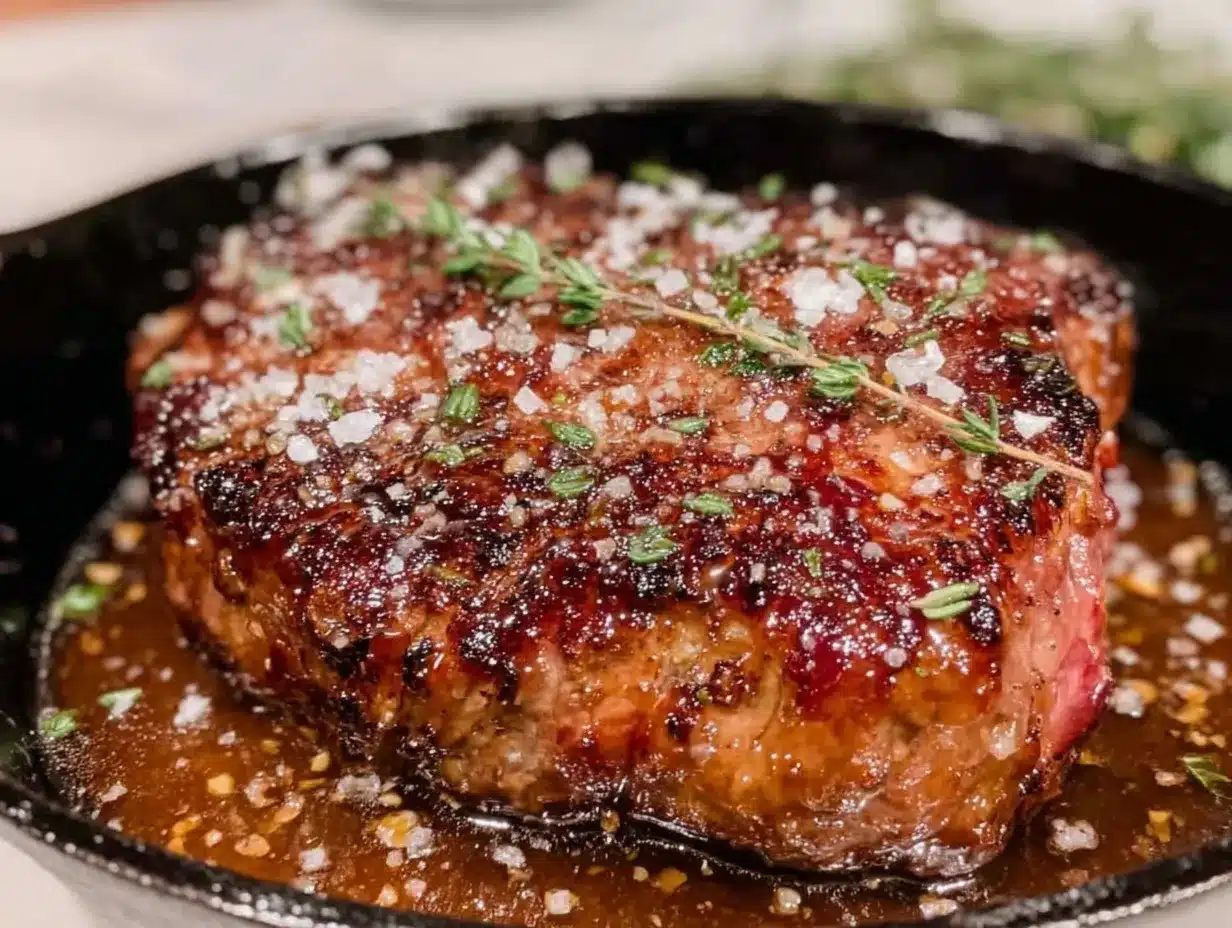
- Sear the Steak: Add 1 tablespoon of butter to the pan, then carefully place the steak in the skillet. Sear for about 1-2 minutes on each side, until a deep brown crust forms. Add smashed garlic cloves and fresh herbs to the pan, basting the steak with melted butter for extra flavor.
- Rest the Steak: Transfer the ribeye to a plate and tent loosely with foil. Rest for 5-10 minutes—this lets the juices redistribute inside, making the steak juicy and tender when you slice.
- Slice and Serve: Slice against the grain and serve immediately. The steak should be warm, juicy, and have that perfect crust on the outside with a rosy pink interior.
Common hiccup? Overcrowding the pan during sear. One steak at a time works best to keep that intense heat. If you want, you can finish the meal with a simple side like the crispy chicken broccoli rice casserole to round out the plate with homey vibes.
Cooking Tips & Techniques
Getting a perfect reverse seared ribeye steak isn’t just about following steps; there’s a bit of art to it, too. Here are some tips I’ve picked up through trial, error, and plenty of hungry taste tests:
- Patience is your friend: Don’t rush the oven stage. The slow warm-up ensures the steak cooks evenly and stays juicy inside.
- Don’t skip the rest: Resting is crucial. I’ve ruined steaks by slicing too soon and losing all those precious juices on the cutting board.
- Use a thermometer: Guesswork is a gamble. An instant-read thermometer helps nail your preferred doneness every time.
- Get your pan smoking hot: The sear happens fast; if the pan isn’t hot enough, you’ll get a grayish crust instead of that beautiful caramelized crust.
- Baste with butter and aromatics: Adding garlic and herbs to the butter while searing infuses the steak with extra flavor and gives you that rich, savory finish.
- Avoid flipping too often: Let each side get a proper crust before flipping. I usually flip once per side.
- Dry the steak thoroughly: Moisture is the enemy of a good sear. Pat it dry before seasoning.
One time I forgot to preheat my skillet enough and ended up with a pale crust. Lesson learned: wait for that smoke! Also, multitasking helps—while the steak’s in the oven, I prep sides or clean up to save time.
Variations & Adaptations
This reverse seared ribeye steak is pretty versatile, so feel free to make it your own:
- Herb Butter Finish: Instead of just butter, mix softened butter with minced garlic, parsley, and a squeeze of lemon juice, then dollop on the steak while resting.
- Spice Rub: Add a rub with smoked paprika, cumin, and cayenne before cooking for a smoky, spicy kick.
- Oven Grill Option: If you don’t have a cast iron skillet, you can finish the steak under a broiler for 1-2 minutes per side, but watch closely to avoid burning.
- Dietary Adaptation: Use ghee or coconut oil instead of butter for dairy-free cooking.
- Seasonal Twist: Top the steak with sautéed mushrooms or caramelized onions for an earthy complement in fall or winter months.
Personally, I tried finishing the steak with a quick pan sauce made from the drippings, a splash of red wine, and a pat of butter—game changer for a fancy dinner without extra fuss.
Serving & Storage Suggestions
Serve your reverse seared ribeye steak hot off the resting plate. It shines best when sliced thinly against the grain, revealing a juicy pink center and a crust that holds its own. A sprinkle of flaky sea salt just before serving adds a nice crunch and flavor boost.
For sides, this steak pairs beautifully with roasted or sautéed vegetables, creamy mashed potatoes, or even a crisp salad like the harvest grain salad bowl for something lighter. A full-bodied red wine or a robust beer complements the rich flavors.
Storage:
- Refrigerate leftover steak in an airtight container for up to 3 days.
- To reheat, gently warm in a 250°F (120°C) oven until just warmed through or briefly pan-sear to refresh the crust.
- Avoid microwaving if you want to keep the texture intact—it tends to dry steak out.
Flavors often deepen after a day in the fridge, so leftovers can be surprisingly good—great for a quick steak sandwich or chopped into a salad.
Nutritional Information & Benefits
A 12-ounce (340 g) ribeye steak cooked with this method contains approximately:
| Nutrient | Amount |
|---|---|
| Calories | 850-900 kcal |
| Protein | 65-70 g |
| Fat | 65-70 g (mostly from marbling and butter) |
| Carbohydrates | 0 g |
Ribeye is rich in iron and B vitamins, supporting energy and muscle function. The marbling fat adds flavor and satiety, though it’s best enjoyed in moderation. This recipe is naturally gluten-free and low-carb, fitting easily into paleo, keto, or whole-food diets. Just be mindful of portion sizes if you’re watching saturated fat intake.
From my own experience, this steak satisfies cravings and feels nourishing without leaving you sluggish—perfect for a balanced approach to indulgence.
Conclusion
This perfect juicy reverse seared ribeye steak in cast iron is a game-changer for anyone wanting steakhouse-quality results at home without complicated steps. It’s straightforward, reliable, and nails that balance of juicy interior and crispy crust every time. I love how it turns a simple piece of meat into something special, whether it’s a quiet night for one or a weekend dinner with friends.
Feel free to tweak the seasoning, add your favorite herbs, or try out the variations to make it your own. If you’ve got your own twists, I’d love to hear about them—drop a comment or share your version. Remember, great steaks don’t need to be complicated—they just need a little patience and good cast iron.
Happy cooking, and here’s to many delicious steaks ahead!
Frequently Asked Questions
What is reverse searing, and why is it better?
Reverse searing means cooking the steak slowly at low heat first, then searing it hot at the end. This method ensures even cooking and a juicy center with a perfect crust, reducing the risk of overcooking.
Can I use this method for other cuts of steak?
Yes! Thick cuts like New York strip, filet mignon, or even thick pork chops work well with reverse searing.
How do I know when the steak is done?
Use an instant-read thermometer to check internal temperature. For medium-rare, aim for about 130°F (54°C) after resting.
Do I need to rest the steak after searing?
Absolutely. Resting for 5-10 minutes lets the juices redistribute so the steak stays moist and tender.
Can I prepare the steak ahead of time?
You can season the steak and keep it in the fridge for a few hours before cooking, but for best results, cook it fresh. The reverse sear method is quick once you’re ready.
Pin This Recipe!
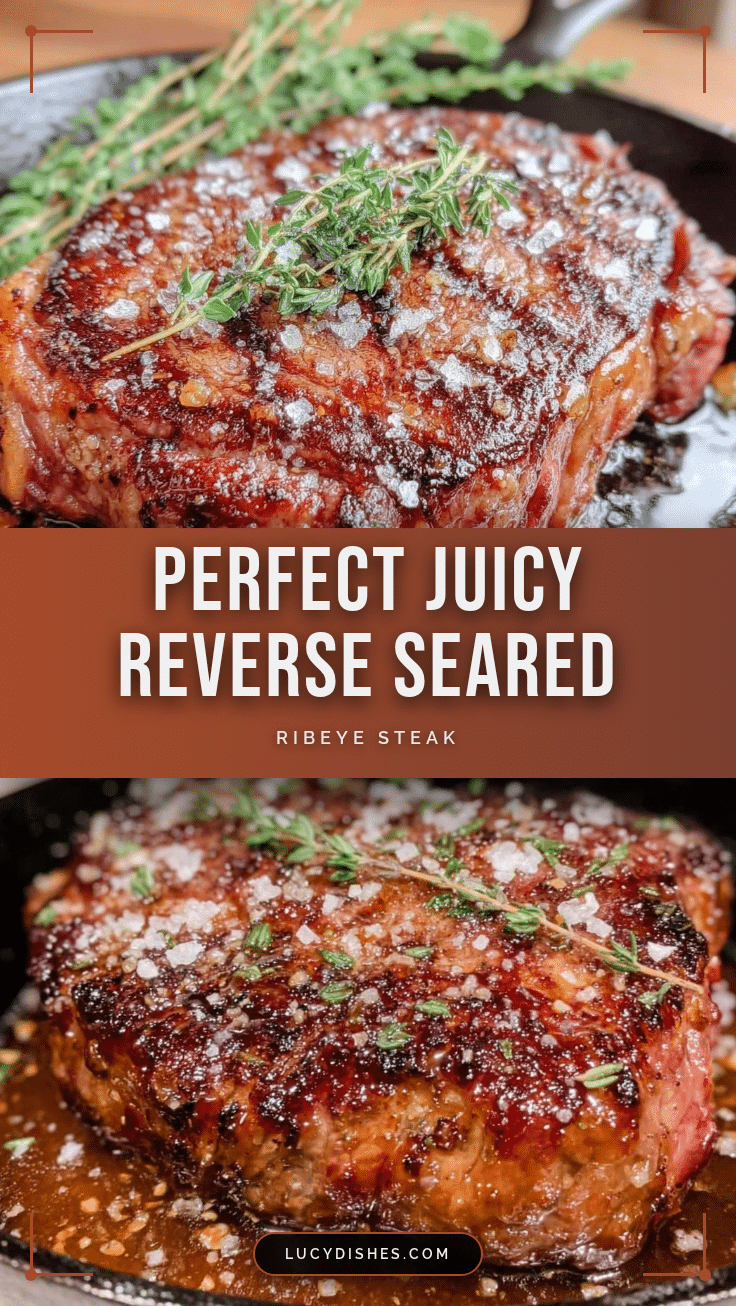
Perfect Juicy Reverse Seared Ribeye Steak Cast Iron Recipe Easy Guide
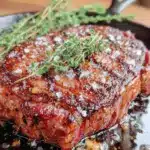
This reverse seared ribeye steak recipe uses a slow oven cook followed by a hot cast iron sear to achieve a juicy interior and a perfectly caramelized crust. It’s simple, reliable, and perfect for steak lovers seeking restaurant-quality results at home.
- Prep Time: 45 minutes (including bringing steak to room temperature)
- Cook Time: 30 minutes (20-30 minutes in oven + 5-7 minutes searing)
- Total Time: 1 hour 15 minutes
- Yield: 1 serving 1x
- Category: Main Course
- Cuisine: American
Ingredients
- 1 thick-cut ribeye steak, about 1.5 to 2 inches thick (12–16 oz / 340–450 g)
- Kosher salt or sea salt (coarse grind preferred)
- Freshly ground coarse black pepper
- 2 tablespoons unsalted butter, softened (about 30 g)
- 2 garlic cloves, smashed (optional)
- A few sprigs of fresh thyme or rosemary (optional)
Instructions
- Bring the ribeye steak to room temperature by removing it from the fridge 30-45 minutes before cooking.
- Preheat your oven to 275°F (135°C).
- Pat the steak dry with paper towels. Generously season both sides with kosher salt and freshly ground black pepper.
- Place the steak on a wire rack set over a rimmed baking sheet to allow air circulation.
- Insert an instant-read thermometer probe if available. Bake the steak in the oven for 20-30 minutes, or until the internal temperature reaches 120°F (49°C) for rare or 125°F (52°C) for medium-rare. Check after 20 minutes to avoid overcooking.
- While the steak cooks, heat a cast iron skillet on the stove over high heat until smoking hot (about 5-7 minutes).
- Add 1 tablespoon of butter to the skillet, then carefully place the steak in the pan. Sear for 1-2 minutes on each side until a deep brown crust forms. Add smashed garlic cloves and fresh herbs to the pan and baste the steak with melted butter for extra flavor.
- Transfer the steak to a plate and tent loosely with aluminum foil. Rest for 5-10 minutes to allow juices to redistribute.
- Slice the steak against the grain and serve immediately.
Notes
Patience is key—do not rush the oven stage to ensure even cooking and juiciness. Rest the steak after searing to redistribute juices. Use a thermometer to avoid overcooking. Avoid overcrowding the pan during searing; sear one steak at a time. Season cast iron skillet well to prevent sticking and achieve a beautiful crust.
Nutrition
- Serving Size: 1 ribeye steak (12-1
- Calories: 850900
- Fat: 6570
- Saturated Fat: 2530
- Protein: 6570
Keywords: reverse sear, ribeye steak, cast iron skillet, steak recipe, juicy steak, easy steak recipe, dinner party steak