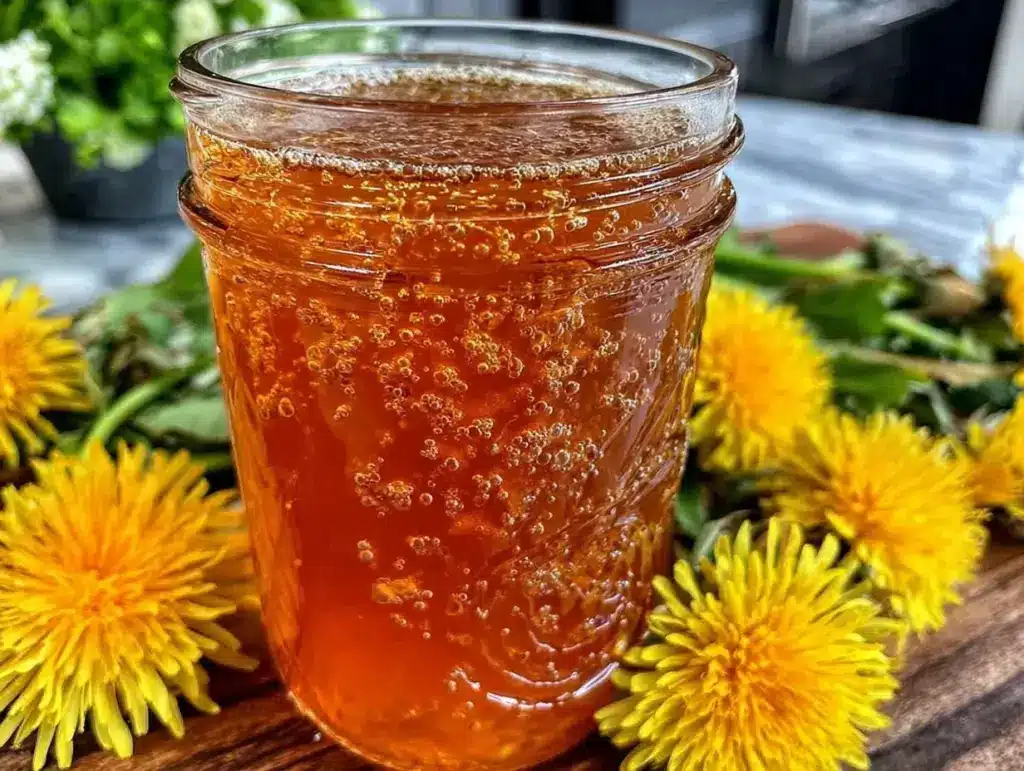
“You’re telling me we’re making wine from dandelions?” my skeptical friend asked as I held up a jar brimming with golden petals. Honestly, I had my doubts too when I first stumbled upon this easy refreshing dandelion wine recipe for spring foraging. It all began one breezy afternoon when I decided to take a slow walk through a nearby meadow—just to clear my head after a whirlwind week. The scent of fresh grass, the buzz of bees, and those bright yellow dandelion flowers everywhere sparked a curiosity that I couldn’t shake.
I remembered my grandmother mentioning dandelion wine once, but the idea seemed a little old-fashioned and complicated. Yet, armed with a few basic ingredients and a bit of patience, I gave it a try. The result? A surprisingly crisp, floral, and lightly sweet homemade wine that felt like spring captured in a glass. This recipe isn’t about fancy equipment or rare ingredients—it’s about enjoying the season’s gifts and turning something wild and overlooked into a delightful drink.
What stuck with me was how this easy refreshing dandelion wine recipe for spring foraging became more than just a project; it was a small celebration of nature’s abundance and a quiet reminder that sometimes the simplest things bring the most joy. No fuss, just the buzz of bees and the gentle fizz of fermentation waiting to surprise you.
Why You’ll Love This Recipe
After making this dandelion wine several times, I’ve come to appreciate why it’s such a keeper. Here’s what makes it stand out:
- Quick & Easy: You can gather the dandelions and get the mixture started in under 30 minutes, making it perfect for casual spring afternoons spent outside.
- Simple Ingredients: No need for trips to specialty stores—dandelions, sugar, lemon, and yeast are all you need.
- Perfect for Spring Celebrations: Whether it’s a backyard gathering or a quiet evening, this wine adds a fresh, floral note that’s just right for the season.
- Crowd-Pleaser: The subtle sweetness and light fizz make it a hit with friends, even those who usually avoid homemade brews.
- Unbelievably Delicious: The floral aroma combined with a touch of citrus creates a refreshing balance you won’t find in store-bought wines.
This recipe isn’t your typical fruit wine. The secret lies in gently extracting the delicate flavors of dandelion petals without any bitterness. I learned early on that picking the flowers before they go to seed and using fresh lemon juice makes a world of difference. Plus, the fermentation process is forgiving, so even if you’re new to home winemaking, you’re likely to get a tasty result.
If you’ve ever tried making homemade drinks like kombucha or berry wines, you’ll find this process refreshingly straightforward. And it pairs beautifully with light dishes like my fresh Lebanese fattoush salad, bringing a vibrant spring vibe to your table.
What Ingredients You Will Need
This recipe uses simple, wholesome ingredients to deliver bold flavor and satisfying texture without the fuss. Most of these are pantry staples or easy to find during spring foraging.
- Dandelion Flowers: About 8 cups of fresh, bright yellow petals (just the petals, no green parts) – freshly picked from pesticide-free areas.
- Granulated Sugar: 4 cups (800 g) – the backbone that feeds fermentation and balances the floral notes.
- Water: 1 gallon (3.8 liters) – preferably filtered or spring water for the cleanest taste.
- Lemon Juice: Juice of 2 large lemons (about ½ cup or 120 ml) – adds brightness and helps preserve the wine.
- Orange: 1 medium orange, sliced thinly – adds a subtle citrus aroma.
- Yeast: ½ teaspoon wine yeast or champagne yeast (like Lalvin EC-1118) – ensures a smooth and controlled fermentation.
- Optional Spices: A couple of crushed cloves or a cinnamon stick for a warm undertone (adds complexity but can be skipped).
When foraging, I always pick flowers on a dry day, early morning, before the sun gets too hot—that’s when the petals are freshest and most fragrant. If fresh dandelions aren’t an option, dried petals can work but expect a milder flavor.
For sugar, I prefer organic cane sugar for a cleaner taste, but white granulated sugar works just fine. If you want to experiment, try raw honey as a partial substitute—it adds a lovely depth but slows fermentation.
For lemon and orange, organic is best, since their peels come into contact with the wine during brewing. These citrus fruits balance the floral sweetness and prevent the wine from tasting flat.
Equipment Needed
- Large Glass or Food-Grade Plastic Fermentation Vessel: At least 1-gallon (3.8 liters) capacity – wide-mouth jars or carboys work well.
- Fine Mesh Strainer or Cheesecloth: To separate the petals from the liquid after steeping.
- Measuring Cups and Spoons: For accurate sugar and yeast quantities.
- Stirring Spoon: Long-handled, preferably wooden or food-safe plastic.
- Airlock and Stopper: Optional but recommended to allow CO2 to escape while keeping air out.
- Clean Bottles with Corks or Screw Caps: For storing the finished wine.
If you don’t have a fancy fermentation vessel, a large glass jar with a loose-fitting lid can do the trick—just remember to “burp” it daily to release built-up gases. I’ve also used regular kitchen strainers and coffee filters in a pinch when cheesecloth wasn’t handy.
Keeping everything sanitized is key; I usually rinse tools with boiling water or a no-rinse sanitizer, especially when working with yeast. It might sound nitpicky, but it really helps avoid off-flavors.
Preparation Method
- Pick and Prepare the Dandelions: Gather about 8 cups of dandelion petals, avoiding any green parts as they can add bitterness. Rinse gently in cool water to remove dirt and tiny bugs. Drain well (about 10 minutes).
- Steep the Petals: Place the petals in your fermentation vessel. Boil 1 gallon (3.8 liters) of water, then pour it over the petals. Add the sugar and stir until fully dissolved—this will take about 5 minutes. Cover and let the mixture steep for 24-48 hours at room temperature, stirring occasionally. You’ll notice a lovely golden color and a floral aroma developing.
- Add Citrus and Yeast: After steeping, strain the liquid through a fine mesh strainer or cheesecloth into a clean vessel. Add the freshly squeezed lemon juice, orange slices, and any optional spices. When the liquid cools to about 70°F (21°C), sprinkle the yeast over the surface. Do not stir; just let it hydrate for 15 minutes.
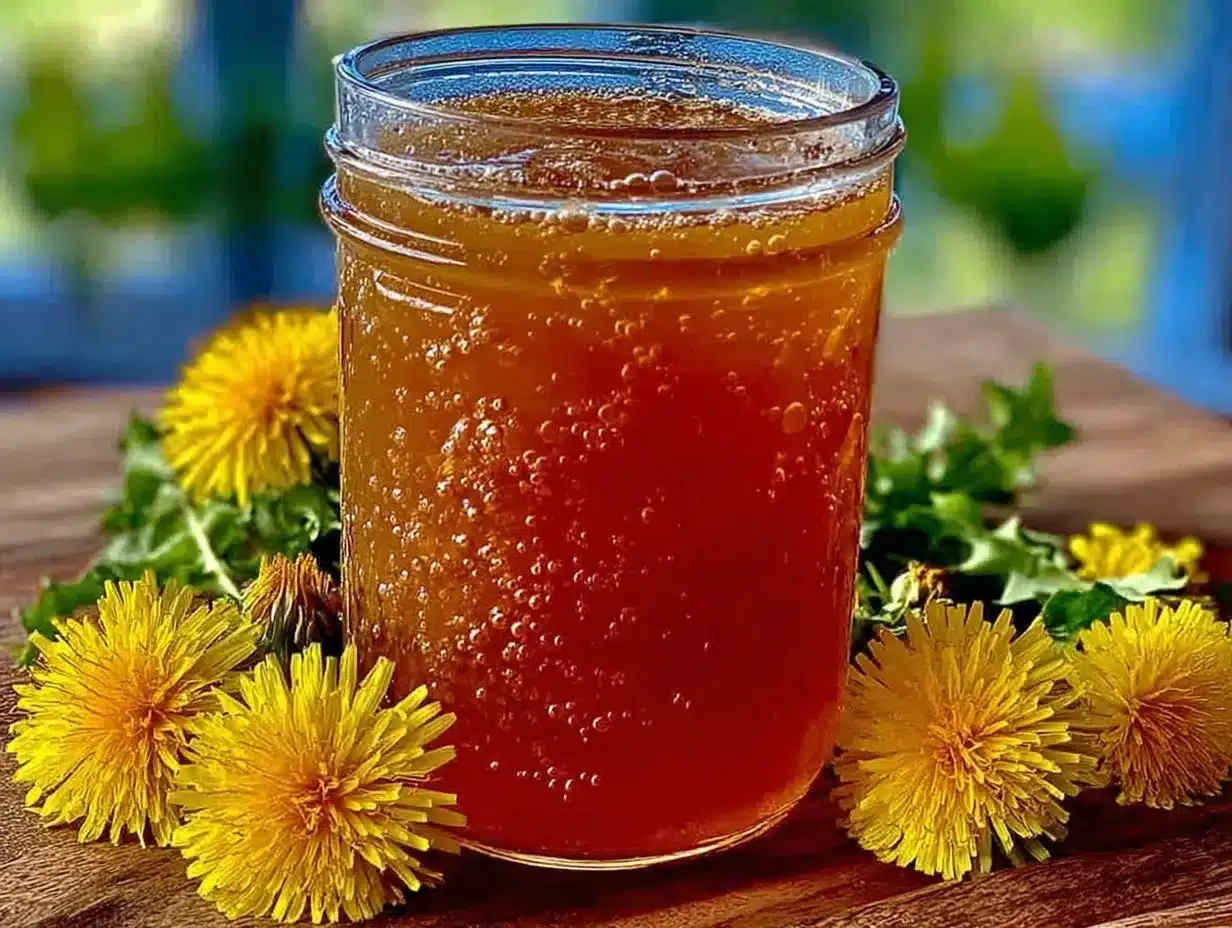
- Fermentation: Stir gently to mix the yeast, then cover with an airlock or loosely with a cloth. Keep the vessel in a dark, warm place (65-75°F / 18-24°C) for 5-7 days. You’ll see bubbles forming as fermentation kicks in. If you don’t have an airlock, open the lid daily to release pressure and prevent explosions!
- Bottling and Aging: Once bubbling slows significantly, strain out the orange slices and any sediment. Transfer the wine into clean bottles, leaving about an inch (2.5 cm) of headspace. Seal tightly and store bottles in a cool, dark place for at least 3 months. The flavor mellows and refreshes over time, so patience pays off.
One time, I forgot to strain the petals quickly and ended up with a slight bitterness—lesson learned! Also, if fermentation stalls, gently stirring or warming the vessel a bit often revives the yeast. You’ll know it’s ready when the wine is clear, lightly fizzy, and tastes bright but not yeasty.
Cooking Tips & Techniques
Making dandelion wine is pretty forgiving, but a few tips can keep you from stumbling:
- Pick Only Yellow Petals: Avoid any green leaves or stems, which add bitterness. It’s worth the extra few minutes to separate them carefully.
- Sanitize Everything: Yeast is sensitive to competing microbes, so clean all tools thoroughly. I’ve learned the hard way that skipping this step leads to funky flavors.
- Temperature Matters: Fermentation is happiest around 70°F (21°C). Too cold and it’ll slow down; too hot and you risk off-flavors or killing the yeast.
- Be Patient: Wine improves with age. Drinking it too soon feels flat, but after a few months, it becomes crisp and delightful.
- Adjust Sweetness: If you like your wine sweeter, add a bit more sugar before bottling, but be cautious—too much can restart fermentation in the bottle.
Once, I tried rushing the aging process, and the wine was kinda harsh. Leaving it tucked away for longer made all the difference, turning it into a smooth sipper perfect for spring evenings.
Variations & Adaptations
This easy refreshing dandelion wine recipe is a great base for playing around:
- Herbal Twist: Add a handful of fresh mint or lavender during steeping for a fragrant, garden-fresh note.
- Fruit Addition: Mix in berries like elderberries or blackberries during fermentation for a richer color and fruity flavor.
- Lower Sugar Version: Use less sugar and ferment longer for a drier wine. It pairs nicely with savory dishes like my copycat Carrabba’s Chicken Bryan.
- Non-Alcoholic: Skip the yeast and refrigerate the lemon-dandelion infusion for a refreshing iced tea alternative.
- Spiced Wine: Add cinnamon sticks, cloves, or star anise during the steeping phase for warm, cozy flavors that hint at holiday cheer.
One spring, I experimented with a dash of honey instead of sugar and ended up with a slightly cloudy but deliciously floral wine—definitely worth trying if you like a more rustic vibe.
Serving & Storage Suggestions
This dandelion wine shines best chilled, served in simple glasses that let the golden color catch the light. It’s perfect as an aperitif on a sunny patio or paired with light dishes like fresh salads or soft cheeses.
Store bottles upright in a cool, dark place—your basement or a wine fridge works great. The wine continues to develop subtle flavors over several months, so don’t rush to finish it all at once.
For leftovers, open the bottle and reseal tightly; it should keep in the fridge for up to a week with minimal flavor loss. I’ve found that gently swirling the bottle before pouring helps redistribute any sediment without clouding the pour.
If you want to gift some homemade charm, package the bottles with a sprig of dried dandelion or a handwritten note—it always sparks good conversations.
Nutritional Information & Benefits
While dandelion wine is enjoyed more for its unique flavor than nutrition, dandelions themselves are packed with vitamins A, C, and K, along with antioxidants. This wine offers a light, low-calorie alternative to heavier alcoholic drinks, usually containing around 10-12% alcohol by volume depending on fermentation.
The natural sugars and citrus add a fresh, tangy profile without refined additives. If you’re mindful of gluten, this recipe is naturally gluten-free, and yeast allergies are uncommon but worth noting.
From a wellness perspective, I like knowing I’m drinking something that started from wildflowers and simple ingredients rather than processed mixes. It’s a small way to connect with nature and savor spring’s bounty responsibly.
Conclusion
This easy refreshing dandelion wine recipe for spring foraging is more than just a drink; it’s a little celebration of the season’s generosity and a reminder that simple pleasures are often the best. Whether you’re a seasoned forager or just curious, this recipe invites you to slow down, gather a few golden blossoms, and enjoy a homemade wine with floral charm and gentle fizz.
Feel free to tailor it—add herbs, switch up the fruit, or adjust the sweetness—to make it your own. I love this recipe because it turns an everyday weed into something special, a story in a bottle that friends always ask about after a taste.
If you’re interested in pairing it with a meal, my creamy loaded baked potato soup complements the wine’s refreshing notes beautifully. Don’t hesitate to share your own twists or questions below—there’s a whole season ahead to experiment and enjoy!
FAQs
Can I use dandelions from my lawn for this wine?
Only if you’re certain they haven’t been treated with pesticides or herbicides. Otherwise, it’s safer to forage from wild or organic areas.
How long does it take for the wine to be ready to drink?
After fermentation, you’ll want to age the wine for at least 3 months to develop the best flavor, though it can be tasted earlier if you’re curious.
What type of yeast is best for dandelion wine?
Wine yeast or champagne yeast (like Lalvin EC-1118) is ideal for a clean, controlled fermentation, but bread yeast can work in a pinch with less predictable results.
Is it possible to make this wine non-alcoholic?
Yes! Simply skip adding yeast and refrigerate the dandelion and citrus infusion for a refreshing iced beverage.
How should I store the finished dandelion wine?
Keep it in sealed bottles in a cool, dark place. Refrigerate after opening and consume within a week for best taste.
Pin This Recipe!
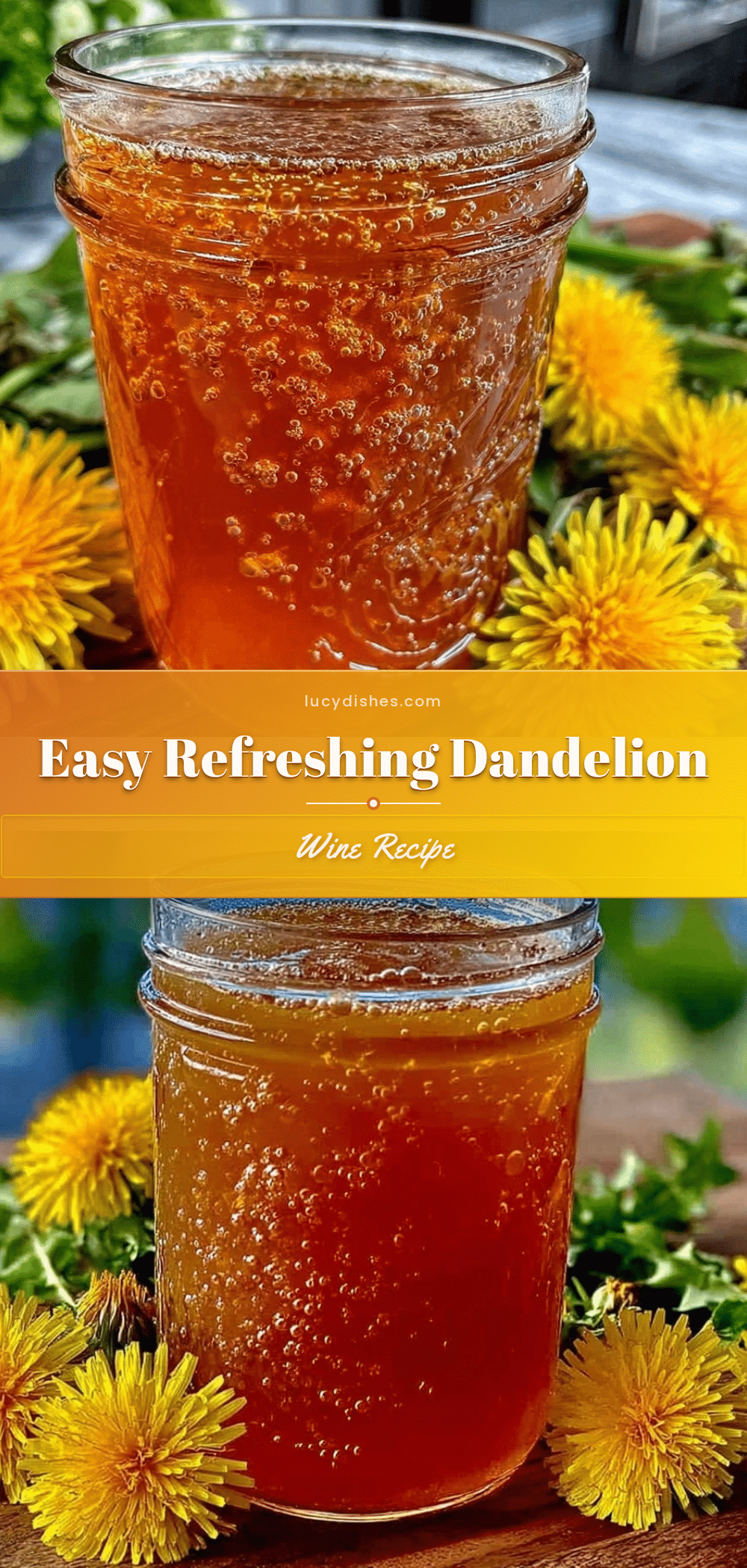
Easy Refreshing Dandelion Wine Recipe
A simple and refreshing homemade dandelion wine recipe perfect for spring foraging, capturing the floral charm and light fizz of the season.
- Prep Time: 30 minutes
- Cook Time: 5-7 days fermentation plus 3 months aging
- Total Time: Approximately 3 months and 7 days
- Yield: About 1 gallon (3.8 liters) of dandelion wine 1x
- Category: Beverage
- Cuisine: Homemade / Foraged
Ingredients
- 8 cups fresh dandelion petals (yellow petals only, no green parts)
- 4 cups granulated sugar (800 g)
- 1 gallon (3.8 liters) filtered or spring water
- Juice of 2 large lemons (about ½ cup or 120 ml)
- 1 medium orange, sliced thinly
- ½ teaspoon wine yeast or champagne yeast (e.g., Lalvin EC-1118)
- Optional: a couple of crushed cloves or a cinnamon stick
Instructions
- Pick and prepare the dandelions: Gather about 8 cups of dandelion petals, avoiding any green parts. Rinse gently in cool water to remove dirt and bugs. Drain well for about 10 minutes.
- Steep the petals: Place petals in fermentation vessel. Boil 1 gallon of water and pour over petals. Add sugar and stir until dissolved (about 5 minutes). Cover and steep for 24-48 hours at room temperature, stirring occasionally.
- Add citrus and yeast: Strain liquid through fine mesh or cheesecloth into a clean vessel. Add lemon juice, orange slices, and optional spices. When liquid cools to about 70°F (21°C), sprinkle yeast over surface and let hydrate for 15 minutes without stirring.
- Fermentation: Stir gently to mix yeast, cover with airlock or loosely with cloth. Keep in dark, warm place (65-75°F / 18-24°C) for 5-7 days until bubbling slows. If no airlock, open lid daily to release pressure.
- Bottling and aging: Strain out orange slices and sediment. Transfer wine to clean bottles leaving 1 inch headspace. Seal tightly and store in cool, dark place for at least 3 months to mature.
Notes
[‘Pick only yellow petals to avoid bitterness from green parts.’, ‘Sanitize all equipment thoroughly to prevent off-flavors.’, ‘Maintain fermentation temperature around 70°F (21°C) for best results.’, ‘Be patient; aging for at least 3 months improves flavor.’, ‘Adjust sweetness carefully before bottling to avoid restarting fermentation.’, ‘If fermentation stalls, gently stir or warm the vessel slightly to revive yeast.’, ‘Non-alcoholic version possible by skipping yeast and refrigerating infusion.’]
Nutrition
- Serving Size: About 5 oz (150 ml)
- Calories: 120
- Sugar: 28
- Sodium: 5
- Carbohydrates: 30
Keywords: dandelion wine, homemade wine, spring foraging, floral wine, easy wine recipe, fermentation, natural wine