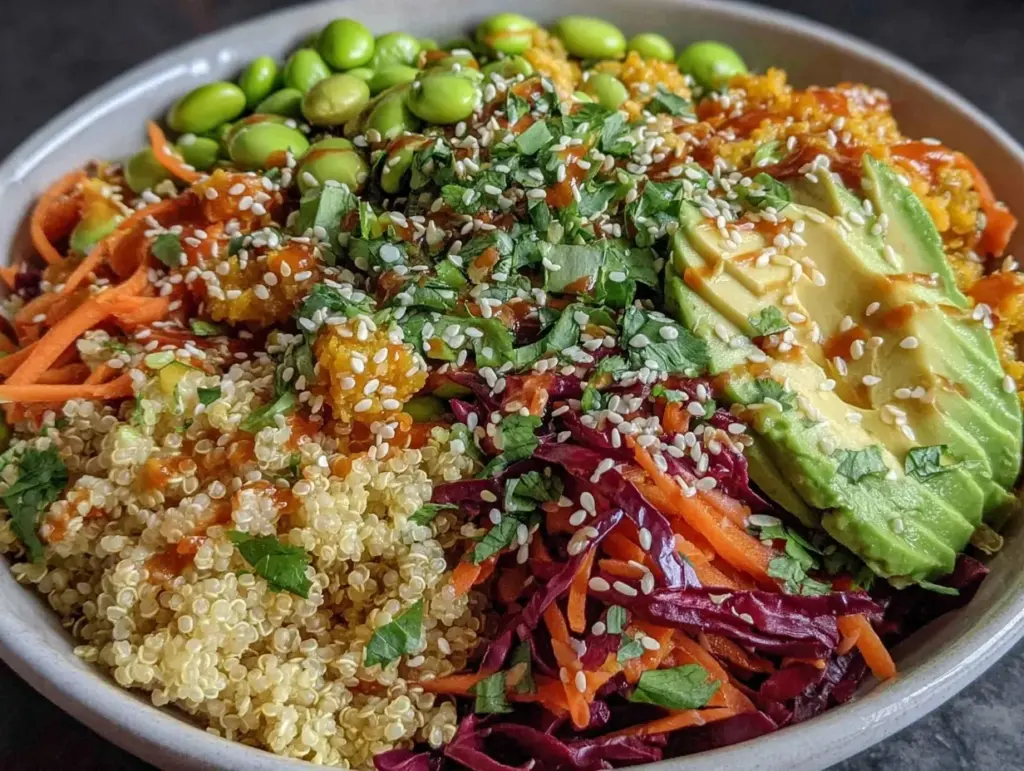
“You sure you want to try that?” my friend joked, eyeing the bowl I’d just slapped together after a long day of back-to-back meetings and a fridge that was basically a sad echo chamber. Honestly, I wasn’t expecting much either. I was just craving something quick, healthy, and filling without having to reheat last week’s sad leftovers yet again. That’s when the idea of this healthy high-protein edamame Buddha bowl came together — completely unplanned but totally satisfying.
The bright green edamame, nutty quinoa, crunchy veggies, and a zingy dressing somehow hit the spot like a reset button. It wasn’t fancy, but the flavors were fresh and the protein kept me fueled for the evening chaos ahead. I made it again the next day, and then the next. Turns out, this bowl is my go-to when I want a meal that feels like a little self-care but without the fuss. It’s one of those recipes that quietly became a staple, saving me from hangry moments and making me wonder why I ever thought healthy meant boring.
What’s funny is how a simple combo like edamame and quinoa can feel so nourishing and indulgent at the same time. The crunch of fresh cucumbers and bell peppers mixed with the creamy avocado keeps each bite interesting. Plus, the dressing ties it all together perfectly, with just enough tang and a hint of spice. This bowl stuck with me because it’s honest food—no gimmicks, no crazy ingredients, just wholesome stuff that tastes good and leaves me feeling good.
It’s not just about eating clean here; it’s about feeling satisfied without the crash later. So if you’re juggling a packed schedule but want to nourish your body with a meal that’s as easy as it is delicious, this healthy high-protein edamame Buddha bowl might just become your new favorite too.
Why You’ll Love This Healthy High-Protein Edamame Buddha Bowl Recipe
After testing this recipe multiple times (trust me, I got obsessed), I can say it hits the sweet spot between convenience, flavor, and nutrition. Here’s why it stands out:
- Quick & Easy: Ready in about 20 minutes, perfect for those hectic days when you barely have time to think, let alone cook.
- Simple Ingredients: No wild grocery runs here — edamame, quinoa, fresh veggies, and a handful of pantry staples.
- Protein-Packed: Thanks to edamame and quinoa, you get a complete, plant-based protein punch that keeps you full for hours.
- Versatile for Any Occasion: Whether it’s a light lunch, a post-workout meal, or a casual dinner, this bowl fits right in.
- Crowd-Pleaser: I’ve brought this bowl to potlucks and it disappears fast — even the skeptics ask for seconds.
- Unique Flavor Balance: The dressing combines soy sauce, sesame oil, and a touch of honey for a flavor that’s savory, slightly sweet, and just a little nutty — not your usual “health food” taste.
This isn’t just another salad in a bowl. The texture combo—creamy avocado, crunchy veggies, and tender quinoa—keeps things interesting bite after bite. Honestly, it’s the kind of meal that makes you close your eyes and savor every mouthful. I’ve even switched up the greens depending on the season or what’s in my fridge, and it always turns out great.
If you’re curious about other wholesome, easy meal ideas, you might enjoy my fresh healthy quinoa salad recipe, which shares some similar ingredients but with a different twist.
What Ingredients You Will Need
This recipe uses simple, wholesome ingredients to deliver bold flavor and satisfying texture without the fuss. Most are pantry staples or fresh produce you can find year-round.
- Edamame: Shelled, cooked (fresh or frozen works great; I prefer organic frozen for ease and texture)
- Quinoa: Rinsed and cooked (I like using tri-color quinoa for a nuttier taste and visual pop)
- Avocado: Ripe, diced (adds creaminess and healthy fats)
- Cucumber: Thinly sliced or diced (for crunch and freshness)
- Red bell pepper: Diced (brightens the bowl with sweetness and color)
- Shredded carrots: Adds a subtle sweetness and vibrant orange hue
- Green onions: Thinly sliced (adds a mild bite)
- Fresh cilantro or parsley: Chopped (optional but highly recommended for brightness)
- Sesame seeds: Toasted (for nutty crunch)
- For the dressing:
- Soy sauce or tamari (tamari if gluten-free)
- Sesame oil (toasted if possible for richer flavor)
- Honey or maple syrup (balances savory with a touch of sweetness)
- Rice vinegar (adds tang)
- Grated fresh ginger (for a subtle zing)
- Minced garlic (fresh, never jarred)
- Red pepper flakes (optional, for heat)
If you want to swap quinoa for brown rice or cauliflower rice, that’s totally doable. For a nut-free version, skip the sesame seeds and oil, and try a light olive oil drizzle instead.
Equipment Needed
- Medium saucepan with lid (for cooking quinoa)
- Mixing bowls (one for the dressing, another for tossing the ingredients)
- Measuring cups and spoons (accuracy helps balance the dressing)
- Sharp knife and cutting board (freshness comes from good chopping)
- Wooden spoon or spatula (for mixing without mashing avocado)
- Optional: small whisk or fork (for emulsifying the dressing)
I tend to keep a rice cooker handy for grains, which makes the quinoa part effortless. No fancy gear needed here—just the basics. Also, a good non-stick saucepan can save you from scrubbing later, trust me on that!
Preparation Method
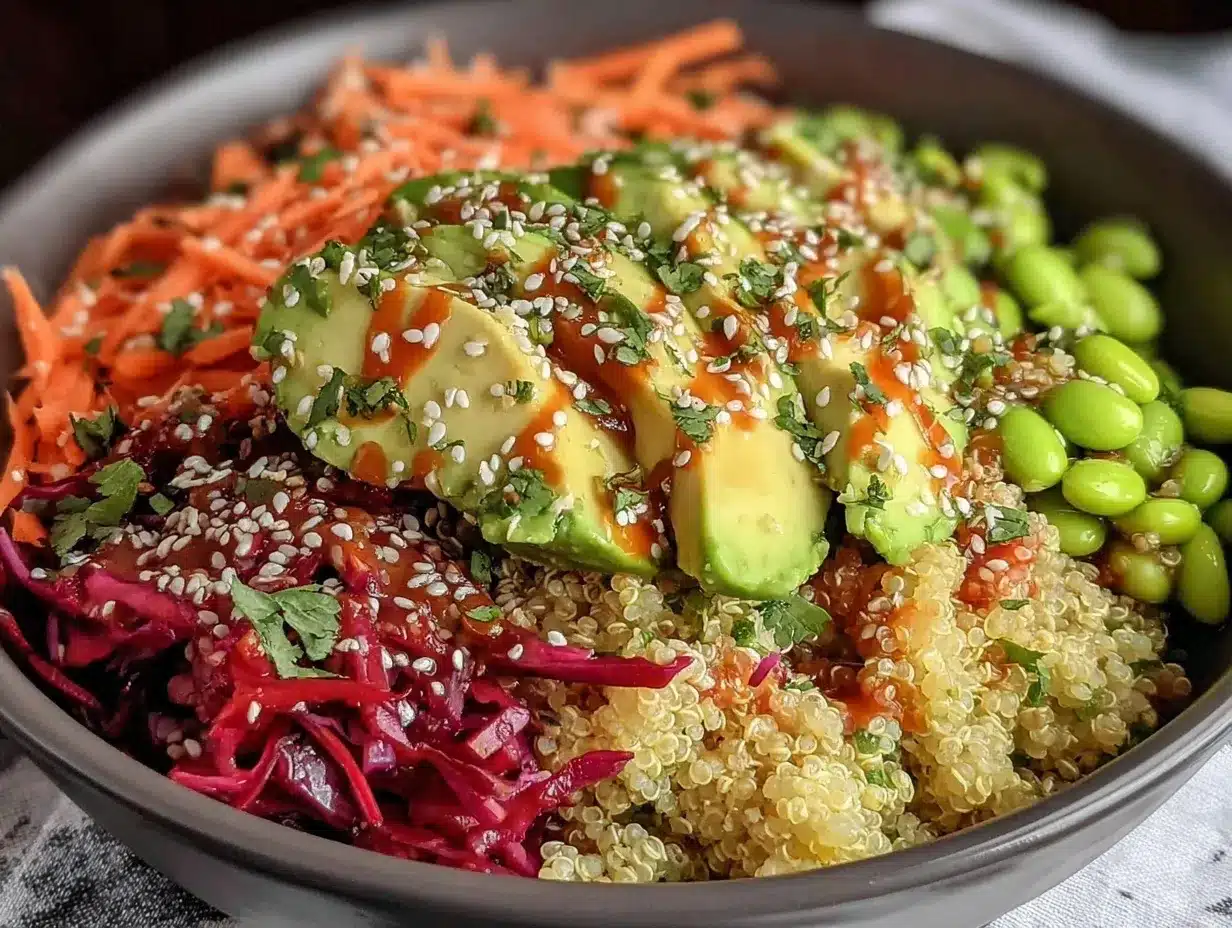
- Cook the quinoa: Rinse 1 cup (170 g) quinoa under cold water to remove bitterness. Combine with 2 cups (475 ml) water in a saucepan. Bring to a boil, then reduce heat to low, cover, and simmer for 15 minutes. Remove from heat and let it rest covered for 5 minutes. Fluff with a fork and set aside to cool slightly.
- Prepare edamame: If using frozen, steam or boil according to package instructions until tender but still bright green (about 5 minutes). Drain and cool.
- Chop the veggies: Dice 1 medium avocado, 1 cucumber, 1 red bell pepper, and shred 1 large carrot. Thinly slice 2 green onions and chop a small handful of cilantro or parsley.
- Make the dressing: In a small bowl, whisk together 3 tablespoons soy sauce or tamari, 1 tablespoon toasted sesame oil, 1 teaspoon honey or maple syrup, 1 tablespoon rice vinegar, 1 teaspoon grated fresh ginger, 1 minced garlic clove, and a pinch of red pepper flakes if using. Taste and adjust sweetness or acidity as needed.
- Assemble the bowl: In a large bowl, combine the cooked quinoa, edamame, and all chopped vegetables. Pour the dressing over and gently toss to coat—careful not to mash the avocado too much.
- Finish with toppings: Sprinkle toasted sesame seeds and extra herbs on top for garnish.
- Serve: Enjoy immediately or chill for 15 minutes to let flavors meld together.
Pro tip: If you want extra crunch, add roasted chickpeas or nuts on top. Also, keep the dressing separate if you plan to store leftovers to avoid sogginess.
Cooking Tips & Techniques for Success
Getting this bowl just right comes down to a few simple but important pointers I learned through trial and error. First, rinsing quinoa is key to avoid that bitter coating. I used to skip this step, and the bowl’s flavor suffered big time.
For edamame, steaming rather than boiling keeps the beans vibrant and firm. Overcooking turns them mushy, which nobody wants.
When chopping vegetables, aim for uniform pieces so every bite balances texture and taste. I’ve found that mixing in both crunchy and creamy elements (hello avocado) prevents boredom mid-meal.
The dressing is where you can really make this bowl your own. Always taste as you go and tweak the balance—sometimes a little more honey or vinegar makes the whole thing sing.
Lastly, if you’re prepping ahead, keep wet ingredients separate until serving. I’ve learned that storing bowls already tossed with dressing leads to sad, soggy veggies. Trust me, your future self will thank you.
Variations & Adaptations
This recipe is like a canvas—easy to adjust depending on what you have or your dietary preferences.
- Seasonal veggie swap: Instead of bell pepper and cucumber, try roasted sweet potatoes and kale in cooler months for a warm, cozy vibe.
- Protein boost: Add grilled chicken, tofu, or even a soft-boiled egg if you’re not strictly plant-based.
- Flavor twist: Use a peanut or almond butter-based dressing for a creamy, nutty change that pairs beautifully with the edamame.
- Allergen-friendly: For gluten-free, just use tamari instead of soy sauce and double-check ingredient labels.
- Personal favorite: I once added pickled red onions and a handful of crunchy roasted seaweed snacks for texture and a salty punch—an unexpected but addictive combo.
Serving & Storage Suggestions
This healthy high-protein edamame Buddha bowl is best enjoyed fresh or slightly chilled, depending on your mood. I like it room temperature so the flavors have time to meld, but it’s just as good cold on a warm day.
Pair it with a light miso soup or some steamed dumplings for a more filling meal. If you’re looking for a refreshing beverage, a cold green tea or sparkling water with lemon works wonders.
Leftovers keep well in an airtight container in the fridge for up to 2 days. Keep dressing separate if possible. When reheating, avoid the microwave if you want to keep that fresh crunch—just let it sit at room temperature for 15 minutes or toss in a warm skillet briefly.
Fun fact: The flavors actually deepen after a day, especially the ginger and sesame notes in the dressing. So if you have leftovers, give them a chance!
Nutritional Information & Benefits
Per serving, this bowl provides approximately:
| Calories | 450-500 kcal |
|---|---|
| Protein | 25-30 grams |
| Carbohydrates | 45 grams |
| Fat | 15 grams (mostly healthy fats from avocado and sesame oil) |
| Fiber | 10 grams |
The edamame and quinoa together provide a complete protein source, which is fantastic for plant-based eaters or anyone looking to increase muscle-supporting nutrients. The fresh vegetables add antioxidants and fiber, helping digestion and boosting overall health. Plus, the healthy fats from avocado and sesame oil support brain and heart health.
This recipe is naturally gluten-free (when using tamari), low in saturated fat, and packed with vitamins and minerals.
Conclusion
This healthy high-protein edamame Buddha bowl is proof that simple, wholesome ingredients can come together in a way that’s both nourishing and deeply satisfying. I love how adaptable it is—whether I’m rushing between meetings or settling in for a relaxed evening meal, it always feels like a little gift to myself.
Feel free to tweak it based on what you love or what’s in season. Cooking should be freeing, not stressful, and this bowl gives you a delicious base to build on.
Let me know how you make it your own or if you try any fun variations! Sharing your twists always makes my day.
Here’s to meals that make you feel good and keep life moving smoothly.
Frequently Asked Questions
Can I use frozen edamame for this recipe?
Yes! Frozen edamame works perfectly. Just cook or steam according to package instructions before adding to the bowl.
Is this recipe suitable for meal prep?
Absolutely. Keep the dressing separate and assemble just before eating to keep veggies fresh and crunchy.
Can I substitute quinoa with another grain?
Definitely. Brown rice, farro, or even cauliflower rice can be used depending on your preference.
What if I don’t like avocado?
You can swap avocado for hummus or roasted sweet potatoes to maintain creaminess and healthy fats.
How spicy is the dressing?
The red pepper flakes are optional, so you can adjust the heat to your liking or leave them out for a milder flavor.
Pin This Recipe!
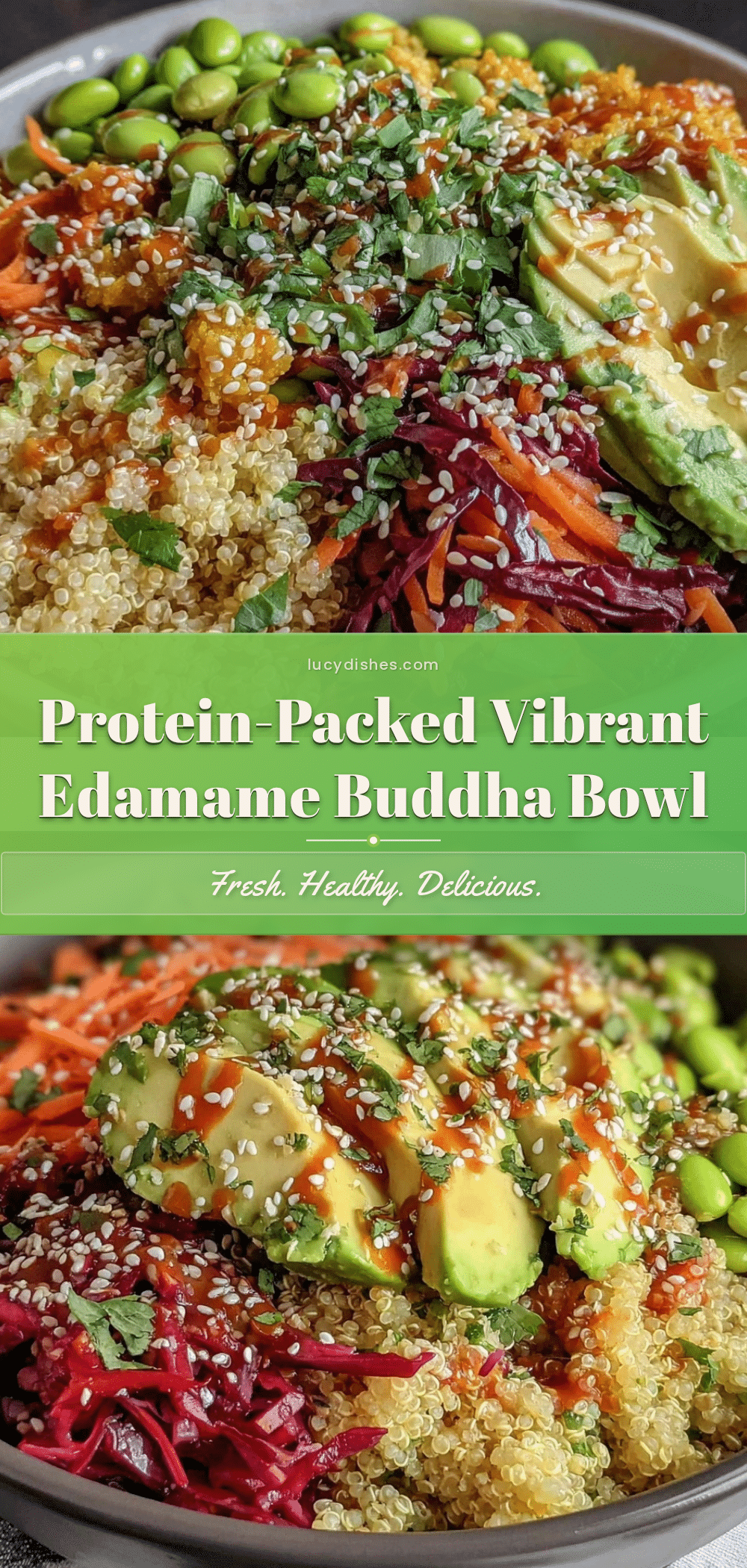
Healthy High-Protein Edamame Buddha Bowl
A quick, easy, and protein-packed Buddha bowl featuring edamame, quinoa, fresh veggies, and a zingy dressing. Perfect for a nourishing meal that keeps you full and satisfied.
- Prep Time: 10 minutes
- Cook Time: 20 minutes
- Total Time: 30 minutes
- Yield: 2 servings 1x
- Category: Main Course
- Cuisine: Fusion, Plant-Based
Ingredients
- 1 cup (170 g) quinoa, rinsed and cooked
- 1 1/2 cups shelled cooked edamame (fresh or frozen)
- 1 medium ripe avocado, diced
- 1 cucumber, thinly sliced or diced
- 1 red bell pepper, diced
- 1 large carrot, shredded
- 2 green onions, thinly sliced
- Small handful fresh cilantro or parsley, chopped (optional)
- 1 tablespoon toasted sesame seeds
- For the dressing:
- 3 tablespoons soy sauce or tamari
- 1 tablespoon toasted sesame oil
- 1 teaspoon honey or maple syrup
- 1 tablespoon rice vinegar
- 1 teaspoon grated fresh ginger
- 1 clove garlic, minced
- Pinch of red pepper flakes (optional)
Instructions
- Rinse quinoa under cold water to remove bitterness. Combine with 2 cups (475 ml) water in a medium saucepan. Bring to a boil, reduce heat to low, cover, and simmer for 15 minutes. Remove from heat and let rest covered for 5 minutes. Fluff with a fork and set aside to cool slightly.
- If using frozen edamame, steam or boil according to package instructions until tender but still bright green (about 5 minutes). Drain and cool.
- Dice avocado, cucumber, red bell pepper, and shred carrot. Thinly slice green onions and chop cilantro or parsley if using.
- In a small bowl, whisk together soy sauce or tamari, toasted sesame oil, honey or maple syrup, rice vinegar, grated ginger, minced garlic, and red pepper flakes if using. Taste and adjust sweetness or acidity as needed.
- In a large bowl, combine cooked quinoa, edamame, and all chopped vegetables. Pour dressing over and gently toss to coat, being careful not to mash the avocado.
- Sprinkle toasted sesame seeds and extra herbs on top for garnish.
- Serve immediately or chill for 15 minutes to let flavors meld.
Notes
Rinse quinoa well to avoid bitterness. Steam edamame rather than boiling to keep texture firm. Keep dressing separate if storing leftovers to prevent soggy veggies. Add roasted chickpeas or nuts for extra crunch. Can substitute quinoa with brown rice or cauliflower rice. For nut-free version, skip sesame seeds and oil, use olive oil instead.
Nutrition
- Serving Size: 1 bowl (approximatel
- Calories: 475
- Sugar: 6
- Sodium: 700
- Fat: 15
- Saturated Fat: 2
- Carbohydrates: 45
- Fiber: 10
- Protein: 28
Keywords: edamame, quinoa, Buddha bowl, high-protein, healthy, plant-based, gluten-free, easy meal, weight loss