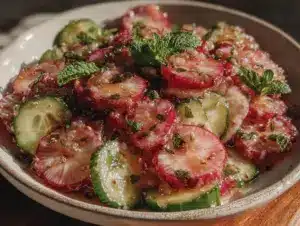
“You have to try this risotto,” my neighbor insisted one sunny afternoon, waving a wooden spoon like a magic wand. Honestly, I was skeptical. Risotto always seemed like one of those dishes that required a whole afternoon and a kitchen full of ingredients I barely recognized. But that day, juggling a stack of mail and a restless toddler, I decided to give it a shot. And guess what? This fresh spring risotto with peas, mint, and lemon zest became my go-to quick comfort food, a little bowl of bright flavors that felt like a reset button after chaotic days.
There’s something about the way the bright green peas pop against the creamy rice, the fresh zing of lemon zest cutting through the richness, and the cool whisper of mint that makes it feel like spring has landed right on your plate. I remember standing in my small kitchen, the scent of garlic and lemon filling the air, thinking: this might just be the easiest way to convince myself risotto isn’t so intimidating after all. I ended up making it three nights in a row — yes, I was that obsessed.
What stuck with me wasn’t just the freshness but the simple joy of a meal that feels thoughtful without fuss. It’s that kind of recipe you can pull off on a busy weeknight but also serve when friends drop by unexpectedly. And really, it’s the kind of dish that makes you pause, savor, and maybe even smile quietly to yourself.
Why You’ll Love This Recipe
After making this fresh spring risotto with peas, mint, and lemon zest multiple times, I can confidently say it’s one of those recipes that reliably impresses without the usual stress. Here’s why it’s found a permanent spot in my recipe rotation:
- Quick & Easy: Ready in about 30 minutes, it’s perfect for those nights when you want a cozy meal without the wait.
- Simple Ingredients: You probably already have most of these in your pantry and fridge — no special trips needed.
- Perfect for Spring and Early Summer: The fresh peas and mint capture the bright, light flavors of the season, making it a lovely choice for brunch or a light dinner.
- Crowd-Pleaser: Everyone from kids to adults seems to enjoy the creamy texture balanced by the fresh, vibrant notes.
- Unbelievably Delicious: The lemon zest adds a surprising brightness that lifts the whole dish, while the mint adds a subtle cooling effect.
What really sets this risotto apart is the harmony of textures and flavors — the velvety arborio rice cooked just right, the little bursts of sweetness from fresh peas, and the refreshing herbal note from mint leaves. It’s not just risotto; it’s risotto with a springtime soul. Honestly, the zest of lemon makes it sing in a way that keeps me coming back.
If you’re looking for a lighter take on traditional risotto or want a dish that feels both comforting and fresh, this recipe hits the spot every single time. It’s also easy to pair with other dishes — like the basil pesto chicken from my neighbor’s backyard potluck or even alongside a crisp salad like the fresh Lebanese fattoush salad for a full spring feast.
What Ingredients You Will Need
This fresh spring risotto recipe uses simple, wholesome ingredients that come together beautifully to deliver bright flavors and a satisfying creamy texture without any fuss. Most of these are pantry staples, and the fresh ones are easy to find during springtime.
- Arborio rice (1 cup / 200g) – the classic risotto rice, perfect for creamy results.
- Vegetable stock (4 cups / 1 liter), kept warm – essential for gently cooking the rice.
- Fresh or frozen peas (1 cup / 150g) – adds a sweet pop; fresh is best in spring, but frozen works well too.
- Fresh mint leaves (1/4 cup, chopped) – brings a refreshing herbal twist; use tender leaves for best flavor.
- Lemon zest (zest of 1 lemon) – brightens the whole dish with a fresh zing.
- Unsalted butter (2 tablespoons / 28g) – for richness and to finish the risotto with creaminess.
- Olive oil (1 tablespoon / 15ml) – to sauté the aromatics.
- Yellow onion (1 small, finely chopped) – adds a subtle sweetness and depth.
- Garlic cloves (2, minced) – for a gentle savory base.
- Dry white wine (1/2 cup / 120ml) – optional but recommended for that classic risotto flavor lift.
- Parmesan cheese (1/2 cup grated / 50g) – stir in at the end for nutty, melty goodness; I personally like Parmigiano-Reggiano for a richer taste.
- Salt and black pepper – to taste.
If you want a dairy-free version, swap butter with a high-quality olive oil and use nutritional yeast instead of Parmesan — it still tastes great! For a gluten-free diet, this recipe is naturally safe as it contains no wheat.
Equipment Needed
- Large heavy-bottomed skillet or saucepan: A wide pan helps cook the rice evenly; I prefer a 3-quart nonstick skillet for easy stirring.
- Wooden spoon or silicone spatula: For stirring without scratching your pan.
- Kettle or small saucepan: To keep the stock warm throughout cooking.
- Microplane or fine grater: For zesting the lemon finely.
- Measuring cups and spoons: For accuracy, especially with liquids.
Don’t worry if you don’t have a fancy risotto pan — any sturdy pan will do, just make sure it has a wide base for the rice to spread out. If your pan tends to stick, a good quality nonstick works wonders. Over the years, I’ve tried both heavy cast iron and stainless steel pans; while the former holds heat beautifully, the stainless steel makes stirring a bit easier without worrying about scraping.
Preparation Method
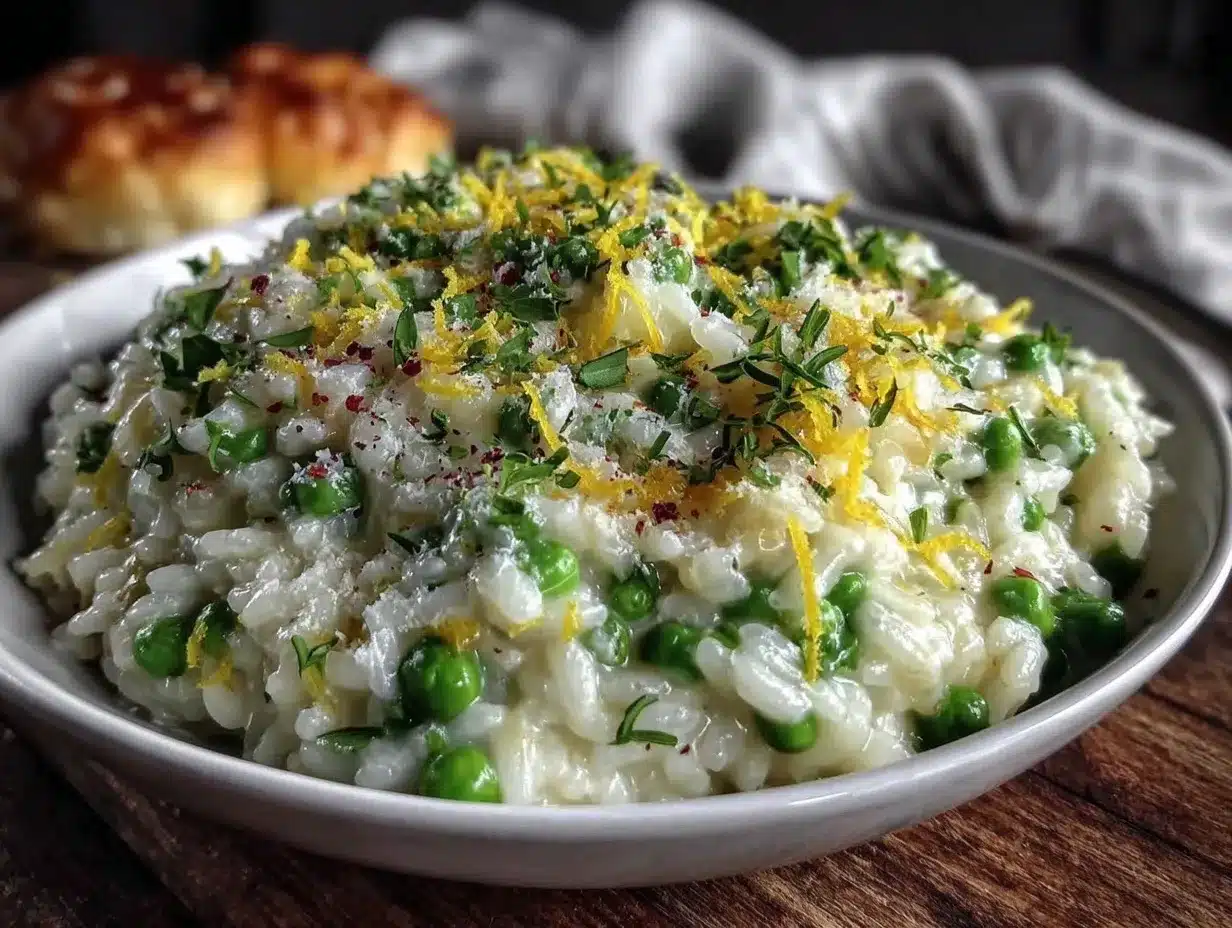
- Warm the stock: Pour your vegetable stock into a kettle or small saucepan and keep it simmering gently over low heat. This is important because adding cold stock to the rice slows down cooking and affects texture.
- Sauté the aromatics: In your large skillet, heat the olive oil over medium heat. Add the finely chopped onion and cook for about 3-4 minutes until softened but not browned. Toss in the minced garlic and cook for another 30 seconds, just until fragrant.
- Add the rice: Stir in the arborio rice to coat it well with the oil and onion mixture. Cook for about 2 minutes, stirring frequently, until the edges of the rice grains start looking translucent. This step is key for that creamy texture.
- Deglaze with wine: Pour in the white wine and stir until it’s mostly absorbed by the rice. This adds a subtle depth but if you’re skipping wine, just move on to the stock.
- Start adding the stock: Add about 1/2 cup (120ml) of warm stock to the rice. Stir gently and wait for the liquid to mostly absorb before adding the next ladle. Repeat this process, slowly stirring and adding stock, which should take about 18-20 minutes. The rice should be tender but still have a slight bite (al dente).
- Add peas: When the rice is nearly done, about 5 minutes before finishing, stir in the fresh or frozen peas. They’ll cook gently with the residual heat, staying bright and sweet.
- Finish the risotto: Remove the pan from heat. Stir in the butter, grated Parmesan, chopped mint, and lemon zest. Season with salt and freshly ground black pepper to taste. The risotto should be creamy and just a bit loose — if it’s too thick, stir in a splash of warm stock or water.
- Rest and serve: Let the risotto sit for a minute or two to settle, then serve immediately. It’s best enjoyed fresh and creamy.
One tip I learned the hard way: keep stirring gently but consistently to coax out the starches from the rice without breaking the grains. Also, don’t rush the stock addition — patience really pays off in texture and flavor.
Cooking Tips & Techniques
Risotto can seem intimidating, but a few tricks make it straightforward and enjoyable:
- Warm stock is your friend: Adding cold stock shocks the rice and slows cooking, so keep it warm on the stove.
- Stir gently but often: You don’t need aggressive stirring — gentle, frequent movements help release starch without breaking grains.
- Watch the liquid: The risotto should be creamy and slightly loose. If it looks dry before the rice is tender, add more stock or a splash of water.
- Timing peas right: Add fresh peas late in cooking so they stay vibrant and sweet. Frozen peas can go in a little earlier to thaw and warm through.
- Don’t skip the finishing butter and cheese: They enrich the texture and meld flavors beautifully.
Once, I overcooked the rice by rushing the process and ended up with a mushy mess. Lesson learned: risotto rewards patience. I also tried substituting mint with basil once, which was tasty but missed that cool brightness mint brings. So, stick with fresh mint for the authentic spring feel.
Variations & Adaptations
This fresh spring risotto is versatile and easy to tweak to your palate or dietary needs:
- Protein boost: Stir in cooked shrimp or diced chicken near the end for a heartier meal.
- Cheese swaps: Use Pecorino Romano instead of Parmesan for a sharper, saltier bite.
- Herb changes: Try swapping mint with fresh tarragon or basil for a different herbal note.
- Vegan version: Replace butter with olive oil and Parmesan with nutritional yeast or vegan cheese alternatives.
- Seasonal twist: In summer, swap peas for fresh corn kernels or diced zucchini for a different fresh taste.
I once made a version with lemon thyme instead of mint and loved the subtle earthiness it added. Feel free to experiment! For a creamy texture with less stirring, try using a slow cooker risotto method, adding warm stock gradually over a couple of hours.
Serving & Storage Suggestions
This risotto is best served hot and creamy straight from the pan. I like to plate it with a sprinkle of extra Parmesan and a few mint leaves for freshness. It pairs wonderfully with grilled chicken or a crisp salad like the Lebanese fattoush salad to balance the creaminess.
Leftovers can be stored in an airtight container in the refrigerator for up to 2 days. When reheating, add a splash of water or stock and warm gently on the stove or in the microwave to bring back the creamy texture. The flavors actually deepen after sitting overnight, though the texture will be thicker.
For a quick twist, you can gently pan-fry leftover risotto patties until golden and crispy — a fun way to reinvent this dish for lunch or snacks.
Nutritional Information & Benefits
Per serving (about 1 cup / 250g): approximately 320 calories, 8g fat, 45g carbohydrates, 7g protein.
This risotto offers a good balance of macronutrients, with complex carbs from arborio rice and protein from Parmesan cheese. Peas provide fiber, vitamins A and C, and a natural sweetness that keeps things fresh. Mint adds antioxidants and a digestive boost, while lemon zest contributes vitamin C and a bright zing with minimal calories.
It’s naturally gluten-free and can be adapted for vegan diets. Plus, it’s a comforting yet light option that fits well into a balanced eating plan.
Conclusion
This fresh spring risotto with peas, mint, and lemon zest has become a quietly satisfying favorite in my kitchen. It’s the kind of dish that feels like a small celebration of the season — simple ingredients, thoughtful technique, and a bright flavor profile that never gets old. You can easily make it your own with different herbs or proteins, so don’t hesitate to play around.
Whether you want a quick weeknight dinner or a dish that feels special without stress, this risotto fits the bill. I hope it finds a place in your home as it did in mine — a little bowl of springtime comfort that’s surprisingly easy to pull off.
If you try it, I’d love to hear how you customize it or what memories it sparks. Cooking is always better when shared, right? So, drop a comment or share your twist!
Frequently Asked Questions About Fresh Spring Risotto with Peas, Mint, and Lemon Zest
Can I use frozen peas instead of fresh?
Yes! Frozen peas work great and are especially convenient outside of spring. Just add them a few minutes earlier to give them time to thaw and warm through.
What if I don’t have white wine for the risotto?
You can skip the wine or replace it with an equal amount of warm stock or a splash of lemon juice for acidity. The risotto will still be delicious.
How do I know when risotto is done?
The rice should be tender but still have a slight firmness in the center — al dente. It should be creamy and just a bit loose in texture.
Can I make this risotto ahead of time?
Risotto is best fresh, but you can refrigerate leftovers for up to 2 days. Reheat gently with a splash of stock or water to restore creaminess.
What can I serve with this spring risotto?
It pairs well with grilled or roasted chicken, fish, or a crisp salad like the fresh Lebanese fattoush salad. For a vegetarian meal, add roasted vegetables or a simple green side.
Pin This Recipe!
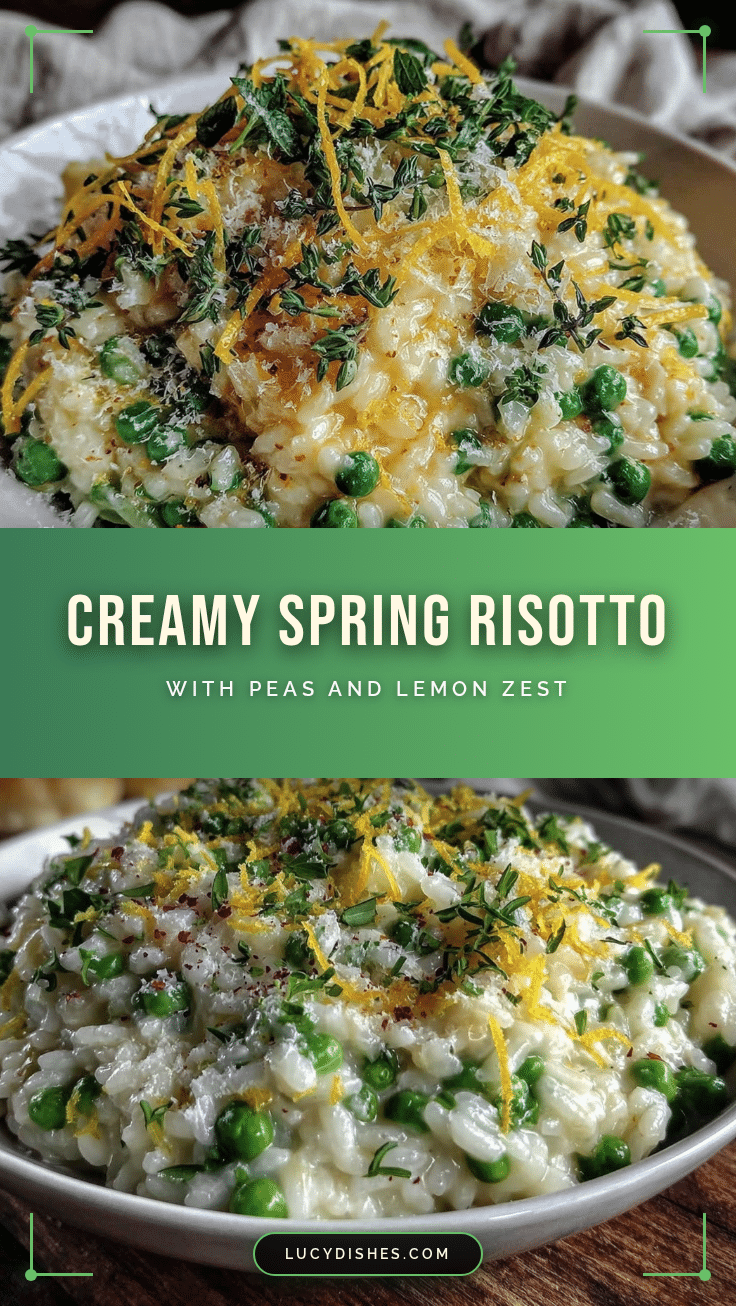
Fresh Spring Risotto with Peas Mint Lemon Zest

A quick and easy risotto recipe featuring fresh peas, mint, and lemon zest that delivers bright, springtime flavors with a creamy texture.
- Prep Time: 10 minutes
- Cook Time: 20 minutes
- Total Time: 30 minutes
- Yield: 4 servings 1x
- Category: Main Course
- Cuisine: Italian
Ingredients
- 1 cup (200g) Arborio rice
- 4 cups (1 liter) vegetable stock, kept warm
- 1 cup (150g) fresh or frozen peas
- 1/4 cup chopped fresh mint leaves
- Zest of 1 lemon
- 2 tablespoons (28g) unsalted butter
- 1 tablespoon (15ml) olive oil
- 1 small yellow onion, finely chopped
- 2 garlic cloves, minced
- 1/2 cup (120ml) dry white wine (optional)
- 1/2 cup grated Parmesan cheese (50g)
- Salt and black pepper to taste
Instructions
- Warm the vegetable stock in a kettle or small saucepan and keep it simmering gently over low heat.
- Heat olive oil in a large heavy-bottomed skillet over medium heat. Add the finely chopped onion and cook for 3-4 minutes until softened but not browned.
- Add minced garlic and cook for another 30 seconds until fragrant.
- Stir in the Arborio rice to coat it with the oil and onion mixture. Cook for about 2 minutes, stirring frequently, until the edges of the rice grains start looking translucent.
- Pour in the white wine and stir until mostly absorbed by the rice. If skipping wine, proceed to the next step.
- Add about 1/2 cup (120ml) of warm stock to the rice. Stir gently and wait for the liquid to mostly absorb before adding the next ladle. Repeat this process for about 18-20 minutes until the rice is tender but still al dente.
- About 5 minutes before finishing, stir in the fresh or frozen peas to cook gently with residual heat.
- Remove the pan from heat. Stir in the butter, grated Parmesan, chopped mint, and lemon zest. Season with salt and freshly ground black pepper to taste. If the risotto is too thick, stir in a splash of warm stock or water.
- Let the risotto rest for 1-2 minutes to settle, then serve immediately.
Notes
Keep the stock warm to ensure even cooking and creamy texture. Stir gently but frequently to release starch without breaking the rice grains. Add peas late to keep them bright and sweet. For dairy-free, substitute butter with olive oil and Parmesan with nutritional yeast or vegan cheese. Leftovers can be refrigerated for up to 2 days and reheated with a splash of stock or water.
Nutrition
- Serving Size: About 1 cup (250g)
- Calories: 320
- Fat: 8
- Carbohydrates: 45
- Protein: 7
Keywords: risotto, spring recipe, peas, mint, lemon zest, quick risotto, easy risotto, vegetarian, gluten-free