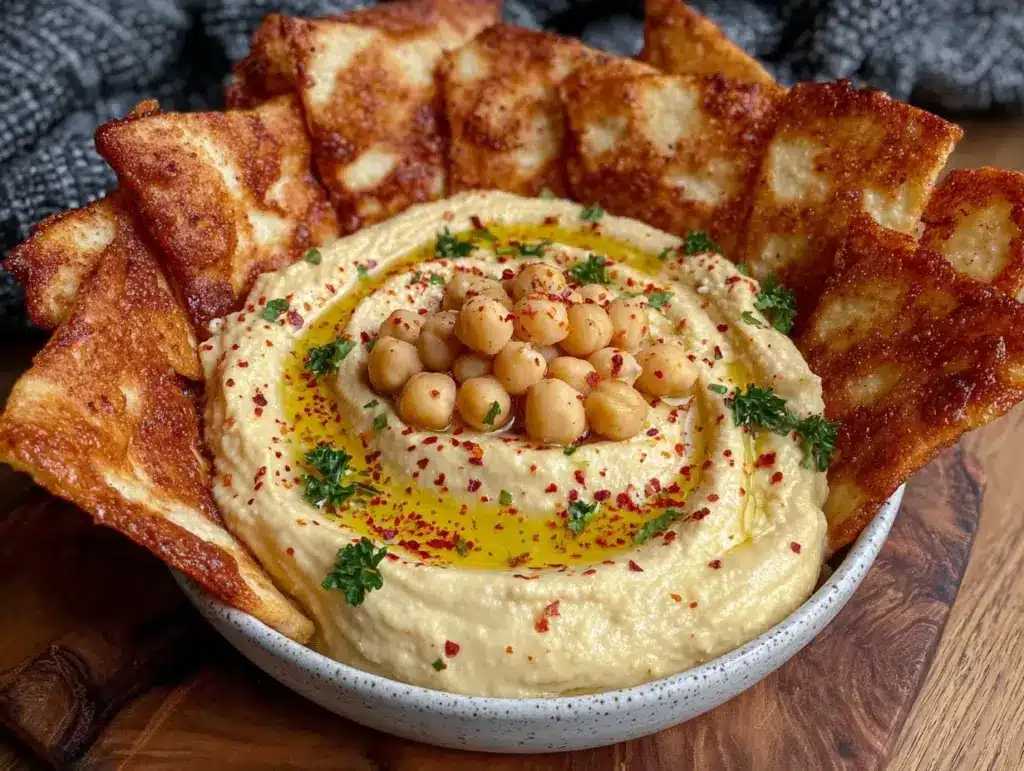
“Hey, you’ve got to try this hummus platter I brought last night!” My friend’s text popped up just as I was wrapping up a long day. Honestly, I wasn’t in the mood for fuss, but curiosity got the best of me. When she arrived with a colorful spread of creamy hummus, bright veggies, and these insanely crispy pita chips—made from scratch—I was hooked. It wasn’t just the flavors; it was the way everything came together so effortlessly, like the perfect little Mediterranean escape right on my kitchen counter.
What surprised me most was how easy it was to make that hummus platter myself. I mean, I always thought hummus was something you grab from a store shelf. But making it fresh with simple ingredients—and baking those pita chips instead of frying—changed the game. The smell of toasted pita wafting through my kitchen was oddly comforting, almost like I’d stumbled onto something that felt both fresh and familiar. It quickly became my go-to snack for those evenings when I want something light but satisfying, and honestly, it’s a little showstopper when friends drop by unexpectedly.
Over time, I tweaked the recipe here and there, adjusting the garlic or lemon until it hit just right—creamy, zesty, with that hint of earthiness you want from chickpeas. And those pita chips? Crispy but not dry, perfect for scooping without falling apart. Now, whenever I make this fresh Mediterranean hummus platter with homemade pita chips, it reminds me how food can be simple and special at the same time. It’s that rare combo of easy prep and rich flavor that sticks with you.
There’s something quietly satisfying about sharing this platter, knowing it’s wholesome, fresh, and made with care. That’s why it’s held a steady spot in my recipe rotation, quietly winning over skeptics one chip at a time.
Why You’ll Love This Fresh Mediterranean Hummus Platter Recipe
After making this fresh Mediterranean hummus platter with homemade pita chips more times than I can count, I can say it’s a keeper for many reasons. It’s not just another hummus recipe; it’s a blend of fresh ingredients and simple techniques that anyone can pull off with confidence.
- Quick & Easy: The whole platter comes together in under 30 minutes, making it perfect for busy weeknights or last-minute guests.
- Simple Ingredients: You probably have most of these in your pantry already—chickpeas, garlic, lemon, tahini—and the rest are fresh veggies or pantry staples.
- Perfect for Entertaining: Whether it’s a casual get-together or a laid-back brunch, this platter is always a hit, offering beautiful colors and diverse textures.
- Crowd-Pleaser: The creamy hummus paired with crispy pita chips and crunchy veggies appeals to kids and adults alike. I’ve never seen it stick around for long!
- Unbelievably Delicious: The balance of bright lemon, toasted tahini, and earthy chickpeas creates a flavor that feels fresh and comforting at once.
What really sets this apart is the homemade pita chips. Baking them yourself means you control the crunch and the seasoning, avoiding the overly oily store-bought versions. Plus, the hummus has that homemade authenticity—you can taste the fresh garlic and lemon zing through, making it far better than the typical pre-made tubs.
This platter feels like a little Mediterranean getaway for your taste buds, yet it’s grounded in super simple, honest cooking. It’s the kind of recipe that makes you want to invite friends over for a casual evening—no stress, just good food and good company.
What Ingredients You Will Need
This fresh Mediterranean hummus platter recipe uses simple, wholesome ingredients to create bold flavors and a satisfying texture without fuss. Most are pantry staples or easy-to-find fresh produce, and you’ll find some notes on substitutions if needed.
- For the Hummus:
- 1 can (15 oz / 425 g) chickpeas, drained and rinsed (I prefer organic brands for creaminess)
- 3 tablespoons tahini (look for smooth, well-stirred tahini like Joyva or Soom)
- 2 tablespoons fresh lemon juice (about 1 medium lemon)
- 2 cloves garlic, minced (adjust to taste; fresh garlic makes a huge difference)
- 3 tablespoons extra virgin olive oil (plus more for drizzling)
- 1/2 teaspoon ground cumin (adds warmth and depth)
- Salt to taste (start with 1/2 teaspoon)
- 2-3 tablespoons cold water (to adjust texture)
- For the Homemade Pita Chips:
- 4 pita bread rounds (whole wheat or white)
- 2 tablespoons olive oil
- 1/2 teaspoon sea salt
- 1/4 teaspoon smoked paprika or za’atar (optional, for flavor)
- For the Platter Extras:
- Cherry tomatoes, halved
- Cucumber slices
- Carrot sticks
- Kalamata olives
- Fresh parsley or mint leaves (for garnish)
- Optional: crumbled feta cheese
If you want to swap ingredients, you can use almond flour pita chips for a gluten-free option, or swap tahini with sunflower seed butter if sesame is an issue. For a dairy-free platter, just skip the feta garnish or use a plant-based alternative.
Equipment Needed
- Baking sheet – essential for crisping pita chips evenly; I use a rimmed sheet pan for easy cleanup
- Food processor or blender – to get that ultra-smooth hummus texture; a high-speed blender works great too
- Mixing bowls – for tossing pita with oil and seasonings
- Measuring spoons and cups – for precise seasoning and ingredient balance
- Knife and cutting board – to prep veggies and pita
If you don’t have a food processor, a sturdy blender with a tamper can do the job, but you might need to scrape down the sides a few times. For crisping pita chips, a toaster oven works well if you’re making a smaller batch.
Preparation Method
- Prepare the Hummus Base (10 minutes): Drain and rinse the chickpeas well under cold water to remove any canned flavor. Place them in your food processor along with the tahini, lemon juice, minced garlic, cumin, and salt.
- Blend Smooth (5-7 minutes): Pulse everything together, then while the machine runs, slowly drizzle in olive oil and cold water. The water helps loosen the mixture to a creamy consistency. Stop occasionally to scrape down the bowl. The hummus should be silky and smooth, not grainy—if it’s thick, add a little more water, one tablespoon at a time.
- Season and Taste (2 minutes): Taste your hummus and adjust salt, lemon, or garlic as needed. I always add a bit more lemon juice at the end for brightness.
- Make the Pita Chips (15 minutes): Preheat your oven to 375°F (190°C). Cut each pita bread into 8 triangles. Toss the pita pieces in olive oil, sea salt, and paprika or za’atar if using, making sure each chip is lightly coated.
- Bake Until Crispy (12-15 minutes): Arrange pita chips in a single layer on a baking sheet. Bake for about 12-15 minutes, flipping halfway through. Watch closely near the end to avoid burning—chips should be golden and crisp.
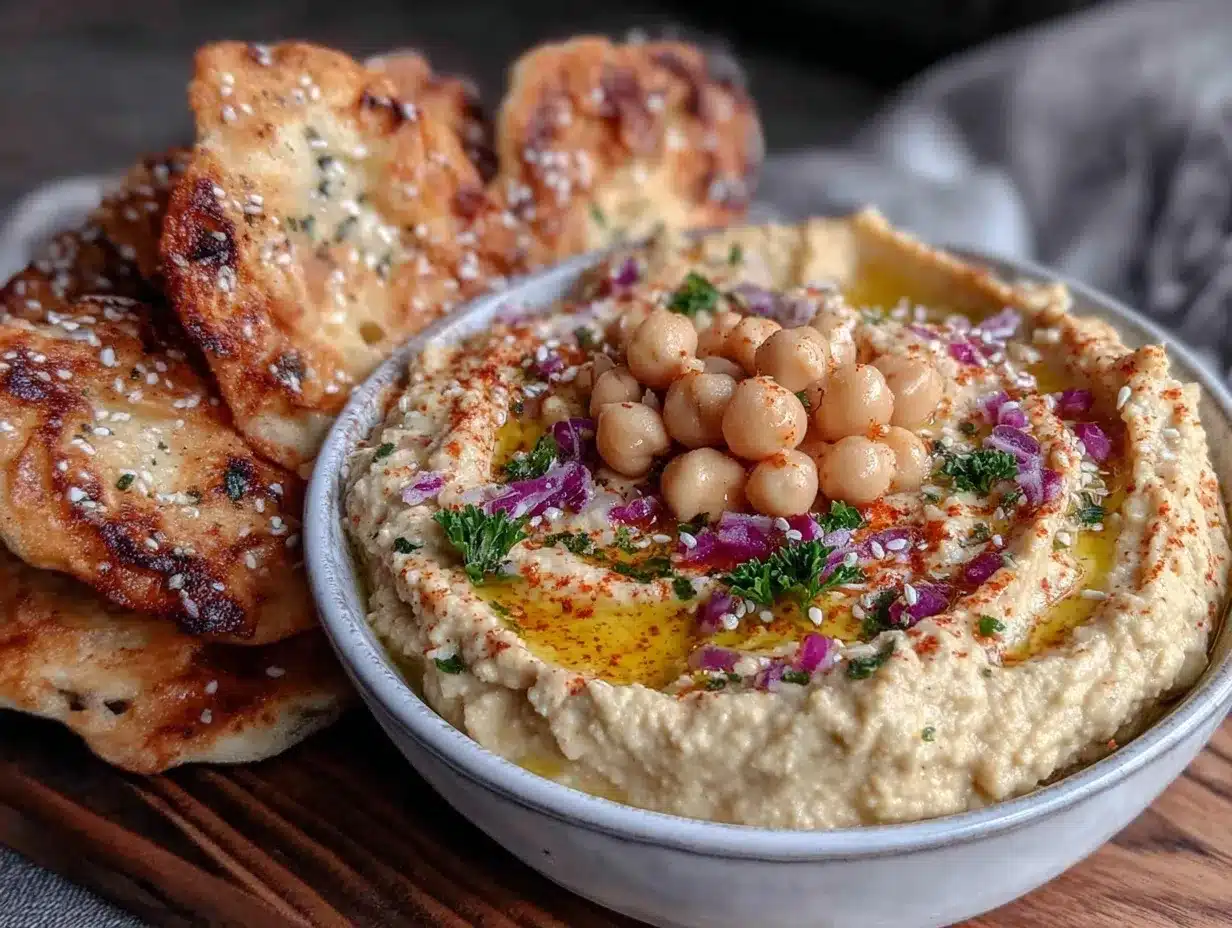
- Assemble the Platter (5 minutes): Spread hummus in a shallow bowl or plate. Drizzle a little olive oil over the top and sprinkle with paprika or chopped parsley. Arrange pita chips and fresh veggies like cucumber, cherry tomatoes, carrot sticks, and olives around the hummus. Add crumbled feta if you like.
Keep an eye on the texture of your hummus; sometimes chickpeas vary, so the water amount might need a tweak. Also, those pita chips are best fresh from the oven—crispy but tender enough to scoop without shattering.
Cooking Tips & Techniques
Making this hummus platter shine is about small details that add up. For starters, peeling your chickpeas can make a difference if you want ultra-smooth hummus, but honestly, I usually skip this step unless I’m feeling fancy.
Don’t rush the blending step—let your food processor run for several minutes if needed. That patience is what breaks down the chickpeas and creates that creamy mouthfeel. If you get stuck, add a touch more water or olive oil, but not too much or it’ll get runny.
When roasting pita chips, uniform size matters. Smaller triangles crisp quicker and more evenly. If you find your chips are burning before crisping through, lower the oven temperature by 10-15 degrees next time and extend the baking time.
Multitasking tip: While the chips bake, prep your veggies and assemble the hummus. This keeps your workflow smooth and the platter fresh.
Lastly, always drizzle a bit of olive oil on the hummus before serving—it adds richness and a lovely shine, plus it’s authentic to Mediterranean style.
Variations & Adaptations
- Roasted Red Pepper Hummus: Add 1/2 cup roasted red peppers to the food processor for a smoky, sweet twist.
- Spicy Hummus: Toss in a pinch of cayenne or a fresh jalapeño for a gentle kick that wakes up the palate.
- Herbed Pita Chips: Mix dried oregano, thyme, or za’atar with olive oil before coating pita for extra Mediterranean flair.
- Gluten-Free Option: Swap out pita for gluten-free crackers or bake gluten-free pita bread if you can find it.
- Vegan-Friendly: Simply omit feta and ensure your tahini brand is pure sesame without additives.
Personally, I once tried topping the platter with a drizzle of pomegranate molasses and it added a tangy sweetness that surprised me. It’s fun to experiment with flavors that complement the creamy hummus and crispy chips.
Serving & Storage Suggestions
Serve this platter at room temperature for the best flavor and texture. The hummus is creamier and the pita chips stay crispier when not chilled straight from the fridge. If you’re serving later in the day, prepare the hummus ahead and bring it to room temp before serving.
This platter pairs beautifully with a crisp white wine or a sparkling water with lemon. For a fuller meal, add some grilled chicken skewers or a fresh salad on the side—something like the Fresh Hawaiian Pasta Salad makes a colorful, complementary match.
Store leftover hummus in an airtight container in the fridge for up to 4 days. It may thicken slightly; just stir in a teaspoon of water or olive oil to loosen it. Pita chips don’t keep well once baked, so it’s best to make those fresh or store them in an airtight container for up to 2 days if you must.
Nutritional Information & Benefits
Per serving (about 1/4 cup hummus + a handful of pita chips): approximately 200 calories, 8g fat, 20g carbohydrates, 5g protein, and 5g fiber.
Chickpeas provide plant-based protein and fiber, aiding digestion and satiety. Tahini adds healthy fats and minerals like calcium and magnesium, which support bone health. Olive oil contributes heart-healthy monounsaturated fats. Plus, the fresh lemon juice and garlic offer antioxidants and immune-boosting properties.
This platter fits well into vegetarian, vegan (without feta), and Mediterranean diets. For those watching carbs, you can reduce pita chip servings or substitute with fresh veggie sticks. Just watch out for sesame allergies due to tahini.
Conclusion
This fresh Mediterranean hummus platter with homemade pita chips isn’t just a recipe—it’s a simple way to bring a little brightness and wholesome flavor to your table with minimal effort. What started as a casual snack has become a staple for me, whether for solo nights or casual entertaining.
Feel free to tweak the garlic, lemon, or spices to suit your taste, or customize the platter with your favorite fresh veggies. It’s forgiving, flexible, and endlessly satisfying. I hope you find it as comforting and easy as I do—something that makes you pause and enjoy the little moments around good food.
If you give it a try, I’d love to hear how you make it your own. Share your thoughts or variations below, and let’s keep the conversation delicious and fresh!
FAQs About Fresh Mediterranean Hummus Platter with Homemade Pita Chips
How long does homemade hummus last in the fridge?
It keeps well for up to 4 days in an airtight container. Stir before serving if it thickens.
Can I make pita chips without olive oil?
Yes, but olive oil helps crispness and flavor. You can use cooking spray or a light brush of water with seasoning as a substitute.
Is tahini necessary for hummus?
Tahini adds creaminess and flavor, but you can make hummus without it by adding extra olive oil or a spoonful of Greek yogurt for smoothness.
Can I use dried chickpeas instead of canned?
Absolutely! Soak and cook dried chickpeas until tender before blending. They often have a fresher flavor but require more prep time.
What other dippers work well with this hummus?
Fresh veggie sticks, warm flatbread, crunchy crackers, or even crispy baked eggplant slices like in the Crispy Baked Eggplant Delight recipe pair beautifully.
Pin This Recipe!
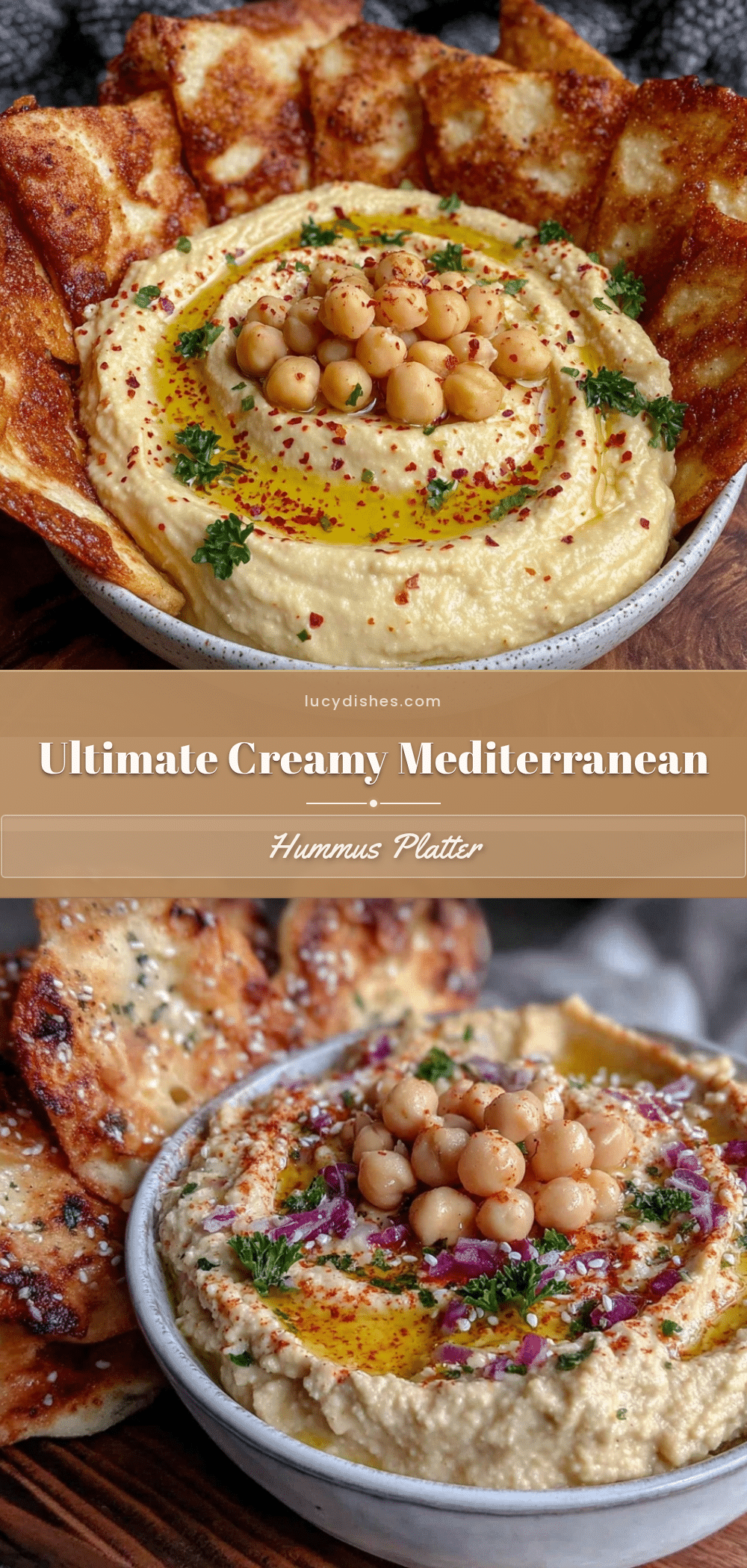
Fresh Mediterranean Hummus Platter Recipe with Easy Homemade Pita Chips
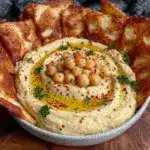
A quick and easy Mediterranean-inspired hummus platter featuring creamy homemade hummus, crispy baked pita chips, and fresh veggies. Perfect for entertaining or a light, satisfying snack.
- Prep Time: 10 minutes
- Cook Time: 15 minutes
- Total Time: 25 minutes
- Yield: 4 servings 1x
- Category: Appetizer
- Cuisine: Mediterranean
Ingredients
- 1 can (15 oz / 425 g) chickpeas, drained and rinsed
- 3 tablespoons tahini
- 2 tablespoons fresh lemon juice (about 1 medium lemon)
- 2 cloves garlic, minced
- 3 tablespoons extra virgin olive oil (plus more for drizzling)
- 1/2 teaspoon ground cumin
- Salt to taste (start with 1/2 teaspoon)
- 2–3 tablespoons cold water
- 4 pita bread rounds (whole wheat or white)
- 2 tablespoons olive oil
- 1/2 teaspoon sea salt
- 1/4 teaspoon smoked paprika or za’atar (optional)
- Cherry tomatoes, halved
- Cucumber slices
- Carrot sticks
- Kalamata olives
- Fresh parsley or mint leaves (for garnish)
- Optional: crumbled feta cheese
Instructions
- Drain and rinse the chickpeas well under cold water to remove any canned flavor. Place them in your food processor along with the tahini, lemon juice, minced garlic, cumin, and salt.
- Pulse everything together, then while the machine runs, slowly drizzle in olive oil and cold water. The water helps loosen the mixture to a creamy consistency. Stop occasionally to scrape down the bowl. The hummus should be silky and smooth, not grainy—if it’s thick, add a little more water, one tablespoon at a time.
- Taste your hummus and adjust salt, lemon, or garlic as needed. Add a bit more lemon juice at the end for brightness.
- Preheat your oven to 375°F (190°C). Cut each pita bread into 8 triangles. Toss the pita pieces in olive oil, sea salt, and paprika or za’atar if using, making sure each chip is lightly coated.
- Arrange pita chips in a single layer on a baking sheet. Bake for about 12-15 minutes, flipping halfway through. Watch closely near the end to avoid burning—chips should be golden and crisp.
- Spread hummus in a shallow bowl or plate. Drizzle a little olive oil over the top and sprinkle with paprika or chopped parsley. Arrange pita chips and fresh veggies like cucumber, cherry tomatoes, carrot sticks, and olives around the hummus. Add crumbled feta if desired.
Notes
Peeling chickpeas can make hummus smoother but is optional. Adjust water and olive oil to achieve desired hummus texture. Bake pita chips until golden and crisp, flipping halfway. Serve hummus at room temperature and pita chips fresh for best texture. Store hummus in airtight container up to 4 days; pita chips best fresh or stored up to 2 days.
Nutrition
- Serving Size: About 1/4 cup hummus
- Calories: 200
- Fat: 8
- Carbohydrates: 20
- Fiber: 5
- Protein: 5
Keywords: hummus, pita chips, Mediterranean, appetizer, homemade, healthy snack, vegetarian, vegan option