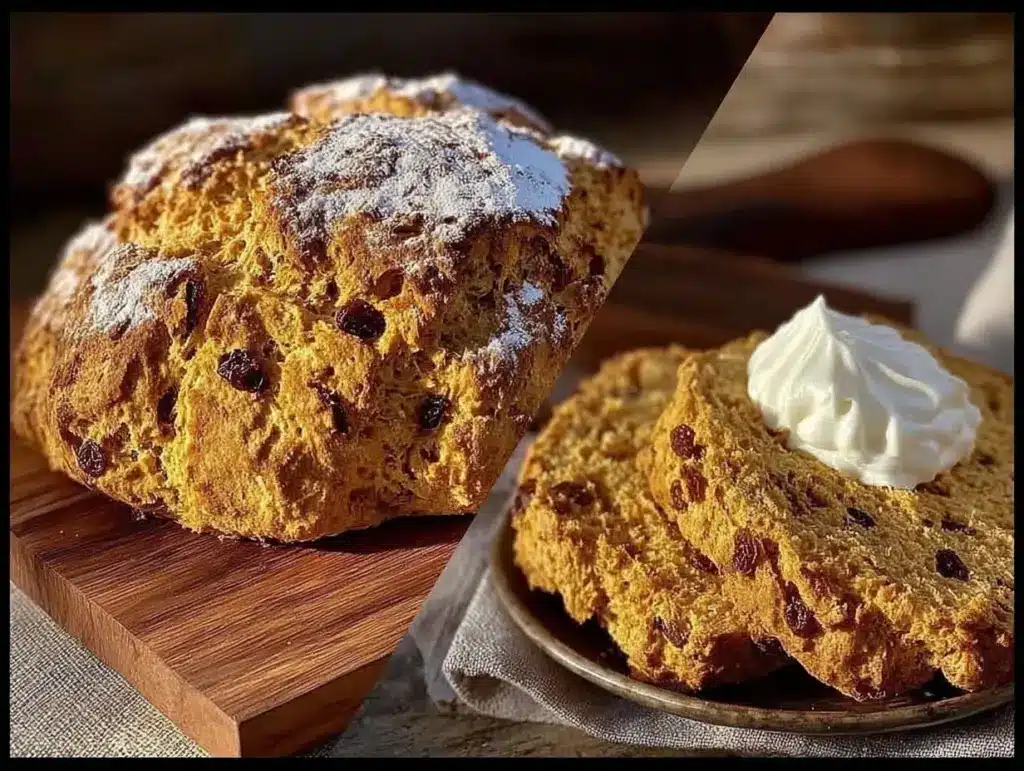
Let me tell you, the smell of freshly baked Irish soda bread wafting through my kitchen is enough to make anyone’s mouth water. That crisp crust, the warm, tender crumb breaking apart under your fingers—honestly, it’s like a comforting little hug from the inside out. The first time I baked this easy rustic Irish soda bread recipe, I was instantly hooked. It was one of those moments where I paused, took a deep breath, and just smiled because I knew I was onto something truly special.
Years ago, when I was knee-high to a grasshopper, my grandma would bring homemade soda bread to family dinners. The rustic, no-fuss charm of it stuck with me over the years. I stumbled upon this recipe on a rainy weekend, trying to recreate that nostalgic feeling without having to hunt down fancy ingredients or spend hours in the kitchen. My family couldn’t stop sneaking slices off the cooling rack (and I can’t really blame them). This easy rustic Irish soda bread recipe quickly became a staple for family gatherings and last-minute treats alike.
You know what makes this bread so dangerously easy? It requires no yeast, no complicated rising times—just simple pantry staples, a little elbow grease, and a hot oven. Perfect for cozy mornings, potlucks, or brightening up your Pinterest cookie board with something a bit more hearty. Trust me, once you try this recipe, you’ll want to bookmark it for every occasion when you need pure, nostalgic comfort on the fly.
Why You’ll Love This Recipe
Honestly, this easy rustic Irish soda bread recipe ticks all the boxes for anyone who loves homemade baking without the hassle. After testing it multiple times (in the name of research, of course), here’s why it stands out:
- Quick & Easy: Comes together in under 45 minutes, perfect for busy weeknights or those sudden cravings.
- Simple Ingredients: No fancy grocery runs needed; you probably have everything at home right now.
- Perfect for Any Occasion: Whether it’s St. Patrick’s Day, a Sunday brunch, or a comforting side for dinner, this bread fits right in.
- Crowd-Pleaser: Kids love it, adults adore it—everyone keeps asking for seconds.
- Unbelievably Delicious: That crunchy crust with a tender, slightly tangy crumb hits all the right notes.
What makes this recipe different? It balances the tang from buttermilk with a subtle sweetness and a rustic texture that isn’t dry or crumbly. Plus, the scoring on top not only looks charming but helps it bake evenly. This isn’t just any soda bread—it’s the best version you’ll find, tested and approved by my family and friends.
It’s the kind of bread that makes you close your eyes after the first bite, savoring that warm, soul-soothing goodness. Whether you’re impressing guests or just treating yourself, this recipe makes homemade baking feel easy, satisfying, and downright special.
What Ingredients You Will Need
This easy rustic Irish soda bread recipe uses simple, wholesome ingredients to deliver bold flavor and satisfying texture without the fuss. Most are pantry staples, and you can easily swap out a few if needed.
- All-purpose flour: 4 cups (480 g) – I prefer King Arthur for consistent texture.
- Baking soda: 1 teaspoon – the magic leavening agent that gives soda bread its rise.
- Salt: 1 teaspoon – balances the flavors perfectly.
- Buttermilk: 1 ¾ cups (420 ml) – adds tang and moisture; you can use dairy-free milk with a splash of vinegar as a substitute.
- Granulated sugar: 1 tablespoon – just a touch for subtle sweetness (optional but recommended).
- Unsalted butter: 2 tablespoons, melted (optional) – adds richness and a slightly tender crumb.
- Optional additions: ½ cup raisins or currants (for a slightly sweet twist), or a tablespoon of caraway seeds for a traditional touch.
If you want a gluten-free version, swapping all-purpose flour for a gluten-free blend works well, but texture will be a bit different. For a dairy-free option, coconut or almond milk mixed with a teaspoon of lemon juice can replace buttermilk. The key is to keep the balance between acid and baking soda to get that classic rise.
This recipe shines because every ingredient plays its part—no fillers or unnecessary extras. It’s honest, simple baking that gets the job done beautifully.
Equipment Needed
- Large mixing bowl: For combining your dry and wet ingredients easily.
- Measuring cups and spoons: Accuracy matters here—especially with baking soda.
- Wooden spoon or sturdy spatula: For mixing the dough without overworking it.
- Baking sheet or cast iron skillet: Both work great. I love using a cast iron skillet for that extra-crispy crust.
- Sharp knife or bread lame: To score the top of the dough before baking.
- Cooling rack: To let the bread breathe and cool properly without getting soggy.
If you don’t have a cast iron skillet, a heavy-duty baking sheet lined with parchment paper works just fine. A bread lame is fancy, but a sharp kitchen knife does the trick—just make sure it’s clean and sharp to get a nice cut. For budget-friendly options, mixing by hand and baking on a simple sheet pan still yields great results.
Personally, I find the cast iron skillet gives the bread that beautiful rustic crust that’s hard to beat, but don’t stress if you don’t have one—you’ll still get delicious results!
Preparation Method
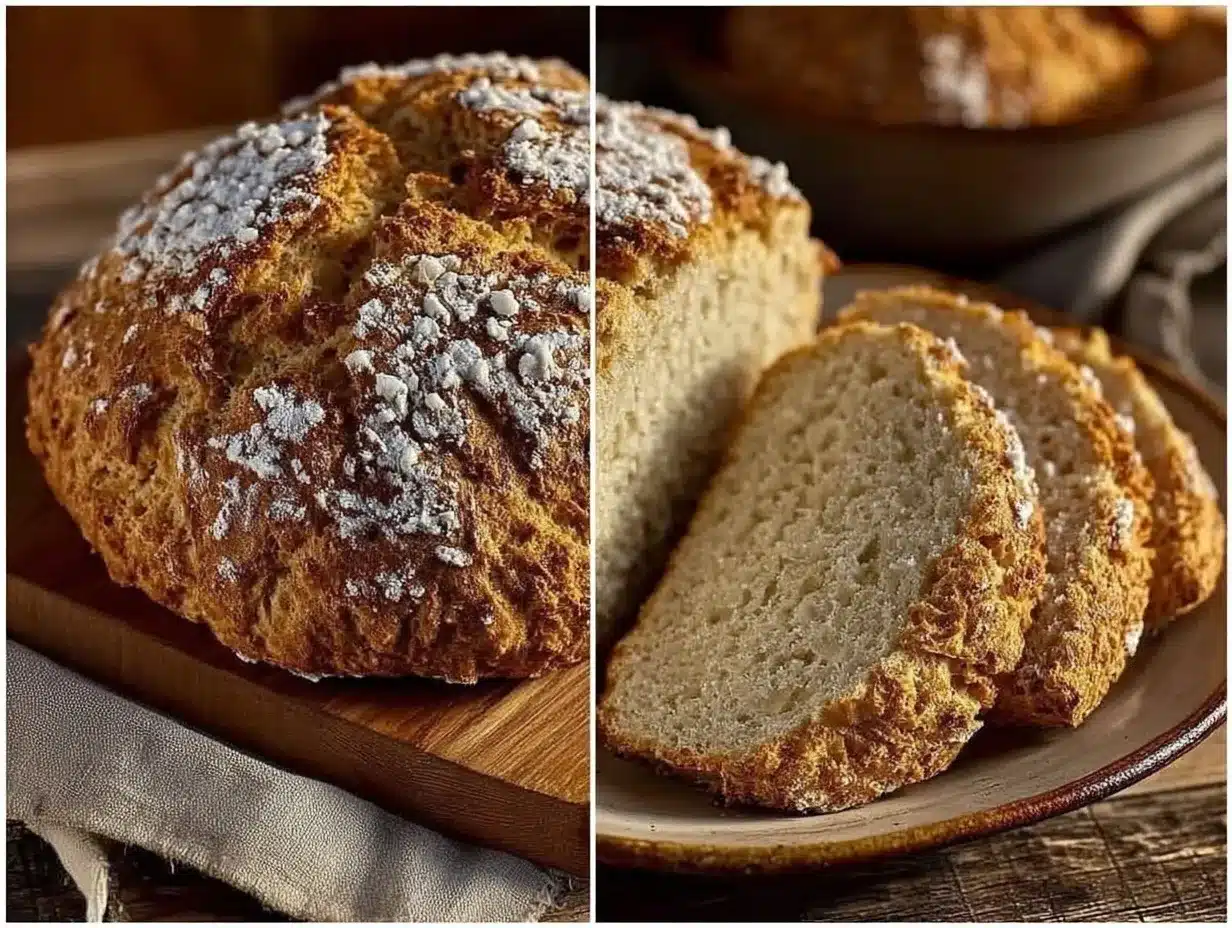
- Preheat your oven to 425°F (220°C). This high temperature helps create that golden, crunchy crust.
- In a large bowl, whisk together 4 cups (480 g) all-purpose flour, 1 teaspoon baking soda, 1 teaspoon salt, and 1 tablespoon granulated sugar. Mixing dry ingredients well ensures even rising.
- Make a well in the center of the dry ingredients and pour in 1 ¾ cups (420 ml) cold buttermilk and 2 tablespoons melted unsalted butter (if using). Use a wooden spoon or spatula to gently mix until a sticky dough forms. Don’t overmix; the dough should be slightly shaggy and moist.
- Turn the dough onto a lightly floured surface. Knead gently about 4-5 times to bring it together. It’s rustic bread, so don’t worry about perfect smoothness—the texture adds to the charm.
- Shape the dough into a round loaf about 7 inches (18 cm) in diameter. Place it on a lightly floured baking sheet or into a cast iron skillet.
- With a sharp knife, score a deep cross on top of the loaf. This traditional step helps the bread bake evenly and gives it that classic look.
- Bake for 30-35 minutes. The bread should be golden brown and sound hollow when tapped on the bottom. If you have a kitchen thermometer, it should read about 200°F (93°C) internally.
- Remove from oven and transfer to a cooling rack. Let it cool for at least 20 minutes before slicing. This resting step lets the crumb set perfectly.
If the crust browns too fast, tent loosely with foil after 20 minutes. One time, I baked it slightly under, and the crumb was a bit gummy—lesson learned: patience is key! Also, don’t skip the scoring—it’s not just for show; it prevents cracking all over the loaf.
With this method, you’re guaranteed a rustic, hearty loaf with a crunchy crust and tender inside every time.
Cooking Tips & Techniques
Let’s be honest—baking soda bread is pretty forgiving, but there are a few tricks to get it just right. First, always measure your baking soda accurately; too much can give off a metallic taste, and too little will leave the bread dense.
Use cold buttermilk straight from the fridge—it reacts with the baking soda to create that quick rise. And don’t overwork the dough! Kneading too much develops gluten and makes the bread tough, which defeats the purpose of this quick bread.
I’ve found that scoring deeply with a sharp knife rather than a dull one helps the bread expand properly. Also, preheating the oven fully before baking is crucial; it gives the bread that initial oven spring that creates a light, airy crumb.
Multitasking tip: while the bread bakes, you can prep your morning coffee or set the table. With just 35 minutes of baking time, it’s perfect for fitting into busy mornings.
Lastly, cool the bread on a rack so the crust stays crisp instead of steaming and getting soggy underneath. These little tips have saved me from more than one baking blunder—trust me, it’s worth the extra care!
Variations & Adaptations
This easy rustic Irish soda bread recipe is wonderfully versatile. Here are a few ways to make it your own:
- Sweet variation: Add ½ cup raisins or dried cranberries and a teaspoon of cinnamon to the dry ingredients for a fruity, cozy loaf.
- Herb-infused: Toss in 1 tablespoon fresh chopped rosemary or thyme for a savory twist that pairs beautifully with soups and stews.
- Gluten-free option: Use a gluten-free flour blend in place of all-purpose flour. The texture will be a bit more crumbly, but just as tasty.
- Dairy-free swap: Replace buttermilk with almond or oat milk mixed with 1 tablespoon lemon juice or apple cider vinegar, let sit for 5 minutes before mixing.
- Whole wheat version: Substitute half the all-purpose flour with whole wheat flour for a nuttier flavor and heartier crumb.
One time, I tried adding shredded sharp cheddar and chopped green onions for a savory cheese bread version—it was a total hit at brunch! Feel free to experiment; this recipe is forgiving enough to handle your creativity.
Serving & Storage Suggestions
Serve your Irish soda bread warm or at room temperature. It’s fantastic slathered with butter and a drizzle of honey or alongside a bowl of hearty stew or soup. For breakfast, try it toasted with jam or cream cheese—it’s honestly one of the best ways to start the day.
Store leftovers wrapped tightly in plastic wrap or in an airtight container at room temperature for up to 2 days. For longer storage, slice and freeze the bread in a resealable bag for up to 3 months. Just pop slices straight into the toaster or warm them in the oven before serving.
Reheating in a 350°F (175°C) oven for 5-7 minutes helps refresh the crust nicely without drying out the crumb. Over time, the flavors mellow and deepen, so leftovers can be surprisingly good the next day.
Pair this bread with a cup of strong tea or your favorite hearty chili, and you’ve got a comforting meal that feels like a warm hug on a plate.
Nutritional Information & Benefits
This easy rustic Irish soda bread recipe provides roughly 180-200 calories per slice (based on 12 slices per loaf), with moderate carbohydrates and low fat. Buttermilk adds a nice dose of calcium and protein, while the bread itself is free from yeast and refined sugars (if you skip the optional sugar).
Using whole wheat flour or adding seeds can boost fiber content, aiding digestion and keeping you fuller longer. This bread is naturally free from nuts and can be adapted for dairy-free diets, making it a friendly choice for many dietary needs.
From a wellness perspective, it’s a wholesome comfort food that doesn’t overload on processed ingredients but still delivers satisfying flavor and texture. Perfect when you want something traditional yet simple and honest.
Conclusion
So there you have it—an easy rustic Irish soda bread recipe that’s quick, straightforward, and downright tasty. Whether you’re new to homemade bread or a seasoned baker, this recipe invites you to enjoy the simple pleasures of fresh bread without the fuss.
Feel free to tweak it—add your favorite mix-ins, swap flours, or try different herbs. This bread is as adaptable as it is delicious, and I think you’re going to love making it part of your baking routine.
I personally adore this recipe because it brings a slice of tradition to my kitchen and always fills the house with that irresistible aroma. Give it a try, let me know how it turned out, and don’t be shy about sharing your own twists!
Happy baking, and here’s to many cozy, crusty loaves ahead!
FAQs
Can I make Irish soda bread without buttermilk?
Yes! Simply mix 1 ¾ cups (420 ml) of milk (dairy or plant-based) with 1 tablespoon lemon juice or vinegar, let it sit for 5 minutes to curdle, then use as buttermilk substitute.
Why does Irish soda bread need baking soda?
Baking soda reacts with the acid in buttermilk to create carbon dioxide bubbles, which help the bread rise quickly without yeast.
How do I know when the soda bread is done baking?
The crust should be golden brown and the bread will sound hollow when tapped on the bottom. An internal temperature around 200°F (93°C) is a good indicator.
Can I add dried fruits or nuts to the bread?
Absolutely! Raisins, currants, nuts, or seeds can be folded into the dough for extra flavor and texture.
How should I store leftover soda bread?
Wrap tightly in plastic wrap or store in an airtight container at room temperature for up to 2 days, or freeze slices for up to 3 months.
Pin This Recipe!
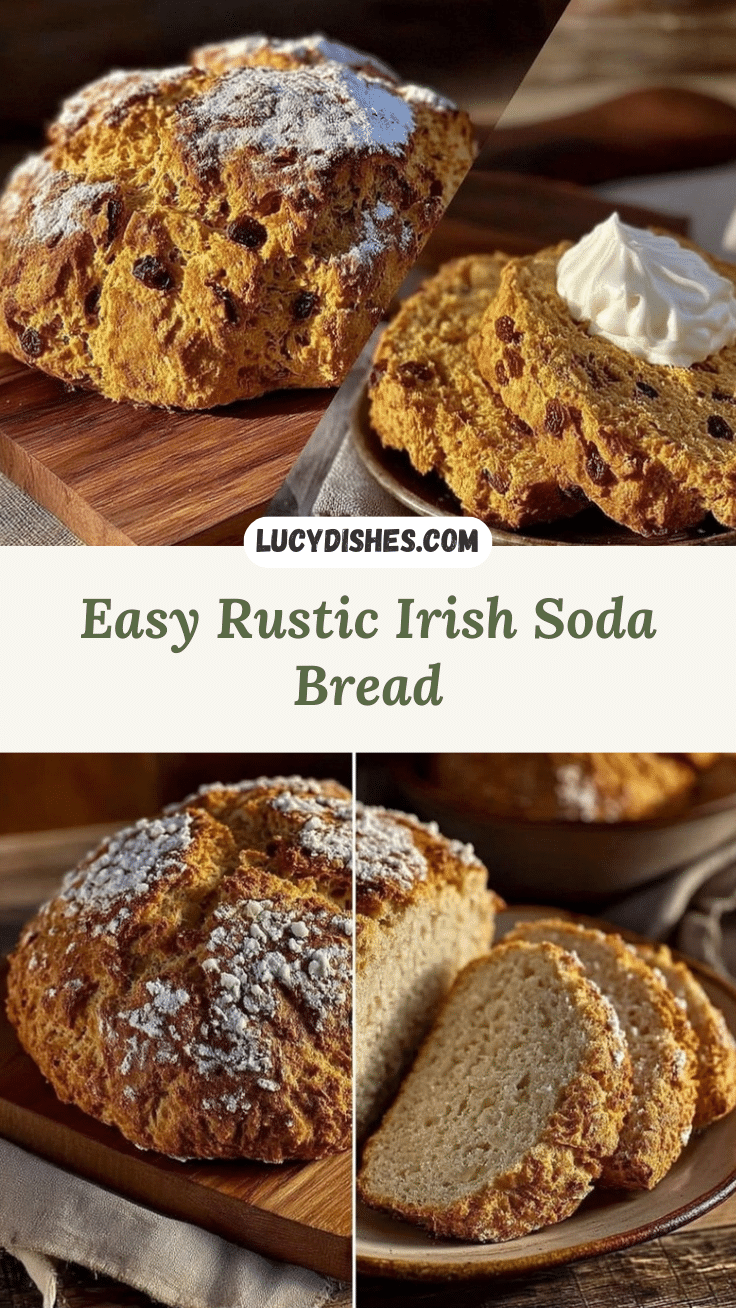
Easy Rustic Irish Soda Bread Recipe Perfect for Quick Homemade Baking

A quick and easy Irish soda bread recipe with a crunchy crust and tender crumb, perfect for any occasion and made with simple pantry staples.
- Prep Time: 10 minutes
- Cook Time: 30-35 minutes
- Total Time: 45 minutes
- Yield: 12 slices 1x
- Category: Bread
- Cuisine: Irish
Ingredients
- 4 cups (480 g) all-purpose flour
- 1 teaspoon baking soda
- 1 teaspoon salt
- 1 tablespoon granulated sugar
- 1 ¾ cups (420 ml) cold buttermilk
- 2 tablespoons unsalted butter, melted (optional)
- Optional additions: ½ cup raisins or currants, or 1 tablespoon caraway seeds
Instructions
- Preheat your oven to 425°F (220°C).
- In a large bowl, whisk together 4 cups (480 g) all-purpose flour, 1 teaspoon baking soda, 1 teaspoon salt, and 1 tablespoon granulated sugar.
- Make a well in the center of the dry ingredients and pour in 1 ¾ cups (420 ml) cold buttermilk and 2 tablespoons melted unsalted butter (if using). Use a wooden spoon or spatula to gently mix until a sticky dough forms. Don’t overmix; the dough should be slightly shaggy and moist.
- Turn the dough onto a lightly floured surface. Knead gently about 4-5 times to bring it together.
- Shape the dough into a round loaf about 7 inches (18 cm) in diameter. Place it on a lightly floured baking sheet or into a cast iron skillet.
- With a sharp knife, score a deep cross on top of the loaf.
- Bake for 30-35 minutes until golden brown and the bread sounds hollow when tapped on the bottom. Internal temperature should be about 200°F (93°C).
- Remove from oven and transfer to a cooling rack. Let cool for at least 20 minutes before slicing.
Notes
If the crust browns too fast, tent loosely with foil after 20 minutes. Don’t overmix or overknead the dough to avoid toughness. Use cold buttermilk for best rise. Scoring the top deeply helps the bread bake evenly and prevents cracking.
Nutrition
- Serving Size: 1 slice (1/12th of l
- Calories: 190
- Sugar: 3
- Sodium: 400
- Fat: 4
- Saturated Fat: 2
- Carbohydrates: 35
- Fiber: 1
- Protein: 5
Keywords: Irish soda bread, rustic bread, quick bread, homemade bread, easy baking, no yeast bread