
“You might want to sit down for this one,” my friend said over text. She had just whipped up a batch of Thai green curry that, honestly, I thought was going to be another ‘meh’ attempt at something exotic. But then she sent a photo—vibrant green, dotted with fresh vegetables that looked like spring itself had been caught in a bowl. I was skeptical (because, you know, curry can be tricky), but the smell wafting through my own kitchen the next day told a different story.
I wasn’t aiming to make anything fancy that night, just a quick meal after a long day. The creamy Thai green curry with spring vegetables came together almost by accident—an impromptu use of what was left in the fridge and a bit of Thai green curry paste I’d been meaning to try. The balance of creamy coconut milk, the subtle heat, and the freshness of snap peas, asparagus, and baby carrots hit differently than I expected. It felt like a warm, comforting reset button after a hectic day.
What stuck with me was how surprisingly easy it was to get that authentic taste at home without a ton of fuss. No hours of prep or hunting down obscure ingredients—just simple steps, fresh produce, and that luscious, velvety curry sauce. I kept making it over and over, tweaking the vegetables according to what was in season or on hand. It quickly became a quiet favorite, the kind of dish that’s both soothing and exciting.
So here’s the thing: this creamy Thai green curry with spring vegetables isn’t just a recipe; it’s that calm moment in your busy week when you remember how good simple, fresh, and well-made food can be. It’s a dish I trust to bring a little joy and ease to the table, every time.
Why You’ll Love This Creamy Thai Green Curry with Spring Vegetables
After countless trials and a few happy accidents, this recipe nails what makes Thai green curry truly special—without the stress or long ingredient lists. I’ve tested it in my own kitchen multiple times, even sharing it with friends who usually shy away from spicy dishes. Here’s why this recipe stands out:
- Quick & Easy: Ready in about 30 minutes, it’s perfect for busy weeknights or when you’re craving something vibrant but don’t want to spend hours cooking.
- Simple Ingredients: No need for exotic markets; most ingredients are pantry staples or easy to find fresh produce, making it an accessible recipe for home cooks everywhere.
- Perfect for Spring: The fresh spring vegetables add a crisp, seasonal bite that brightens the creamy, spicy sauce.
- Crowd-Pleaser: The balance of creamy coconut milk and green curry paste creates a flavor profile that both kids and adults can enjoy.
- Unbelievably Delicious: The texture is silky with a hint of heat and freshness, a combination that feels indulgent without being heavy.
This isn’t just another green curry recipe floating around. A secret I’ve found is to lightly blanch the vegetables before tossing them in the sauce—keeps them bright, crisp, and prevents that overcooked mushiness that sometimes ruins the dish. Plus, a splash of fresh lime juice at the end wakes up the flavors beautifully. Honestly, this recipe feels like the kind of comfort food that makes you close your eyes and savor every bite, the way a great meal should.
If you’ve ever been curious about making your own curry but felt overwhelmed, this recipe is a perfect starting point. It’s straightforward, forgiving, and endlessly adaptable—kind of like the cozy homemade meals in my fresh healthy quinoa salad recipe, which is another favorite for quick, wholesome dinners.
What Ingredients You Will Need
This recipe uses simple, wholesome ingredients to deliver bold flavor and satisfying texture without the fuss. Most items are pantry staples or fresh spring vegetables that are easy to swap depending on what’s available.
- Thai Green Curry Paste: About 3 tablespoons (look for authentic brands like Mae Ploy or Thai Kitchen for best flavor).
- Coconut Milk: 1 can (13.5 oz / 400 ml), full-fat for creaminess.
- Spring Vegetables:
- 1 cup asparagus, trimmed and cut into 2-inch pieces
- 1 cup snap peas, strings removed
- 1/2 cup baby carrots, sliced diagonally
- 1/2 cup sugar snap peas (optional for extra crunch)
- Onion: 1 small yellow onion, thinly sliced (adds subtle sweetness).
- Garlic: 3 cloves, minced (freshly minced packs more punch).
- Fresh Ginger: 1 teaspoon, grated (for a bright, zesty note).
- Vegetable Broth or Water: 1/2 cup (to adjust sauce consistency).
- Fresh Thai Basil Leaves: A handful, roughly chopped (essential for authentic aroma).
- Lime Juice: Juice of 1 lime (brightens and balances richness).
- Fish Sauce: 1 tablespoon (or soy sauce for vegetarian version).
- Brown Sugar: 1 teaspoon (balances the heat and sourness).
- Oil: 1 tablespoon vegetable or coconut oil for sautéing.
- Optional Protein: Firm tofu cubes or peeled shrimp can be added if desired.
If asparagus isn’t in season, swapping in green beans or zucchini works just as well. For a gluten-free version, make sure your curry paste and fish sauce don’t contain any hidden wheat. And if you want to make this dish extra vibrant, fresh herbs like cilantro or mint can be stirred in at the end, though Thai basil remains king here.
Equipment Needed
- Large Skillet or Wok: Ideal for sautéing the curry paste and vegetables evenly. I personally prefer a heavy-bottomed skillet for even heat distribution.
- Sharp Knife and Cutting Board: Essential for prepping fresh vegetables and herbs.
- Measuring Cups and Spoons: For accurate seasoning and liquid measurements, especially the curry paste and liquids.
- Wooden Spoon or Silicone Spatula: For stirring without scratching your cookware.
- Small Bowl: To mix lime juice, fish sauce, and sugar before adding to the curry.
If you don’t have a wok, a large sauté pan works just fine. For those on a budget, a non-stick skillet with a good lid is a solid choice and easy to clean. Make sure whatever pan you use can hold all the ingredients comfortably to avoid overcrowding, which can steam rather than sauté your vegetables.
Preparation Method
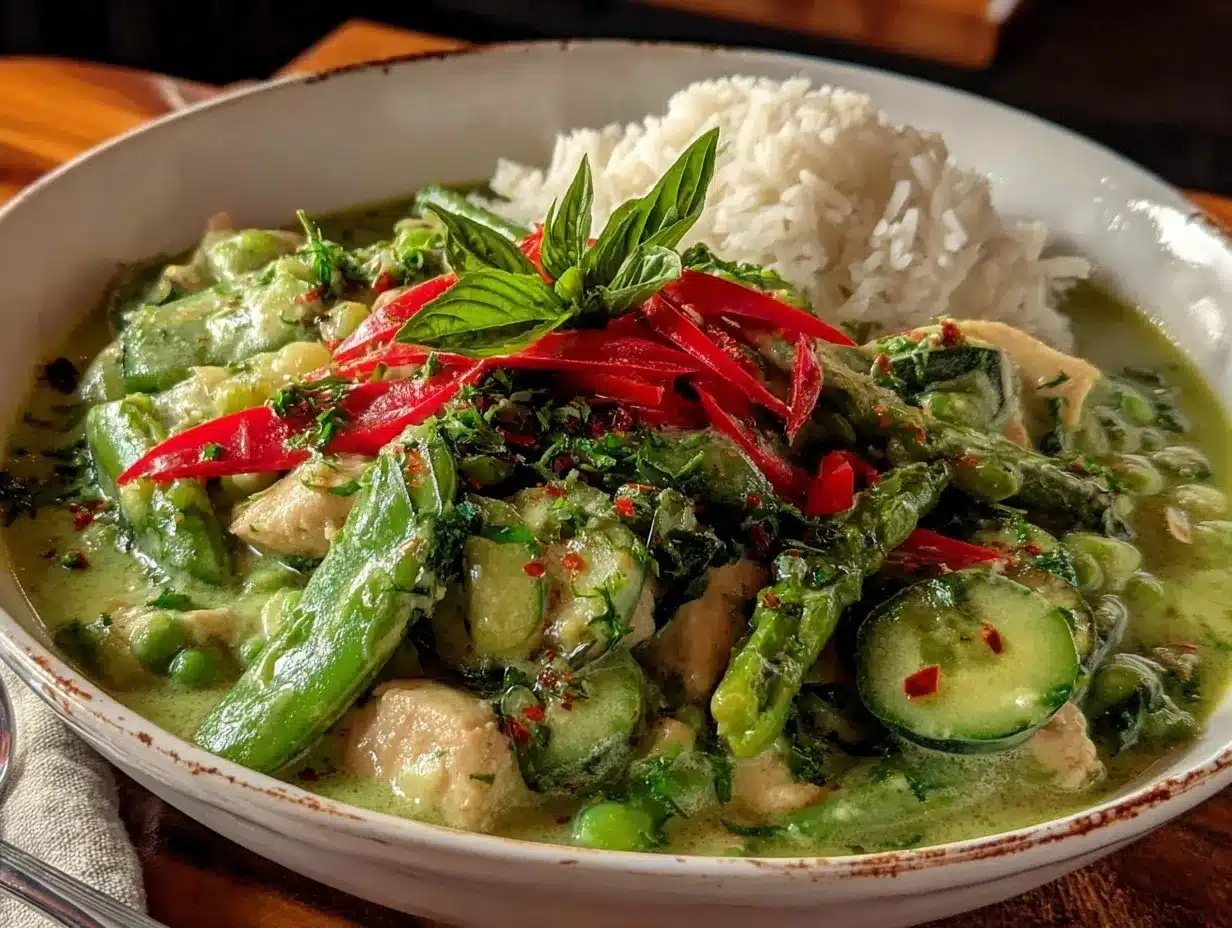
- Prep the Vegetables (10 minutes): Trim and cut asparagus into 2-inch pieces, slice baby carrots diagonally, remove strings from snap peas, and thinly slice the onion. Mince garlic and grate fresh ginger. Set aside.
- Blanch the Spring Vegetables (5 minutes): Bring a pot of salted water to a boil. Add asparagus, baby carrots, and snap peas for 1-2 minutes until crisp-tender. Drain and immediately plunge into ice water to stop cooking and preserve color. Drain again and set aside.
- Sauté Aromatics (5 minutes): Heat 1 tablespoon oil in a large skillet over medium heat. Add sliced onion, minced garlic, and grated ginger. Cook until fragrant and onions soften, about 3-4 minutes, stirring frequently to prevent burning.
- Cook Curry Paste (2 minutes): Add 3 tablespoons of Thai green curry paste to the skillet. Stir constantly to toast the paste and release essential oils—this step is key for depth of flavor.
- Add Coconut Milk and Broth (5 minutes): Pour in the can of coconut milk and 1/2 cup vegetable broth or water. Stir to combine and bring to a gentle simmer. Let it cook for 4-5 minutes, stirring occasionally, until slightly thickened.
- Season the Curry (2 minutes): Mix fish sauce (or soy sauce), brown sugar, and lime juice in a small bowl. Add this mixture to the skillet. Stir well to balance salty, sweet, and sour notes.
- Add Blanched Vegetables (3 minutes): Gently fold in the blanched asparagus, carrots, and snap peas. Heat through for 2-3 minutes, so the vegetables stay crisp but warm.
- Finish with Fresh Herbs (1 minute): Remove from heat and stir in chopped fresh Thai basil leaves. Taste and adjust seasoning if necessary—sometimes a little extra lime juice or fish sauce does the trick.
- Serve Immediately: Spoon the creamy Thai green curry over steamed jasmine rice or alongside your favorite noodles.
Pro tip: If you want to add protein like tofu or shrimp, cook these separately and add them in the last few minutes to avoid overcooking. Also, keep an eye on the curry’s thickness—it should be creamy but pourable, not too watery or too thick.
Cooking Tips & Techniques
Getting the perfect creamy Thai green curry with spring vegetables is easier than you might expect, but a few insider tips make all the difference.
- Don’t Skip Toasting the Curry Paste: This step releases the paste’s intense flavors and aromatics. Stir it in a hot pan for a couple of minutes before adding liquids.
- Blanch Vegetables First: It keeps them vibrant and crunchy. Otherwise, they might get soggy and lose their fresh snap.
- Balance Your Flavors: Thai food is all about the harmony of sweet, salty, sour, and spicy—taste as you go and adjust with lime juice, fish sauce, or sugar.
- Use Full-Fat Coconut Milk: It creates that luscious, creamy texture that defines this curry.
- Mind the Heat: If you prefer mild curries, start with less green curry paste and add more to taste.
- Multitasking Tip: While the curry simmers, you can prepare a quick salad or even bake some crispy baked eggplant for a side. It pairs surprisingly well.
I once overcooked the snap peas in this curry and ended up with a mushy mess—lesson learned to blanch and shock vegetables right away! It’s little things like that which can really elevate your home cooking from “okay” to “wow.”
Variations & Adaptations
This creamy Thai green curry with spring vegetables is a flexible recipe that welcomes your personal touch.
- Protein Options: Add cubed chicken breast, shrimp, or firm tofu for a heartier meal. Cook proteins separately to keep the curry balanced.
- Seasonal Veggies: Swap spring vegetables for summer zucchini, bell peppers, or even thinly sliced eggplant depending on what’s fresh.
- Spice Level: For a milder version, reduce the curry paste or add a splash of coconut cream to mellow the heat. Crank it up by adding chopped fresh green chilies.
- Vegan/Vegetarian: Use soy sauce instead of fish sauce and skip any animal proteins to keep it plant-based.
- Lower Carb: Serve over cauliflower rice or spiralized zucchini noodles for a lighter, low-carb option.
One of my favorite tweaks is stirring in a tablespoon of creamy peanut butter at the end for a subtle nutty depth—sounds unusual but trust me, it’s delicious. If you want to try something a little different, pairing this curry with a warm loaf like the easy rustic Irish soda bread makes for a cozy, fusion-inspired meal.
Serving & Storage Suggestions
Serve this creamy Thai green curry hot over steamed jasmine rice or fragrant coconut rice to soak up all that luscious sauce. For a lighter option, fluffy quinoa or even simple noodles work well.
Garnish with extra fresh Thai basil, a wedge of lime on the side, or a sprinkle of chopped peanuts for added texture. It also pairs nicely with a crisp cucumber salad or fresh spring rolls for a refreshing contrast.
Store leftovers in an airtight container in the refrigerator for up to 3 days. The flavors deepen overnight, though the vegetables may soften slightly. To reheat, warm gently on the stove or microwave in short bursts, stirring occasionally to keep the sauce creamy and prevent splitting.
For longer storage, this curry freezes well for up to 2 months. Thaw overnight in the fridge and reheat slowly. A quick squeeze of fresh lime juice after reheating helps brighten the flavors again.
Nutritional Information & Benefits
This creamy Thai green curry with spring vegetables is not only satisfying but packs a nutritious punch. A typical serving provides approximately:
| Calories | 320 kcal |
|---|---|
| Protein | 6 g |
| Fat | 24 g (mostly from healthy coconut milk) |
| Carbohydrates | 18 g |
| Fiber | 4 g |
Key ingredients like coconut milk provide medium-chain triglycerides (MCTs) that are easier to digest and can provide quick energy. The fresh spring vegetables offer fiber, vitamins A and C, and antioxidants. This curry is naturally gluten-free and can be made vegan with simple swaps, making it suitable for many dietary preferences.
From a wellness perspective, the ginger and garlic in the curry paste bring anti-inflammatory benefits, while the balance of flavors can help stimulate digestion and appetite—a comforting yet light meal option.
Conclusion
This creamy Thai green curry with spring vegetables is one of those dishes that quietly wins over your taste buds and your weeknight routine. It’s easy to make, uses fresh ingredients you probably have around, and delivers a satisfying, flavorful meal every single time. I love how adaptable it is—whether you’re cooking for one or feeding a crowd, it fits the bill.
Feel free to customize the veggies, spice level, or protein to make it your own. This recipe is a gentle reminder that sometimes, simple things done well are the most rewarding. I hope it finds a spot in your kitchen as it has in mine, bringing a little bit of warmth and freshness whenever you need it.
And hey, if you try this green curry, I’d love to hear about your twists or how it turned out—sharing kitchen stories is part of the fun!
Frequently Asked Questions
Can I make this creamy Thai green curry ahead of time?
Yes, you can prepare the curry a day in advance. Just store it in the refrigerator and reheat gently before serving. Keep in mind the vegetables may soften slightly but the flavors will intensify.
What can I substitute for Thai green curry paste if I can’t find it?
While green curry paste is unique, you can substitute with red curry paste for a different flavor or make a simple blend of green chilies, garlic, ginger, lemongrass, and cilantro if you want to try a homemade version.
Is this recipe spicy?
The heat level depends on the amount of curry paste used. This recipe uses about 3 tablespoons, which gives a moderate spice level. Adjust to your preference by adding less paste or incorporating fresh chilies.
Can I freeze the leftovers?
Yes, creamy Thai green curry freezes well for up to 2 months. Thaw overnight in the fridge and reheat slowly on the stove for best texture and flavor.
What should I serve with this curry?
Steamed jasmine rice is classic, but coconut rice, quinoa, or noodles also work beautifully. A side of fresh cucumber salad or spring rolls can add a refreshing crunch.
Pin This Recipe!
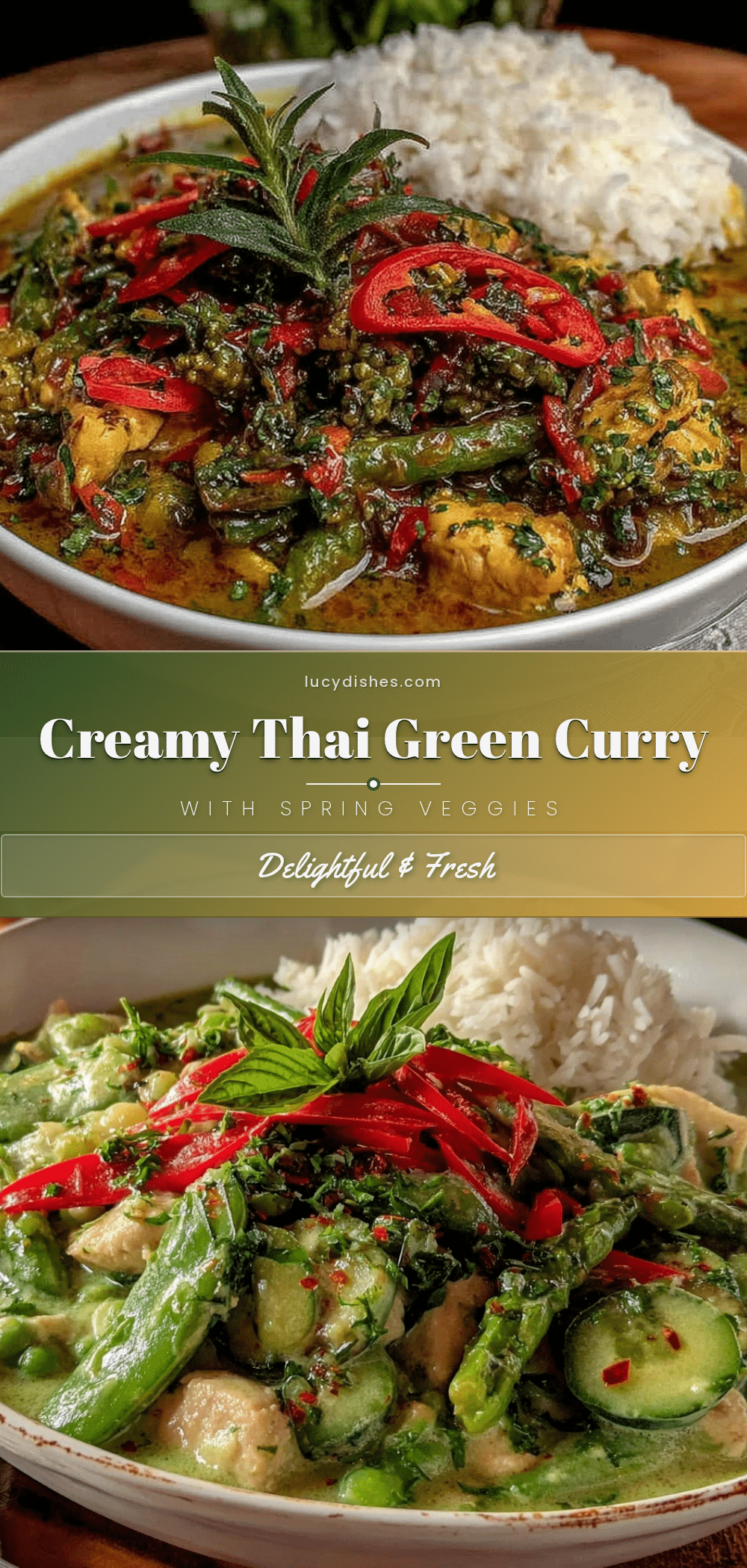
Creamy Thai Green Curry with Spring Vegetables

A quick and easy homemade Thai green curry featuring fresh spring vegetables in a creamy coconut milk sauce, perfect for a comforting and vibrant weeknight meal.
- Prep Time: 10 minutes
- Cook Time: 20 minutes
- Total Time: 30 minutes
- Yield: 4 servings 1x
- Category: Main Course
- Cuisine: Thai
Ingredients
- 3 tablespoons Thai green curry paste (authentic brands like Mae Ploy or Thai Kitchen recommended)
- 1 can (13.5 oz / 400 ml) full-fat coconut milk
- 1 cup asparagus, trimmed and cut into 2-inch pieces
- 1 cup snap peas, strings removed
- 1/2 cup baby carrots, sliced diagonally
- 1/2 cup sugar snap peas (optional)
- 1 small yellow onion, thinly sliced
- 3 cloves garlic, minced
- 1 teaspoon fresh ginger, grated
- 1/2 cup vegetable broth or water
- A handful fresh Thai basil leaves, roughly chopped
- Juice of 1 lime
- 1 tablespoon fish sauce (or soy sauce for vegetarian version)
- 1 teaspoon brown sugar
- 1 tablespoon vegetable or coconut oil for sautéing
- Optional protein: firm tofu cubes or peeled shrimp
Instructions
- Prep the vegetables: Trim and cut asparagus into 2-inch pieces, slice baby carrots diagonally, remove strings from snap peas, and thinly slice the onion. Mince garlic and grate fresh ginger.
- Blanch the spring vegetables: Bring a pot of salted water to a boil. Add asparagus, baby carrots, and snap peas for 1-2 minutes until crisp-tender. Drain and immediately plunge into ice water to stop cooking and preserve color. Drain again and set aside.
- Sauté aromatics: Heat 1 tablespoon oil in a large skillet over medium heat. Add sliced onion, minced garlic, and grated ginger. Cook until fragrant and onions soften, about 3-4 minutes, stirring frequently.
- Cook curry paste: Add 3 tablespoons of Thai green curry paste to the skillet. Stir constantly to toast the paste and release essential oils for about 2 minutes.
- Add coconut milk and broth: Pour in the can of coconut milk and 1/2 cup vegetable broth or water. Stir to combine and bring to a gentle simmer. Cook for 4-5 minutes until slightly thickened.
- Season the curry: Mix fish sauce (or soy sauce), brown sugar, and lime juice in a small bowl. Add this mixture to the skillet and stir well.
- Add blanched vegetables: Gently fold in the blanched asparagus, carrots, and snap peas. Heat through for 2-3 minutes.
- Finish with fresh herbs: Remove from heat and stir in chopped fresh Thai basil leaves. Taste and adjust seasoning if necessary.
- Serve immediately over steamed jasmine rice or your favorite noodles.
Notes
Toast the curry paste to release its flavors. Blanch vegetables to keep them crisp and vibrant. Adjust spice level by varying curry paste amount. Use full-fat coconut milk for best creaminess. Cook protein separately to avoid overcooking. The curry freezes well for up to 2 months.
Nutrition
- Serving Size: 1 serving (approxima
- Calories: 320
- Fat: 24
- Carbohydrates: 18
- Fiber: 4
- Protein: 6
Keywords: Thai green curry, creamy curry, spring vegetables, quick Thai recipe, coconut milk curry, vegetarian Thai curry, easy weeknight dinner