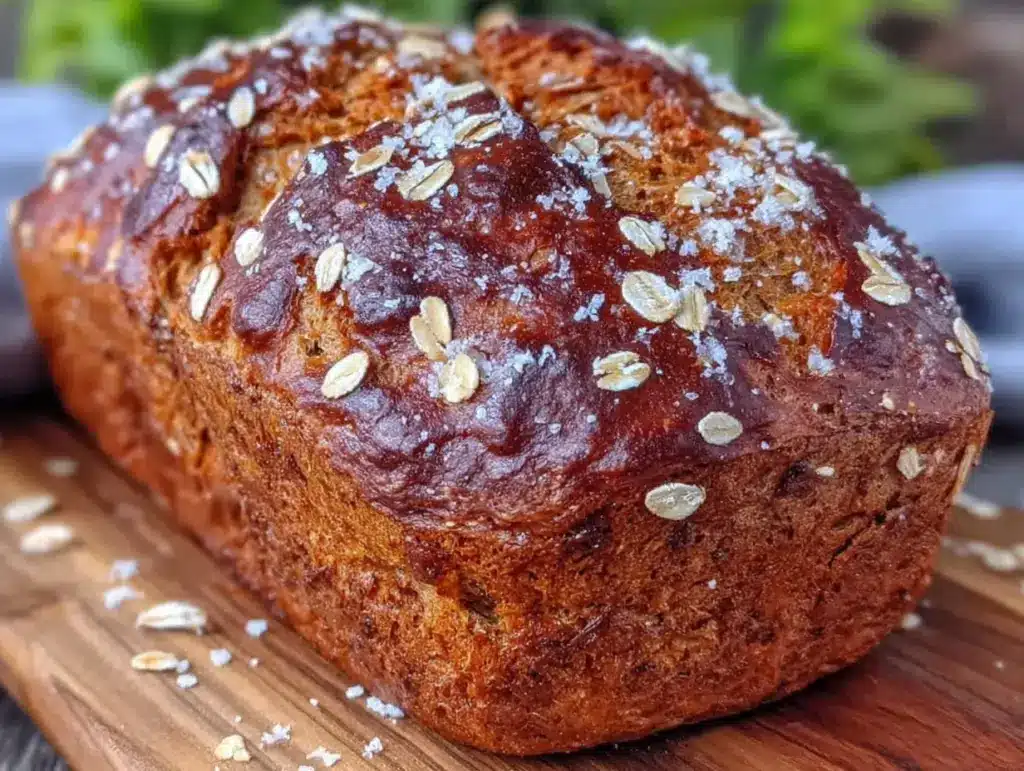
“You’re telling me this bread is made with beer?” my roommate asked, eyebrows raised as I pulled the loaf from the oven. Honestly, I was just as skeptical the first time I tried baking Irish brown bread with oats and stout. The idea came about on a chilly evening when I was craving something warm and comforting but didn’t want to fuss over complicated baking. I grabbed a half-empty bottle of stout from the fridge (because, why not?), threw together some oats and whole wheat flour, and crossed my fingers. The smell that filled the kitchen was instantly cozy—the deep malty notes from the stout mingling with the nutty oats. When I cut into that crusty, hearty loaf, I was surprised by how moist and flavorful it was. It wasn’t just “beer bread”; it was a dense, rustic treat that felt like a hug in carb form.
Since then, this recipe has quietly become a staple in my baking rotation, especially on weekends when I want something a little different but still simple. I love how the oats add texture and a bit of chew, while the stout lends complexity without overpowering. It’s the kind of bread that pairs beautifully with a slather of butter or alongside a bowl of soup—like the rich, comforting chicken tortilla soup I often make when the weather turns chilly. Over time, I’ve learned a few tricks to nail the perfect crust and crumb, and I’m excited to share those with you.
What’s stuck with me is how this hearty Irish brown bread feels like a little discovery—something that looks humble but delivers a quiet kind of satisfaction. There’s a trust in every slice that it’ll warm you up and stick with you through the day. If you’re willing to give it a shot, you might find it becoming your own go-to comfort bread too.
Why You’ll Love This Recipe
After baking this hearty Irish brown bread with oats and stout a handful of times (and yes, sometimes twice in a week because it disappears fast), I can say it’s one of those recipes that’s easy to come back to. Here’s why it might win you over:
- Quick & Easy: From mixing to baking takes about 1 hour and 15 minutes—perfect when you want homemade bread without the fuss or long rise times.
- Simple Ingredients: No weird flours or specialty items. Whole wheat flour, oats, baking soda, and a good stout—likely things you already have or can find easily.
- Perfect for Cozy Meals: Whether you’re serving it with a hearty stew or alongside a fresh salad like the Lebanese fattoush salad, it’s a warm, rustic addition that feels like home.
- Crowd-Pleaser: I’ve brought this loaf to casual dinners, and it’s always asked about (sometimes even before the main course).
- Unbelievably Delicious: The oats add a lovely chewiness, while the stout contributes a subtle malty sweetness and depth that sets this bread apart from your typical brown bread.
What makes this recipe stand out is the balance. The stout isn’t just a gimmick—it brings out a complexity and moisture that keeps the bread from being dry or flat. Plus, the oats give it a hearty texture that’s satisfying but not heavy. Honestly, it’s the kind of bread that makes you pause, close your eyes, and appreciate simple ingredients transformed.
Whether you’re baking for yourself on a quiet night or bringing something special to a potluck, this bread has a way of making the moment feel a bit more comforting and genuine.
What Ingredients You Will Need
This recipe relies on straightforward, wholesome ingredients that come together to create a robust flavor and satisfying texture. Most are pantry staples, and substitutions are easy if you want to tweak it.
- Whole Wheat Flour – 2 ½ cups (about 300g). Look for finely ground, fresh flour for the best flavor and texture.
- Rolled Oats – 1 cup (90g), plus a tablespoon for topping. Adds chewiness and rustic appeal.
- Baking Soda – 1 teaspoon. The leavening agent that gives the bread a good rise without yeast.
- Salt – ½ teaspoon. Balances the flavors and enhances the maltiness of the stout.
- Stout Beer – 1 ⅔ cups (400ml). A rich Irish stout works best (I prefer Guinness for its smooth, slightly bitter notes), but any dark stout will do. It’s the star that lends the bread its characteristic depth.
- Honey or Brown Sugar – 1 tablespoon (optional). Adds a touch of sweetness to balance the bitterness of the stout.
- Buttermilk or Plain Yogurt – ½ cup (120ml). Helps tenderize the crumb and adds a subtle tang. Greek yogurt can be used but thin it with a bit of milk if too thick.
- Unsalted Butter – 2 tablespoons, melted (for brushing the top). Gives a golden crust and extra richness.
Ingredient tips: If you want a gluten-free version, swap whole wheat flour with a gluten-free blend and use almond milk mixed with a teaspoon of vinegar instead of buttermilk. For an extra nutty twist, consider adding a handful of chopped toasted walnuts or sunflower seeds right into the batter.
Equipment Needed
- Mixing Bowl: A large bowl to combine all ingredients comfortably.
- Measuring Cups and Spoons: For accurate measurements, especially with the baking soda and salt.
- Loaf Pan: A standard 9×5 inch (23×13 cm) loaf pan works perfectly. You can also bake this freeform on a baking sheet for a more rustic shape.
- Wooden Spoon or Spatula: For mixing the batter without overworking the dough.
- Cooling Rack: Helps the bread cool evenly and prevents sogginess.
If you don’t have a loaf pan, a cast-iron skillet or a round cake pan can be great alternatives. Just adjust the baking time slightly and watch for a deep golden crust. I usually grease my pan well with butter to avoid sticking but using parchment paper works, too. And a simple kitchen timer is a lifesaver for timing the bake without distraction.
Preparation Method
- Preheat your oven to 375°F (190°C). Grease your 9×5 inch (23×13 cm) loaf pan with butter or line it with parchment paper.
- Mix dry ingredients: In a large bowl, combine the whole wheat flour, rolled oats, baking soda, and salt. Stir gently to distribute everything evenly.
- Add wet ingredients: Pour in the stout beer, buttermilk (or yogurt), and honey or brown sugar if using. Stir with a wooden spoon or spatula just until the ingredients come together. The batter will be thick and a bit sticky—don’t overmix or the bread will turn dense.
- Transfer to pan: Spoon the batter into your prepared loaf pan and smooth the top with a spatula. Sprinkle a tablespoon of oats over the top for a rustic finish.
- Bake: Place the pan in the oven and bake for 45-50 minutes. The bread should rise and develop a deep brown crust. To check doneness, insert a toothpick into the center—it should come out clean or with just a few moist crumbs.
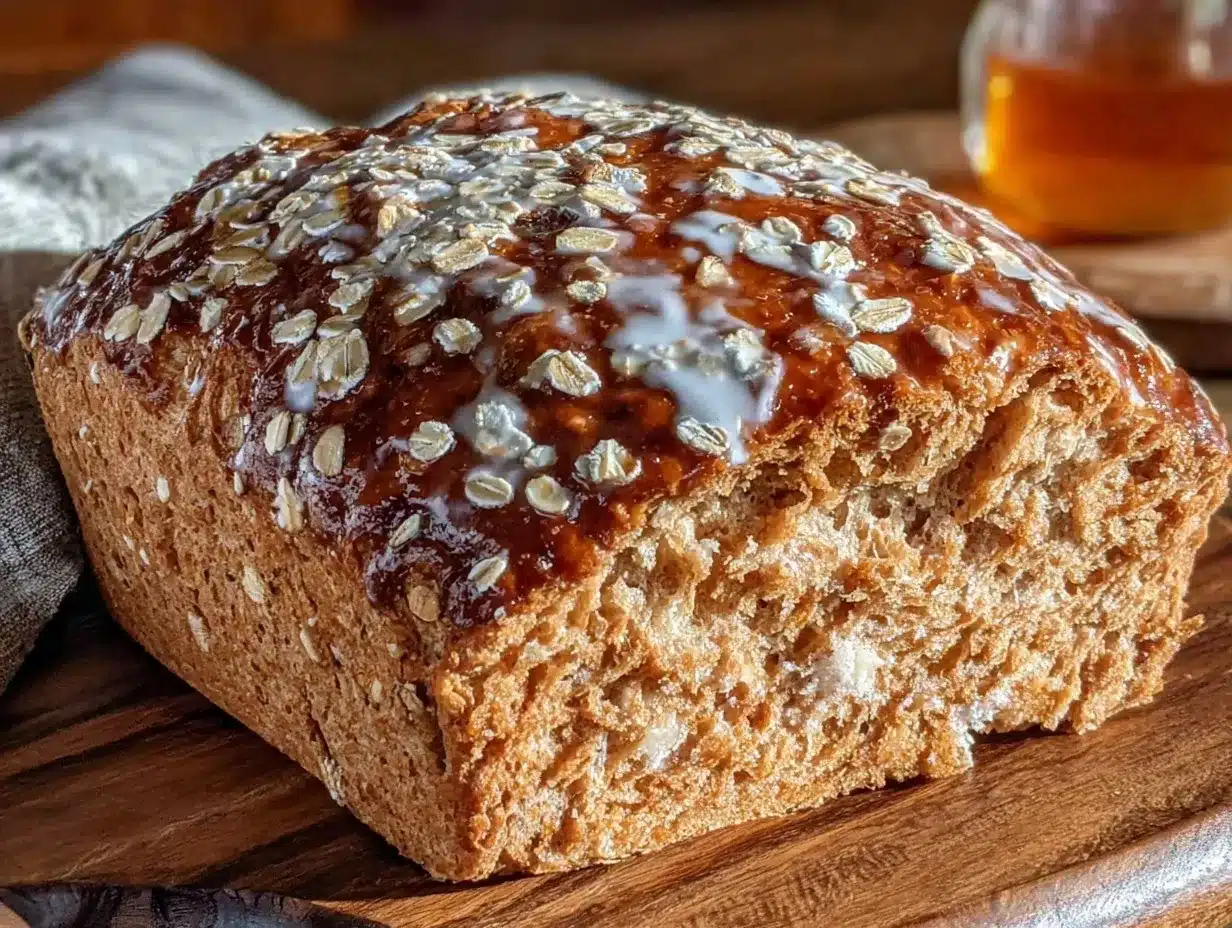
- Brush with butter: As soon as the bread comes out of the oven, brush the top with melted butter to keep the crust soft and flavorful.
- Cool: Let the bread cool in the pan for 10 minutes before transferring it to a wire rack. This step helps the crumb set and prevents a gummy texture.
Pro tip: If your crust gets too dark before the bread is cooked through, loosely tent it with foil for the last 10 minutes of baking. Also, if you want a more open crumb, don’t be afraid to add a splash more buttermilk to loosen the batter slightly.
Cooking Tips & Techniques
One thing I learned the hard way with this Irish brown bread is not to rush the mixing. The batter should be just combined—not overly stirred—so that the bread keeps a tender crumb. Overmixing activates the gluten too much, making the bread tough instead of soft.
Using stout beer is key here; the carbonation helps the bread rise along with the baking soda. I prefer to use a stout that I’d happily drink because its flavor really comes through. Guinness is a classic choice, but feel free to experiment with local stouts for a personal twist.
Another tip is to keep your oats fresh. Rolled oats can sometimes feel a little stale if stored too long, which dulls that lovely nutty flavor. Toasting them lightly before adding to the batter is something I occasionally try, but it’s not necessary—just fresh oats do the trick.
Timing is important, especially when baking bread with soda rather than yeast. The batter starts reacting as soon as the liquids hit the baking soda, so get it in the oven quickly. I usually pre-measure all my ingredients and have my pan ready to avoid delays. This way, you get the best rise and a tender crumb.
Finally, don’t skip the butter brushing at the end. It’s a small step with a big payoff, giving the crust a soft sheen and richer flavor. I find this keeps the bread fresh for an extra day or two, perfect when you want to enjoy it over several meals.
Variations & Adaptations
This hearty Irish brown bread is versatile, and I like to tweak it depending on the season or what I have on hand.
- Nutty Variation: Add ½ cup chopped walnuts or pecans for crunch and extra depth. Toast them lightly before folding in to bring out flavor.
- Seeded Twist: Mix in a tablespoon each of flaxseeds and sunflower seeds for a boost of nutrition and texture. These also make the bread more visually interesting.
- Gluten-Free Version: Replace the whole wheat flour with a gluten-free blend designed for baking, and swap buttermilk for almond milk with a teaspoon of apple cider vinegar. The texture will be slightly different but still delicious.
- Sweet & Fruity: Stir in ½ cup dried currants or raisins for a touch of sweetness that pairs beautifully with the stout’s bitterness.
- Cooking Method: For a crustier exterior, try baking the bread on a preheated baking stone or cast-iron skillet. Just watch closely for baking time adjustments.
One personal favorite is adding a pinch of caraway seeds to give the bread a subtle, aromatic twist that nods to traditional Irish flavors. It pairs wonderfully with a hearty stew or even a savory breakfast dish.
Serving & Storage Suggestions
This Irish brown bread is best served warm or at room temperature. I like slicing it thick and spreading plenty of butter, letting it melt into the crumb. It’s also fantastic alongside soups and stews, especially if you’re making a cozy meal like the chicken tortilla soup that’s warm and filling.
For storage, wrap the bread tightly in plastic wrap or place it in an airtight container once it has completely cooled. It keeps well at room temperature for 2-3 days. If you want to keep it longer, slice and freeze it in a resealable bag—toast slices directly from the freezer for a fresh-baked taste.
Reheating is simple: a few seconds in the microwave or a quick toast brings back that fresh-baked feeling. The flavors actually deepen after resting overnight, so sometimes I bake the bread a day ahead on purpose.
Nutritional Information & Benefits
This hearty Irish brown bread combines whole wheat flour and oats, making it a source of fiber and complex carbohydrates that keep you full and energized. The oats contribute beta-glucan, a soluble fiber linked to heart health and better cholesterol levels. Using stout beer adds flavor but minimal calories, as most alcohol evaporates during baking.
Compared to white bread, this loaf offers more nutrients and a lower glycemic index, making it a better choice for sustained energy. The inclusion of buttermilk or yogurt adds protein and calcium, rounding out the nutritional profile.
If you’re watching gluten intake, the recipe can be adapted with gluten-free flour blends, but it’s not suitable for those with celiac disease unless carefully modified.
Overall, this bread fits well into balanced meals, especially when paired with protein-rich dishes or fresh salads that bring in vitamins and minerals.
Conclusion
This hearty Irish brown bread with oats and stout isn’t just another loaf—it’s a simple, rustic recipe that has quietly found its way into my kitchen favorites. It’s easy to make, requires no yeast or special skills, and delivers a depth of flavor that surprises every time. I love that it’s flexible enough to suit different tastes and occasions, whether you’re enjoying it with a savory dip or a fresh salad like the Mediterranean chickpea salad.
Give it a try, and don’t be afraid to make it your own. Maybe add your favorite nuts, seeds, or a twist of sweetness—whatever feels right for your kitchen. And if you bake this bread, I’d love to hear what you think or how you’ve customized it. Baking is better when shared, after all!
Here’s to many cozy mornings and hearty meals with a slice of homemade Irish brown bread at your table.
FAQs
Can I use regular beer instead of stout?
Yes, but the flavor will be lighter and less malty. Stout adds a rich, deep taste that’s characteristic of this bread.
Is this bread gluten-free?
Not as written, since it uses whole wheat flour. However, you can substitute with a gluten-free flour blend and adjust the liquid slightly for a gluten-free version.
Can I make this bread without buttermilk?
Yes, plain yogurt or milk mixed with a teaspoon of lemon juice or vinegar works well as a buttermilk substitute.
How should I store leftover bread?
Wrap it tightly in plastic wrap or store in an airtight container at room temperature for up to 3 days. For longer storage, freeze sliced portions.
Can I add seeds or nuts to the dough?
Absolutely! Adding walnuts, sunflower seeds, or flaxseeds can enhance texture and nutrition. Just fold them in at the mixing stage.
Pin This Recipe!
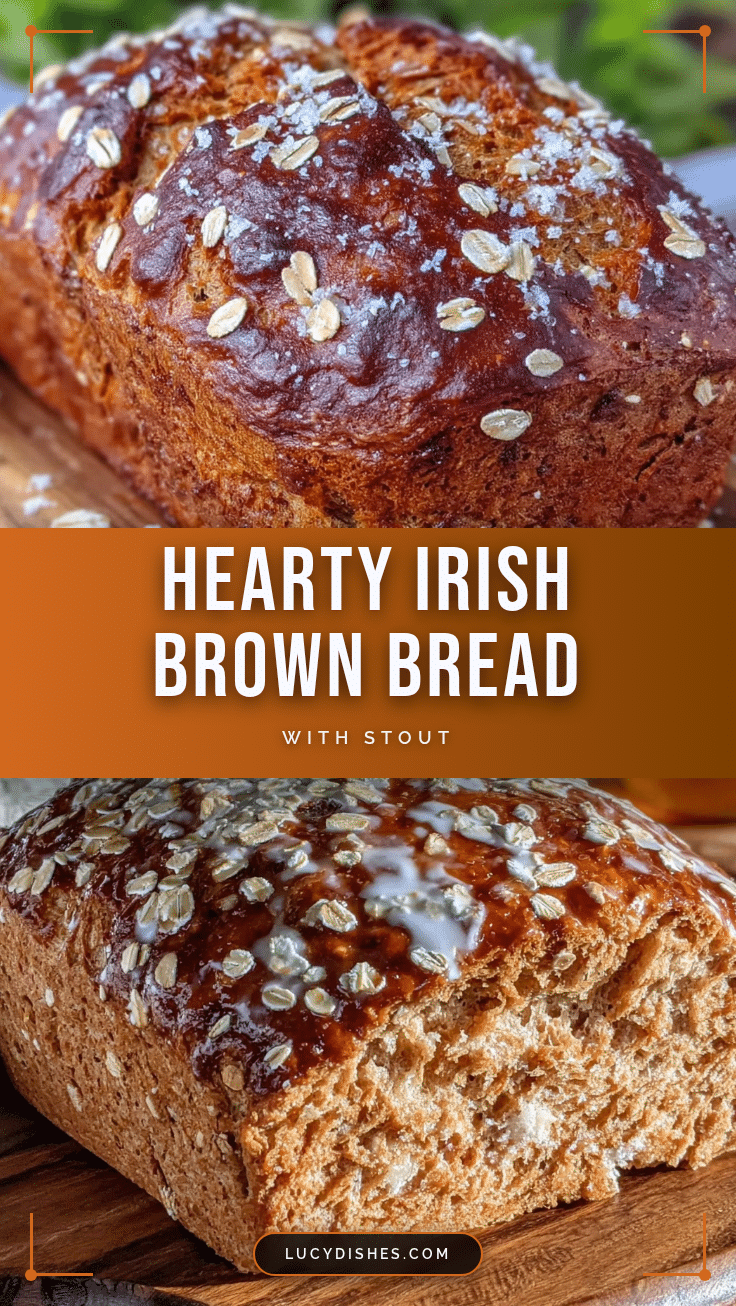
Hearty Irish Brown Bread with Oats and Stout
A rustic, dense, and flavorful Irish brown bread made with whole wheat flour, oats, and stout beer. This easy homemade recipe delivers a moist crumb with a hearty texture and a subtle malty sweetness.
- Prep Time: 15 minutes
- Cook Time: 50 minutes
- Total Time: 1 hour 5 minutes
- Yield: 1 loaf (about 8 servings) 1x
- Category: Bread
- Cuisine: Irish
Ingredients
- 2 ½ cups whole wheat flour (about 300g)
- 1 cup rolled oats (90g), plus 1 tablespoon for topping
- 1 teaspoon baking soda
- ½ teaspoon salt
- 1 ⅔ cups stout beer (400ml)
- 1 tablespoon honey or brown sugar (optional)
- ½ cup buttermilk or plain yogurt (120ml)
- 2 tablespoons unsalted butter, melted (for brushing the top)
Instructions
- Preheat your oven to 375°F (190°C). Grease a 9×5 inch (23×13 cm) loaf pan with butter or line it with parchment paper.
- In a large bowl, combine the whole wheat flour, rolled oats, baking soda, and salt. Stir gently to distribute evenly.
- Pour in the stout beer, buttermilk (or yogurt), and honey or brown sugar if using. Stir with a wooden spoon or spatula just until the ingredients come together. Do not overmix.
- Spoon the batter into the prepared loaf pan and smooth the top with a spatula. Sprinkle 1 tablespoon of oats over the top.
- Bake for 45-50 minutes until the bread rises and develops a deep brown crust. Check doneness by inserting a toothpick into the center; it should come out clean or with a few moist crumbs.
- Brush the top of the bread with melted butter immediately after removing it from the oven.
- Let the bread cool in the pan for 10 minutes, then transfer to a wire rack to cool completely.
Notes
If the crust darkens too quickly, tent the bread loosely with foil for the last 10 minutes of baking. Avoid overmixing the batter to keep the crumb tender. Use a stout beer you enjoy drinking for best flavor. For gluten-free, substitute whole wheat flour with a gluten-free blend and use almond milk with vinegar instead of buttermilk. Brush the top with melted butter after baking to keep the crust soft and flavorful.
Nutrition
- Serving Size: 1 slice (1/8 of loaf
- Calories: 180
- Sugar: 3
- Sodium: 300
- Fat: 3
- Saturated Fat: 1.5
- Carbohydrates: 34
- Fiber: 5
- Protein: 5
Keywords: Irish brown bread, stout bread, oat bread, whole wheat bread, easy bread recipe, no yeast bread, rustic bread