“Hey, did you ever try baking that Italian Easter bread with the colored eggs?” my neighbor asked me one chilly spring morning. I shrugged, honestly thinking it was just another festivity staple, you know—the kind of thing that’s more for show than for eating. But that year, I found myself with a basket of beautifully dyed eggs and a little extra time on my hands. I figured, why not give it a shot?
The dough was sticky and soft, a little temperamental at first, but as I braided it and nestled those brightly colored eggs into the twists, the kitchen started filling with this warm, yeasty aroma that instantly felt like home. Honestly, I was skeptical at first—braiding bread always felt like a task too fancy for a weeknight, and the idea of baking whole eggs inside seemed a bit odd. But the first slice, with that slightly sweet, tender crumb and the little pops of egg nestled in, was a surprise. It wasn’t just a pretty tradition; it was a comforting, joyful bite that made me pause and smile.
That loaf stayed on my counter for days, and somehow, each time I passed it, I felt a little calmer, a bit more connected to the season and the stories behind it. It’s funny how food can do that, right? It’s not just bread—it’s a quiet reminder of simpler moments stitched with color and warmth. This classic Italian Easter bread with vibrant colored eggs has since become my go-to for welcoming spring, and every time I make it, I think about that morning chat and how a little curiosity turned into a new tradition.
So, if you’ve got some eggs and a pinch of patience, this recipe might just surprise you too—offering more than just a festive centerpiece, but a slice of comfort and celebration rolled into one.
Why You’ll Love This Recipe
Making classic Italian Easter bread with vibrant colored eggs is one of those experiences that feels both timeless and surprisingly easy. I’ve baked this bread countless times, tweaking it here and there, and it never fails to impress. Here’s why it stands out:
- Quick & Easy: You can have this bread braided and rising within 30 minutes, perfect for busy mornings or last-minute holiday plans.
- Simple Ingredients: No need to hunt down obscure items; everything is likely already in your pantry or fridge.
- Perfect for Spring Celebrations: Whether it’s Easter brunch, a family gathering, or just a cozy weekend at home, this bread brings color and warmth to the table.
- Crowd-Pleaser: Kids love the vibrant eggs nestled in the dough, and adults appreciate the subtle sweetness and soft texture.
- Unbelievably Delicious: The combination of a lightly sweet, aromatic dough with the surprise of whole eggs baked inside creates a comforting, memorable flavor profile.
What really makes this recipe stand apart is the traditional technique of braiding the dough around those colored eggs, symbolizing renewal and hope. The texture is fluffy yet slightly chewy, with just enough sweetness to complement breakfast spreads or afternoon tea. I like to use fresh farm eggs for the best color vibrancy and freshness, and a touch of anise or lemon zest in the dough adds a subtle aromatic twist that’s uniquely Italian.
This isn’t just another bread recipe—it’s a slice of heritage that brightens up your kitchen and your spirit. Plus, I’ve found it pairs beautifully with simple dishes like a fresh green salad or even alongside creamy Hawaiian pasta salad for a casual brunch spread. It’s a recipe that invites sharing, savoring, and making new memories.
What Ingredients You Will Need
This recipe calls for straightforward, wholesome ingredients that come together to create a tender, flavorful bread with those iconic colored eggs baked right in. You’ll find most of these are pantry staples, with a few fresh touches to round out the flavor.
- All-purpose flour (about 4 cups / 480 g) – the base for the dough; King Arthur is a favorite for consistent results
- Granulated sugar (1/2 cup / 100 g) – adds just the right amount of sweetness
- Active dry yeast (2 1/4 teaspoons or one packet) – for that perfect rise
- Warm whole milk (1 cup / 240 ml) – helps activate the yeast; use dairy-free milk if needed
- Unsalted butter, softened (1/4 cup / 56 g) – adds richness and tenderness
- Large eggs (3 total; 2 for the dough, plus 4-6 colored eggs for baking) – make sure the colored eggs are hard-boiled
- Lemon zest (from 1 lemon) – provides a fresh, bright note
- Salt (1 teaspoon) – balances the sweetness
- Anise seeds (1 teaspoon, optional) – traditional flavor that adds a subtle licorice hint
- Colored hard-boiled eggs (4-6, dyed vibrant colors) – these are nestled into the braid for that classic look
- Egg wash: 1 egg beaten with 1 tablespoon water – for a shiny golden crust
If you’re dyeing your own eggs, natural colorings like beet juice or turmeric work beautifully and keep things vibrant without artificial dyes. For a gluten-free option, swapping all-purpose flour with a blend like Bob’s Red Mill gluten-free flour mix can work, though texture will differ slightly.
This recipe is forgiving and flexible—you can leave out the anise if it’s not your thing or swap lemon zest for orange zest for a different citrus twist. The dough’s slightly sweet flavor is a perfect canvas for these little personal touches.
Equipment Needed
- Large mixing bowl: To combine ingredients and let the dough rise comfortably.
- Measuring cups and spoons: For precise ingredient amounts—especially important with yeast.
- Whisk or fork: To mix wet ingredients and beat eggs for the egg wash.
- Stand mixer with dough hook (optional): Makes kneading easier, but hand kneading works just fine if you don’t have one.
- Baking sheet: Lined with parchment paper to bake the bread evenly and prevent sticking.
- Kitchen towel or plastic wrap: To cover the dough while it rises, keeping it warm and moist.
- Small bowl: For preparing the egg wash.
I remember the first time I didn’t use parchment paper—lesson learned the hard way when the bottom stuck to the pan! If you don’t have a stand mixer, kneading by hand for about 8-10 minutes works just as well, just be patient with the dough’s texture. Using a silicone baking mat or parchment paper is a budget-friendly way to keep your pans in shape and clean up easy.
Preparation Method
- Activate the yeast: In a small bowl, combine warm milk (about 110°F / 43°C) with 1 tablespoon sugar and the active dry yeast. Let it sit for 5-10 minutes until frothy and bubbly—a sign that the yeast is alive and kicking.
- Mix the dough: In a large mixing bowl, whisk together the flour, remaining sugar, salt, and anise seeds (if using). Add the lemon zest for that fresh zing.
- Add wet ingredients: Crack in 2 large eggs and the softened butter into the yeast mixture, then pour everything into the flour bowl. Stir with a wooden spoon or dough hook until a shaggy dough forms.
- Knead the dough: Turn the dough out onto a lightly floured surface and knead for 8-10 minutes until smooth, elastic, and slightly tacky but not sticky. If using a stand mixer, knead on medium speed with the dough hook for about 6 minutes.
- First rise: Place the dough in a lightly oiled bowl, cover with a clean towel or plastic wrap, and let it rise in a warm spot for 1 to 1.5 hours, or until doubled in size. It should feel puffy and spring back slowly when poked.
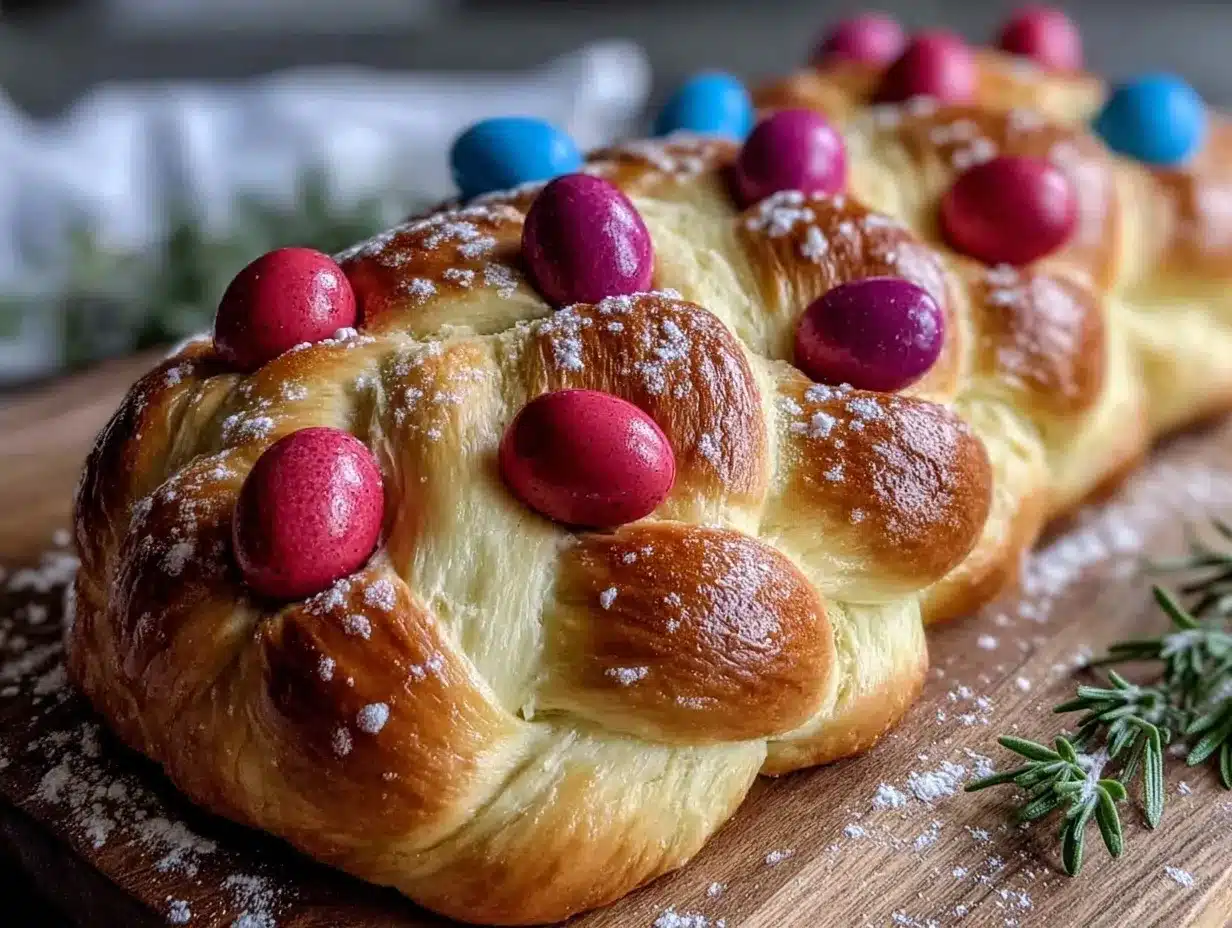
- Shape the bread: Punch down the dough gently and divide into three equal strands (about 12 inches / 30 cm each). Roll each strand evenly, then braid them together tightly but gently.
- Insert the eggs: Carefully tuck the colored, hard-boiled eggs into the braid, spacing them evenly. Pinch the dough around the eggs to secure them.
- Second rise: Transfer the braided loaf to a parchment-lined baking sheet, cover loosely, and let it rise again for 30-45 minutes until slightly puffed.
- Prepare the egg wash: Beat the remaining egg with a tablespoon of water, then brush it generously over the bread for a glossy, golden finish.
- Bake: Preheat the oven to 350°F (175°C). Bake the bread for 25-30 minutes or until golden brown and sounds hollow when tapped underneath. If it browns too quickly, tent with foil halfway through.
- Cool and enjoy: Let the bread cool on a wire rack for at least 20 minutes before slicing. The aroma will fill your kitchen, and the vibrant eggs peek out invitingly—ready to be admired and devoured.
Pro tip: Sometimes the dough feels a bit sticky after the first mix—don’t rush adding flour. A slightly tacky dough leads to a softer final bread. And if the eggs crack during baking, it just adds to the rustic charm.
Cooking Tips & Techniques
Getting that perfect texture and look with classic Italian Easter bread can be a little tricky, but here are some tips I’ve gathered over the years that make a difference:
- Check your yeast: Fresh, active yeast makes all the difference. If the mixture doesn’t foam during activation, it’s time to get new yeast.
- Don’t over-flour: It’s tempting to add lots of flour when the dough feels sticky, but a slightly tacky dough yields a softer bread. Use just enough to keep it manageable.
- Braiding technique matters: Keep your strands even in thickness and braid loosely enough to allow for expansion but tight enough to hold shape. This balance prevents cracks in the crust.
- Colored eggs prep: Use eggs that are fully hard-boiled and cooled before coloring and baking. This prevents cracking and preserves color vibrancy.
- Egg wash timing: Brush the egg wash just before baking to get that shiny, golden crust without it pooling or running off.
- Oven temp and rack placement: Bake on the middle rack for even heat distribution. If the crust browns too fast, tent with foil.
- Multitasking: While the dough rises, it’s a good moment to prep any side dishes or even whip up a batch of chewy mini egg chocolate chip cookies for a sweet finish.
Honestly, the first few times I baked this bread, my eggs were sliding out or the dough was too tough, but patience and practice turned it into a beloved staple. Remember, every kitchen is a bit different, so keep an eye on rising times and dough texture—they’re your best guides.
Variations & Adaptations
This classic Italian Easter bread is wonderfully adaptable depending on your preferences, dietary needs, or what’s in season:
- Flavor twists: Swap lemon zest for orange or add a teaspoon of vanilla extract for a sweeter, dessert-like bread.
- Nutty addition: Fold in chopped toasted almonds or pine nuts into the dough for extra texture and flavor.
- Gluten-free option: Use a high-quality gluten-free flour blend and add a teaspoon of xanthan gum if the blend doesn’t include it. Expect a denser bread.
- Dairy-free adaptation: Substitute the milk with almond or oat milk and swap butter for a plant-based alternative.
- Egg-free decoration: If you want the traditional braid look without the eggs, try small clusters of dried fruit or colorful candied citrus peels tucked into the braid instead.
One variation I particularly enjoy is adding a handful of mini chocolate chips into the dough, turning this festive bread into a sweet treat perfect for brunch. It pairs especially well with a simple fruit salad like the fresh rainbow fruit tray I often prepare alongside.
Serving & Storage Suggestions
Classic Italian Easter bread is best served at room temperature, allowing the tender crumb and vibrant eggs to shine. Slice it thick for breakfast with butter or honey, or thinly as a sweet snack alongside a cup of coffee or tea.
It pairs beautifully with lighter sides like a fresh spring salad or even a creamy pasta dish for a heartier meal. If you’re serving it as part of a brunch spread, the bread’s festive look adds a cheerful centerpiece—perfect when paired with colorful dishes like fresh healthy quinoa salad.
To store, wrap the bread tightly in plastic wrap or place it in an airtight container. It stays fresh at room temperature for 2-3 days. For longer storage, freeze the sliced bread in a freezer bag for up to 3 months. When ready to eat, thaw at room temperature and warm lightly in the oven or toaster oven to refresh the texture.
Interestingly, the flavors meld a bit more after a day, with the lemon zest and anise notes becoming more pronounced. Leftover slices toasted with a smear of butter make for a delightful snack or breakfast.
Nutritional Information & Benefits
This classic Italian Easter bread is a moderately sweet treat with a tender crumb, offering a good source of energy and some essential nutrients from eggs and milk. Here’s an approximate breakdown per slice (based on 12 slices):
- Calories: ~180 kcal
- Protein: 5 g
- Fat: 6 g (mostly from butter and eggs)
- Carbohydrates: 26 g
- Fiber: 1 g
Eggs provide high-quality protein and important vitamins like B12 and D, while lemon zest adds a touch of vitamin C. If you include anise seeds, they contribute antioxidants and digestive benefits. This bread is not gluten-free by default, but can be adapted.
From a wellness perspective, it’s a treat that balances indulgence with nutrition, making it a satisfying choice for festive meals without feeling overly heavy or sugary. Just remember, portion control is key!
Conclusion
Classic Italian Easter bread with vibrant colored eggs is more than just a recipe—it’s a slice of tradition, warmth, and joy all braided into one. Its simple ingredients and straightforward method make it approachable, even if you don’t bake often. Plus, the colorful eggs bring a touch of festive cheer that brightens any table.
Feel free to tweak the flavors or shape to suit your style, and trust that this bread will bring smiles and a comforting aroma to your kitchen. It’s a little piece of spring you can bake, share, and savor.
I’d love to hear how your loaf turns out or any personal twists you give it—drop a comment or share your photos! Baking is better when it’s shared, after all.
FAQs about Classic Italian Easter Bread
Can I use raw eggs instead of hard-boiled eggs in this bread?
No, the eggs baked inside the bread should be hard-boiled first. Raw eggs would not cook properly and could be unsafe.
How do I dye eggs naturally for this recipe?
Use natural ingredients like beet juice for pink, turmeric for yellow, or red cabbage for blue. Boil the eggs with these natural dyes and a splash of vinegar for vibrant colors.
Can I make the dough ahead of time?
Yes, you can prepare the dough the night before and let it rise slowly in the fridge. Just bring it back to room temperature before shaping and baking.
What if I don’t have anise seeds—can I leave them out?
Absolutely! Anise seeds add a traditional flavor but the bread is delicious without them. You could substitute with a bit of vanilla or orange zest instead.
How do I store leftover Easter bread?
Wrap it well in plastic wrap or store in an airtight container at room temperature for up to 3 days, or freeze slices for up to 3 months. Warm slices before serving for best texture.
Pin This Recipe!
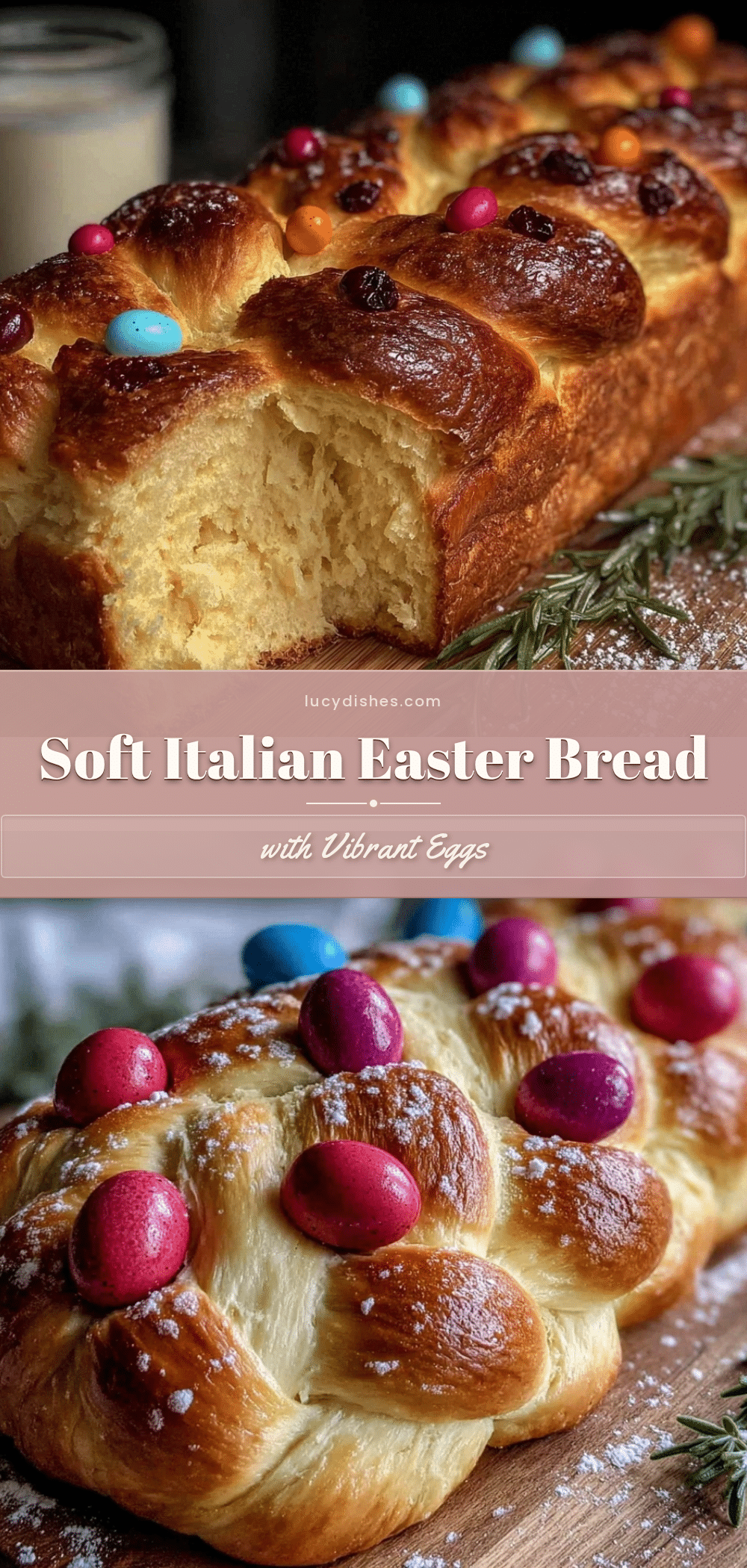
Classic Italian Easter Bread Recipe Easy Homemade with Vibrant Colored Eggs
A traditional Italian Easter bread featuring a lightly sweet, tender braided dough with vibrant colored hard-boiled eggs nestled inside, perfect for spring celebrations.
- Prep Time: 30 minutes
- Cook Time: 30 minutes
- Total Time: 1 hour 30 minutes to 2 hours 15 minutes
- Yield: 12 servings 1x
- Category: Bread
- Cuisine: Italian
Ingredients
- 4 cups (480 g) all-purpose flour
- 1/2 cup (100 g) granulated sugar
- 2 1/4 teaspoons (1 packet) active dry yeast
- 1 cup (240 ml) warm whole milk
- 1/4 cup (56 g) unsalted butter, softened
- 3 large eggs (2 for the dough, plus 4–6 colored hard-boiled eggs for baking)
- Zest of 1 lemon
- 1 teaspoon salt
- 1 teaspoon anise seeds (optional)
- 4–6 colored hard-boiled eggs (dyed vibrant colors)
- Egg wash: 1 egg beaten with 1 tablespoon water
Instructions
- Activate the yeast: In a small bowl, combine warm milk (about 110°F / 43°C) with 1 tablespoon sugar and the active dry yeast. Let it sit for 5-10 minutes until frothy and bubbly.
- Mix the dough: In a large mixing bowl, whisk together the flour, remaining sugar, salt, and anise seeds (if using). Add the lemon zest.
- Add wet ingredients: Crack in 2 large eggs and the softened butter into the yeast mixture, then pour everything into the flour bowl. Stir until a shaggy dough forms.
- Knead the dough: Turn the dough out onto a lightly floured surface and knead for 8-10 minutes until smooth, elastic, and slightly tacky but not sticky. Alternatively, knead with a stand mixer dough hook on medium speed for about 6 minutes.
- First rise: Place the dough in a lightly oiled bowl, cover with a towel or plastic wrap, and let it rise in a warm spot for 1 to 1.5 hours until doubled in size.
- Shape the bread: Punch down the dough and divide into three equal strands (about 12 inches / 30 cm each). Roll each strand evenly, then braid them together tightly but gently.
- Insert the eggs: Carefully tuck the colored, hard-boiled eggs into the braid, spacing them evenly. Pinch the dough around the eggs to secure them.
- Second rise: Transfer the braided loaf to a parchment-lined baking sheet, cover loosely, and let it rise again for 30-45 minutes until slightly puffed.
- Prepare the egg wash: Beat the remaining egg with 1 tablespoon water and brush it generously over the bread.
- Bake: Preheat oven to 350°F (175°C). Bake the bread for 25-30 minutes until golden brown and hollow sounding when tapped. Tent with foil if browning too quickly.
- Cool and enjoy: Let the bread cool on a wire rack for at least 20 minutes before slicing.
Notes
Use fresh, active yeast for best results. Avoid adding too much flour; a slightly tacky dough yields softer bread. Use fully hard-boiled and cooled eggs for vibrant color and to prevent cracking. Brush egg wash just before baking for a shiny crust. Bake on middle rack and tent with foil if browning too fast. Dough can be prepared ahead and refrigerated overnight.
Nutrition
- Serving Size: 1 slice (1/12 of loa
- Calories: 180
- Fat: 6
- Carbohydrates: 26
- Fiber: 1
- Protein: 5
Keywords: Italian Easter bread, braided bread, colored eggs bread, traditional Easter bread, homemade Easter bread, festive bread, spring bread