
Let me tell you, the scent of fresh herbs, tender spring vegetables, and buttery, flaky crust wafting from my oven is enough to make anyone’s mouth water. The first time I baked this fresh homemade spring pie, I was instantly hooked—the kind of moment where you pause, take a deep breath, and just smile because you know you’re onto something truly special. Years ago, when I was knee-high to a grasshopper, my grandma used to make pies that felt like warm hugs, but this spring pie recipe? It’s a bright, lively twist on that nostalgic comfort.
I stumbled upon this recipe on a rainy weekend when I wanted something that screamed spring but was dangerously easy to pull off. Honestly, my family couldn’t stop sneaking pieces off the cooling rack (and I can’t really blame them). Whether it’s for a weekend brunch, a sweet treat for your kids, or to brighten up your Pinterest cookie board with something savory and fresh, this fresh homemade spring pie with flaky golden crust is your go-to. I’ve tested it more times than I can count—in the name of research, of course—and it’s become a staple for family gatherings and gifting. You’re going to want to bookmark this one.
Why You’ll Love This Recipe
Having cooked and tweaked this fresh homemade spring pie recipe over many seasons, I can say it’s got something for everyone. Here’s why it stands out:
- Quick & Easy: Comes together in under an hour, perfect for busy weeknights or last-minute cravings.
- Simple Ingredients: No fancy grocery trips needed; you likely already have everything in your kitchen or farmer’s market haul.
- Perfect for Springtime: Bursting with fresh veggies and herbs, it’s great for potlucks, cozy dinners, or sunny picnic days.
- Crowd-Pleaser: Always gets rave reviews from kids and adults alike, even the picky eaters.
- Unbelievably Delicious: The flaky golden crust paired with a bright, savory filling hits that next-level comfort-food note.
This isn’t just another pie recipe—it’s crafted by blending fresh, seasonal ingredients with a perfectly flaky, buttery crust that’s no-fail every time. The secret? A quick chilling step for the dough that makes it super easy to work with and gives you that irresistible flakiness. You know what makes it really special? That balance between fresh, vibrant flavors and the warm, comforting feel of homemade pie. It’s the kind of recipe that makes you close your eyes after the first bite and smile. Whether you’re impressing guests without breaking a sweat or treating yourself to a simple yet memorable meal, this spring pie is ready to deliver.
What Ingredients You Will Need
This fresh homemade spring pie uses simple, wholesome ingredients to deliver bold flavor and satisfying texture without the fuss. Most are pantry staples or easy to source from local markets during spring.
- For the Crust:
- 2 ½ cups (310g) all-purpose flour (I swear by King Arthur for best texture)
- 1 teaspoon salt
- 1 teaspoon sugar (adds a subtle sweetness)
- 1 cup (225g) unsalted butter, cold and cubed (keeps crust flaky)
- 6-8 tablespoons (90-120ml) ice-cold water
- For the Filling:
- 1 cup (150g) fresh peas, shelled (or frozen if out of season)
- 1 cup (130g) asparagus tips, chopped
- 1 cup (130g) baby carrots, sliced thin
- 1 small leek, white and light green parts only, thinly sliced
- 2 cloves garlic, minced (adds aromatic depth)
- 1 tablespoon olive oil
- 1 tablespoon fresh thyme leaves (or 1 teaspoon dried)
- ½ cup (120ml) heavy cream or full-fat coconut milk (adds richness)
- 2 large eggs, beaten (for binding and richness)
- Salt and freshly ground black pepper, to taste
- Optional Garnishes:
- Fresh parsley or chives, chopped
- Grated Parmesan or your favorite hard cheese (adds a lovely savory touch)
If you want a gluten-free version, almond or oat flour works nicely in the crust, though the texture will differ slightly. For dairy-free options, swap butter with a vegan butter alternative and use coconut milk instead of cream. Seasonal swaps like fresh spinach or radishes can keep the filling interesting. Trust me—fresh, quality ingredients make all the difference here!
Equipment Needed
To whip up this fresh homemade spring pie with flaky golden crust, you’ll need a few kitchen tools that you probably already own:
- Mixing Bowls: For combining dry and wet ingredients separately.
- Pastry Cutter or Food Processor: To cut cold butter into flour easily. A food processor speeds things up, but a simple pastry cutter and a little elbow grease work just fine.
- Rolling Pin: Essential for rolling out that flaky crust evenly. If you don’t have one, a clean wine bottle can do the trick in a pinch.
- 9-inch (23cm) Pie Dish: Glass or ceramic works best for even baking and beautiful presentation.
- Sharp Knife and Cutting Board: For prepping your fresh veggies.
- Measuring Cups and Spoons: Precise measurements make all the difference.
- Baking Sheet: Place your pie dish on it to catch any drips during baking.
For budget-friendly options, look for used rolling pins or wooden spoons at thrift stores. Maintaining your rolling pin by occasionally wiping it with a damp cloth keeps it smooth and ready. And, honestly, sometimes the simplest tools make the best baking buddies. No fancy gadgets required here!
Preparation Method

- Make the Pie Crust: In a large bowl, whisk together 2 ½ cups (310g) all-purpose flour, 1 teaspoon salt, and 1 teaspoon sugar. Add 1 cup (225g) cold, cubed unsalted butter. Using a pastry cutter or your fingers, cut the butter into the flour until the mixture resembles coarse crumbs with pea-sized pieces. (Tip: Work quickly so butter stays cold.)
- Add Ice Water: Slowly drizzle 6-8 tablespoons (90-120ml) of ice-cold water into the mixture, stirring gently with a fork after each addition. Stop when the dough begins to clump together but is not sticky. (You might not need all the water.)
- Form Dough and Chill: Gather dough into a ball, divide in half, and flatten each half into a disk. Wrap in plastic wrap and chill in the fridge for at least 30 minutes. (This helps develop that flaky crust you’re after.)
- Prepare Filling: While the dough chills, heat 1 tablespoon olive oil in a large skillet over medium heat. Add 1 small sliced leek and 2 minced garlic cloves; sauté until softened and fragrant, about 3 minutes.
- Add 1 cup (130g) chopped asparagus, 1 cup (130g) baby carrots, and 1 cup (150g) fresh peas. Cook for another 5 minutes until veggies are tender but still bright and slightly crisp. Stir in 1 tablespoon fresh thyme leaves, and season with salt and pepper. Remove from heat and let cool slightly.
- Mix Filling Base: In a medium bowl, whisk together ½ cup (120ml) heavy cream and 2 large beaten eggs. Stir the cooled vegetables into this mixture until evenly combined.
- Roll Out Bottom Crust: On a lightly floured surface, roll out one dough disk into a 12-inch (30cm) circle. Carefully transfer it to your 9-inch (23cm) pie dish, pressing gently to fit without stretching. Trim excess dough hanging over the edges.
- Add Filling: Pour the vegetable and egg mixture into the crust, spreading it out evenly.
- Roll Out Top Crust: Roll out the second dough disk to cover the pie. Place it gently over the filling. Trim excess and crimp edges to seal. Cut several small slits in the top crust to vent steam.
- Chill Again: Refrigerate the assembled pie for 15 minutes—this keeps the crust firm and helps prevent shrinking.
- Bake: Preheat your oven to 375°F (190°C). Place the pie on a baking sheet and bake for 40-45 minutes or until the crust is golden brown and filling is set. (If the edges brown too quickly, cover them with foil.)
- Cool & Serve: Let the pie cool for at least 15 minutes before slicing to let the filling settle beautifully.
This method gives you a perfect balance of flaky crust and fresh, flavorful filling every time. If the crust feels sticky, just pop it back in the fridge for a few minutes before rolling. Trust me, patience here pays off with that perfect golden finish.
Cooking Tips & Techniques
One pro tip I’ve learned is to keep everything cold when making the crust. Cold butter and water help create those magic flaky layers. Also, don’t overwork the dough—you want to see bits of butter still intact for that tender texture.
Another thing: when sautéing your veggies, aim for a tender-crisp texture. Overcooking makes the filling mushy, and that’s just sad pie. I usually test by poking a carrot slice; it should have a little bite left.
Timing is key here. Chill the dough before rolling and again after assembling the pie to avoid shrinkage and soggy bottom crust. I often multitask by prepping the filling while the dough chills, saving precious minutes.
Finally, keep a close eye on the crust edges during baking. If they brown too fast, cover with foil or a pie crust shield. This little trick keeps the edges from burning while the rest of the pie bakes through perfectly.
Honestly, these tips come from a few burned pies and lots of trial and error—so you don’t have to repeat my mistakes! Stick with these tricks, and your spring pie will look and taste like a pro made it.
Variations & Adaptations
This fresh homemade spring pie is wonderfully versatile, easily adapting to your mood or dietary needs. Here are a few ways to make it your own:
- Vegetarian-Friendly: Stick with the veggies listed, or swap in mushrooms and spinach for a richer, earthier filling.
- Gluten-Free: Use almond flour or a gluten-free flour blend for the crust. Keep in mind the texture will be a bit different but still delicious.
- Dairy-Free/Vegan: Swap butter for vegan butter, and replace heavy cream with full-fat coconut milk or cashew cream. Use a flax egg (1 tablespoon flaxseed meal + 3 tablespoons water) instead of eggs.
- Seasonal Twist: In summer, add fresh tomatoes or zucchini for a lighter, juicier filling. In fall, roasted butternut squash and sage make a cozy alternative.
- Cheese Variations: Try mixing in goat cheese or feta for a tangy punch. I once added crumbled ricotta and fresh basil—delicious and fresh!
With each tweak, you can keep the heart of the fresh homemade spring pie but make it fit your kitchen and cravings perfectly.
Serving & Storage Suggestions
This spring pie is best served warm or at room temperature, allowing those fresh flavors to really shine. Pair it with a crisp green salad or light vinaigrette to balance the richness of the crust and filling.
If you’re feeling fancy, a chilled glass of crisp white wine or sparkling water with lemon complements the herbaceous notes beautifully. For a casual family meal, it holds up well alongside roasted potatoes or simple steamed greens.
To store, cover leftover pie tightly and refrigerate for up to 3 days. You can also freeze unbaked pie for up to a month—just thaw in the fridge overnight before baking.
Reheat slices in a 350°F (175°C) oven for about 10-15 minutes to revive that flaky crust and warm filling. Microwave works in a pinch but might sacrifice some crispness.
Fun fact: the pie’s flavors actually deepen after a day or two, so leftovers can be even better than fresh out of the oven!
Nutritional Information & Benefits
Each slice of this fresh homemade spring pie offers a nourishing balance of veggies, protein, and wholesome carbs. Roughly, one serving provides:
| Calories | 320-350 kcal |
|---|---|
| Protein | 8-10g |
| Fat | 20-22g (mostly from butter and cream) |
| Carbohydrates | 25-28g |
| Fiber | 3-4g |
The fresh peas and asparagus are rich in vitamins A, C, and K, plus antioxidants that support immune health. Butter and cream provide satisfying fats that keep you full, while eggs add quality protein and nutrients like choline.
For those watching gluten or dairy intake, the recipe’s easy swaps make it customizable without losing flavor. Honestly, this pie feels like a treat but comes with a wholesome dose of springtime goodness.
Conclusion
So there you have it: a fresh homemade spring pie with flaky golden crust that’s as approachable as it is delicious. Whether you’re new to pie-making or a seasoned home chef, this recipe offers a perfect blend of fresh veggies, comforting textures, and buttery crust that feels like a warm hug on a plate.
Feel free to customize it with your favorite seasonal veggies or dietary tweaks—you’re in charge here! I love this recipe because it brings my family together, and it’s versatile enough to fit just about any occasion.
Give it a try, and let me know how it turns out! Drop a comment with your favorite variations or tips, and don’t forget to share this recipe with friends who need a little spring in their baking life. Happy baking!
FAQs
Can I make the pie crust ahead of time?
Absolutely! You can prepare the dough up to two days in advance and keep it wrapped tightly in the fridge. Just bring it back to cold before rolling out.
What if I don’t have fresh peas or asparagus?
Frozen peas work great, just thaw before cooking. For asparagus, green beans or broccoli florets can be tasty alternatives.
How do I prevent a soggy bottom crust?
Chilling the dough before baking and using a hot oven helps. Also, avoid overfilling with too much liquid and consider blind baking the crust for 10 minutes if you want extra crispness.
Can I double this recipe for a larger crowd?
Yes! Just double the ingredients and bake in a larger dish or two standard pie dishes. Adjust baking time slightly and check for doneness.
Is this recipe suitable for vegans?
With substitutions like vegan butter, coconut or cashew cream, and flax eggs, you can easily make it vegan-friendly without sacrificing flavor.
Pin This Recipe!
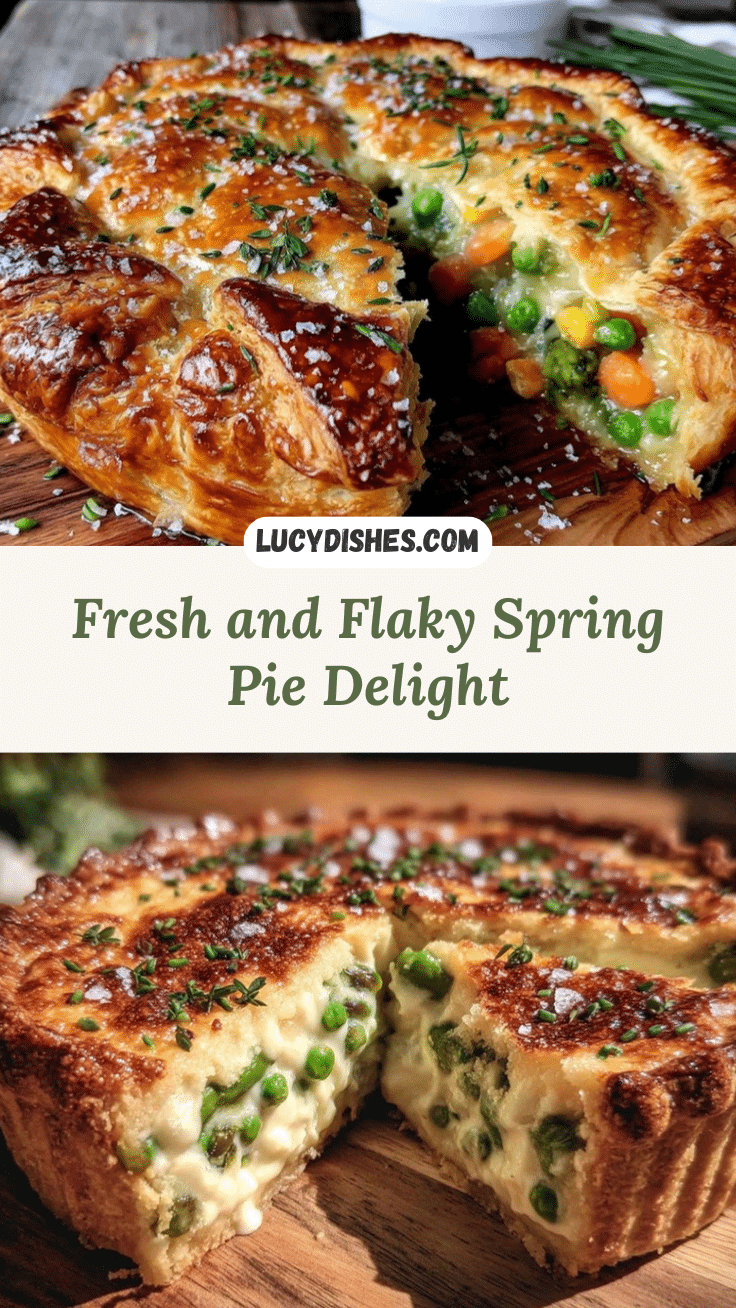
Fresh Homemade Spring Pie Recipe with Flaky Golden Crust Easy Steps

A bright, lively spring pie bursting with fresh veggies and herbs, wrapped in a flaky, buttery crust. Perfect for brunch, family meals, or potlucks.
- Prep Time: 20 minutes
- Cook Time: 45 minutes
- Total Time: 1 hour 5 minutes
- Yield: 8 servings 1x
- Category: Main Course
- Cuisine: American
Ingredients
- 2 ½ cups (310g) all-purpose flour
- 1 teaspoon salt
- 1 teaspoon sugar
- 1 cup (225g) unsalted butter, cold and cubed
- 6–8 tablespoons (90-120ml) ice-cold water
- 1 cup (150g) fresh peas, shelled (or frozen)
- 1 cup (130g) asparagus tips, chopped
- 1 cup (130g) baby carrots, sliced thin
- 1 small leek, white and light green parts only, thinly sliced
- 2 cloves garlic, minced
- 1 tablespoon olive oil
- 1 tablespoon fresh thyme leaves (or 1 teaspoon dried)
- ½ cup (120ml) heavy cream or full-fat coconut milk
- 2 large eggs, beaten
- Salt and freshly ground black pepper, to taste
- Optional garnishes: Fresh parsley or chives, chopped
- Optional garnishes: Grated Parmesan or your favorite hard cheese
Instructions
- In a large bowl, whisk together flour, salt, and sugar. Add cold, cubed butter and cut into flour until mixture resembles coarse crumbs with pea-sized pieces.
- Slowly drizzle ice-cold water into mixture, stirring gently after each addition until dough clumps but is not sticky.
- Gather dough into a ball, divide in half, flatten each into a disk, wrap in plastic wrap, and chill for at least 30 minutes.
- Heat olive oil in a skillet over medium heat. Sauté leek and garlic until softened, about 3 minutes.
- Add asparagus, baby carrots, and peas; cook 5 minutes until tender-crisp. Stir in thyme, salt, and pepper. Remove from heat and cool slightly.
- Whisk heavy cream and beaten eggs in a bowl. Stir cooled vegetables into this mixture evenly.
- Roll out one dough disk on floured surface into a 12-inch circle. Transfer to 9-inch pie dish, pressing gently and trimming excess dough.
- Pour vegetable and egg mixture into crust, spreading evenly.
- Roll out second dough disk to cover pie. Place over filling, trim excess, crimp edges, and cut slits to vent steam.
- Refrigerate assembled pie for 15 minutes to keep crust firm.
- Preheat oven to 375°F (190°C). Place pie on baking sheet and bake 40-45 minutes until crust is golden and filling set. Cover edges with foil if browning too fast.
- Let pie cool at least 15 minutes before slicing to allow filling to settle.
Notes
Keep butter and water cold for flaky crust. Chill dough before rolling and after assembling to prevent shrinking and soggy crust. Cover edges with foil if browning too quickly. Avoid overcooking veggies to keep filling tender-crisp. For gluten-free crust, use almond or oat flour. For dairy-free, use vegan butter and coconut milk. Vegan option: replace eggs with flax egg.
Nutrition
- Serving Size: 1 slice (1/8 of pie)
- Calories: 320350
- Sugar: 35
- Sodium: 300400
- Fat: 2022
- Saturated Fat: 1214
- Carbohydrates: 2528
- Fiber: 34
- Protein: 810
Keywords: spring pie, homemade pie, flaky crust, fresh vegetables, easy pie recipe, savory pie, seasonal recipe